Double Board Certified · Facial Trauma Reconstruction
Broken Nose Repair in NYC — restoring form and breathing after a nasal fracture.
A nasal fracture is the most common facial fracture seen in clinical practice. Most are reducible with the right approach if evaluated in time; what makes the difference is recognizing whether closed reduction will suffice or whether definitive open repair is the right operation.
ABFPRS
Facial Plastic & Reconstructive Surgery
ABOto
Otolaryngology — Head & Neck Surgery
AAFPRS
Fellowship Director

In Consultation
"Time matters with nasal trauma. The earlier we evaluate, the more options remain open."

A Note from Dr. Mourad
"A nasal fracture is the most common facial fracture seen in clinical practice. Most are reducible with the right approach if evaluated in time; what makes the difference is recognizing whether closed reduction will suffice or whether definitive open repair is the right operation."
— Dr. Moustafa Mourad, MD
Medically reviewed by Moustafa Mourad, MD, FACS — dual board-certified Facial Plastic & Reconstructive Surgeon and Otolaryngologist (Head & Neck Surgery).
Last reviewed: June 2026
Urgent — when to seek care now
Some nasal injuries need same-day attention.
Most broken noses are evaluated on an unhurried, elective basis. A few findings, however, warrant urgent or emergency care. After a nasal injury, seek immediate attention if you notice any of the following:
- A soft, swelling bulge on the nasal septum or a rapidly worsening blockage inside the nose — this can be a septal hematoma, which needs to be drained promptly to protect the cartilage.
- Nosebleeding that is heavy or does not stop with gentle, sustained pressure.
- Clear fluid draining from the nose after a forceful blow, which should be evaluated without delay.
- Difficulty breathing, a severely deformed nose with intense pain, vision changes, or a head injury with confusion, vomiting, or loss of consciousness — go to the nearest emergency room.
This is general information and does not replace in-person evaluation. When in doubt after a facial injury, seek emergency care.
Is this the right page for you?
This page is for
- Your nose was struck or fractured and now looks crooked, feels blocked, or both.
- You are within the first one to two weeks of an injury and want to know whether early realignment is possible.
- An old, healed nasal fracture has left you with a deviated nose or restricted breathing.
You may be looking for
- If you want to change the shape of a nose that was never injured, see rhinoplasty.
- If your main concern is a deviated septum and breathing, see septoplasty.
Overview
What is broken nose repair?
Broken nose repair is a procedure that restores the position and function of nasal bones and cartilage after trauma. In the first one to two weeks after injury, a closed reduction can often realign the bones without external incisions. Beyond that window, or when the deformity involves the septum, tip, or dorsum, a formal septorhinoplasty is typically required.
It is considered when a nasal fracture has produced a visible deformity, persistent breathing obstruction, recurrent nosebleeds, or a septal hematoma. Early evaluation is important because the optimal timing of repair depends on how much swelling has resolved and how the bones have begun to heal.
Post-traumatic noses often have both functional and aesthetic components — a deviated septum, narrowed nasal valves, an off-axis bridge, and a hump where bone has callused. Repair is planned with both in mind, so breathing and shape are addressed in a single operation rather than a series of revisions.
An Established Academic Authority
Double board certification. Fellowship director. Published author. A surgeon's surgeon.
ABFPRS
Board Certified
American Board of Facial Plastic & Reconstructive Surgery
ABOto
Board Certified
American Board of Otolaryngology — Head & Neck Surgery
AAFPRS
Fellowship Director
American Academy of Facial Plastic and Reconstructive Surgery
Textbook
Published Author
Contributions to the academic literature of facial plastic surgery
Dual board certification in both Facial Plastic & Reconstructive Surgery and Otolaryngology — Head & Neck Surgery.
02 · Ideal Candidates
Who benefits most from this operation.
Candidacy is determined together at consultation. The most satisfied patients share three things in common.
I
Recent Trauma
Fractures presenting within the first two weeks of injury are often amenable to closed reduction — repositioning the bones under controlled anesthesia.
II
Healed Deformity
Fractures that have already healed in a deviated position typically require open reduction — formal osteotomies as part of a septorhinoplasty.
III
Functional Compromise
Post-traumatic septal deviation, valve collapse, or persistent airway obstruction — repair restores breathing alongside any cosmetic correction.
If this describes you, the next step is a quiet, unhurried conversation — not a sales call.
An Honest Note
When this operation may not be right for you.
Severely swollen or actively infected noses are stabilised medically before any reduction is attempted.
Patients with significant medical instability are evaluated and cleared by their primary care physician before elective definitive repair.
Anticoagulation is reviewed and the operation is timed appropriately around any required holds.
Pediatric nasal fractures are managed with specific consideration of the growing nose.
03 · Approaches
The full range of options.
Broken nose repair depends on how recent the injury is and what was disrupted. The right plan ranges from early closed reduction through formal septorhinoplasty when the fracture has healed in a deformed position.
1 of 6 · Closed Reduction
04 · Technique
Closed vs open reduction.
The fundamental question with any nasal fracture is timing — early reductions can often be closed; late or complex injuries require open definitive repair.
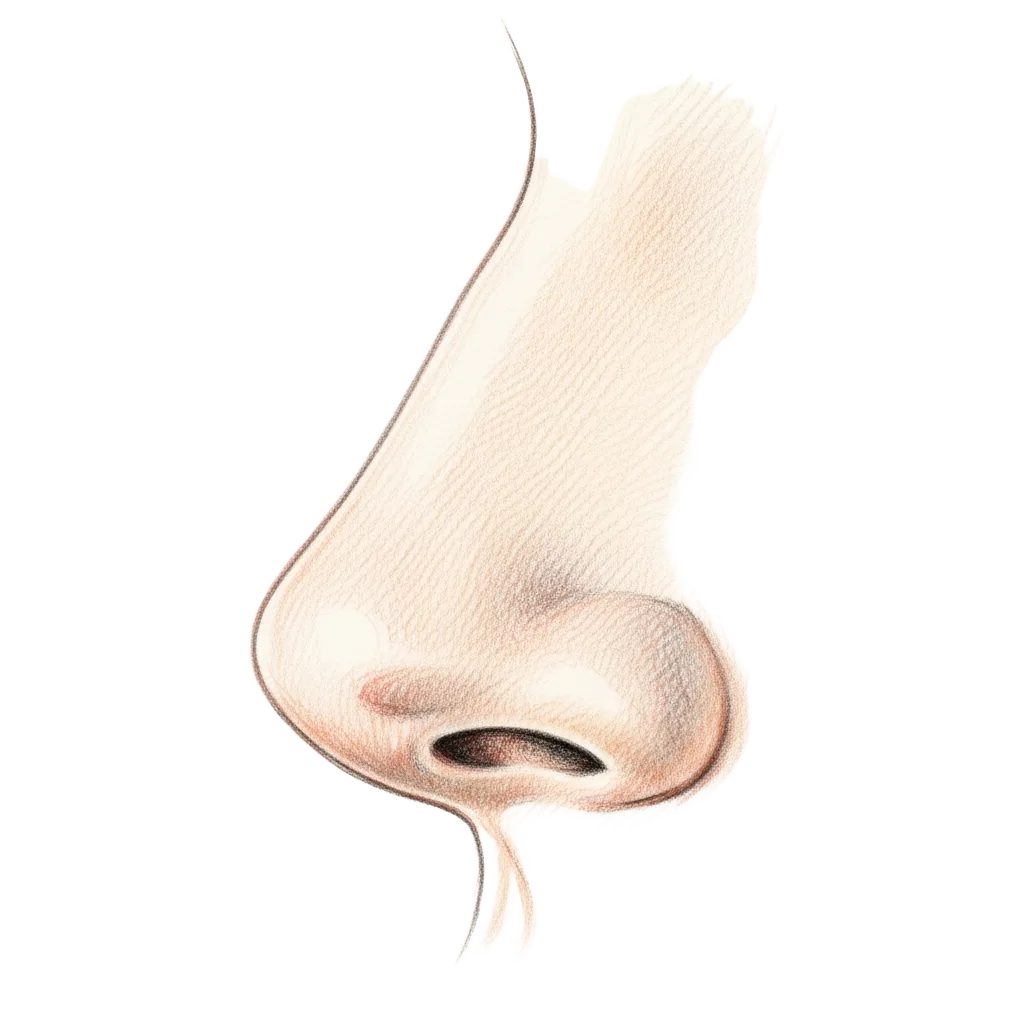
Closed
Within ~2 weeks
Performed under anesthesia within roughly two weeks of the injury, the displaced nasal bones are gently repositioned and a small external splint stabilises the result.
No external incisions are made. Swelling is the main short-term issue, and the long-term cosmetic and functional result is often good when the fracture pattern is favourable.
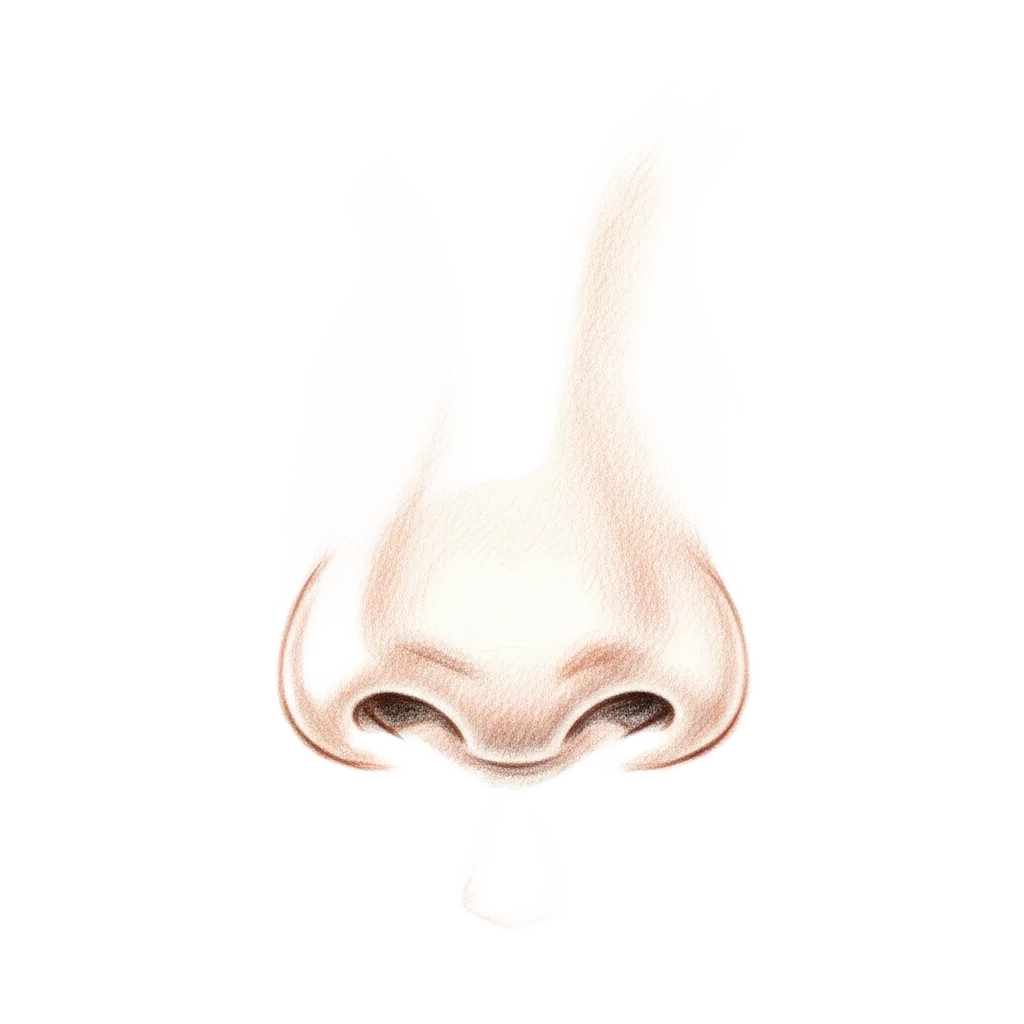
Open
Definitive Repair
When a fracture has healed in a deviated position, or when the septum and internal valve are significantly disrupted, open reduction is undertaken — essentially a septorhinoplasty designed around the trauma.
This allows the framework to be rebuilt with controlled osteotomies and cartilage grafts where needed, restoring both the airway and the external shape.
Illustrative diagrams. The right approach depends on the timing, the fracture pattern, and the functional impact.
01 · Why Dr. Mourad
A surgeon trusted by surgeons for this operation.
Dr. Moustafa Mourad is double board-certified by the American Board of Facial Plastic & Reconstructive Surgery and the American Board of Otolaryngology — Head & Neck Surgery, and serves as an AAFPRS Fellowship Director.
The practice concentrates on the operations of the face, nose, and sinuses — and on the patients other surgeons have found challenging.
Every consultation is unhurried, every plan is individual, and no operation is recommended unless it is the right one.
Begin the conversation
Suspect a nasal fracture? Earlier evaluation preserves more options.
Cost, Financing & Insurance
Broken Nose Repair Cost, Financing & Insurance in NYC
The cost of broken nose repair depends on the type and timing of the injury, whether closed reduction or more involved reconstruction is required, whether the nasal airway is affected, the type of anesthesia, and the surgical setting.
When broken nose repair restores nasal function or corrects an injury, it may be covered by insurance when medically necessary. Coverage often depends on documentation of the injury, examination findings, imaging, and the patient’s insurance plan. Procedures performed purely to change nasal appearance are generally considered cosmetic. Our office can help review benefits when appropriate.
What May Affect Cost
- Type and timing of injury
- Closed reduction vs reconstruction
- Whether the nasal airway is affected
- Type of anesthesia
- Functional vs cosmetic goals
- Insurance plan requirements
This information is educational and is not a guarantee of pricing, insurance coverage, reimbursement, financing approval, or surgical candidacy. A personalized estimate is provided after consultation. Insurance coverage depends on the patient’s plan, medical necessity, documentation, and carrier requirements. Financing terms are determined by third-party financing providers.
05 · In Dr. Mourad's Words
Educational videos.
Short educational films and patient perspectives from the Manhattan practice.
Dr. Mourad in Practice
An overview of the practice and philosophy.
Patient Perspective
A patient discusses her experience before, during, and after surgery.
Inside the Consultation
How Dr. Mourad evaluates anatomy, goals, and candidacy.
From the Patient Gallery
Broken Nose Repair Before and After
Documented nasal repairs from the Manhattan practice, photographed in standardized studio conditions with written photographic consent on file. Individual results vary with anatomy and the nature of the injury; these cases are representative, not predictive.
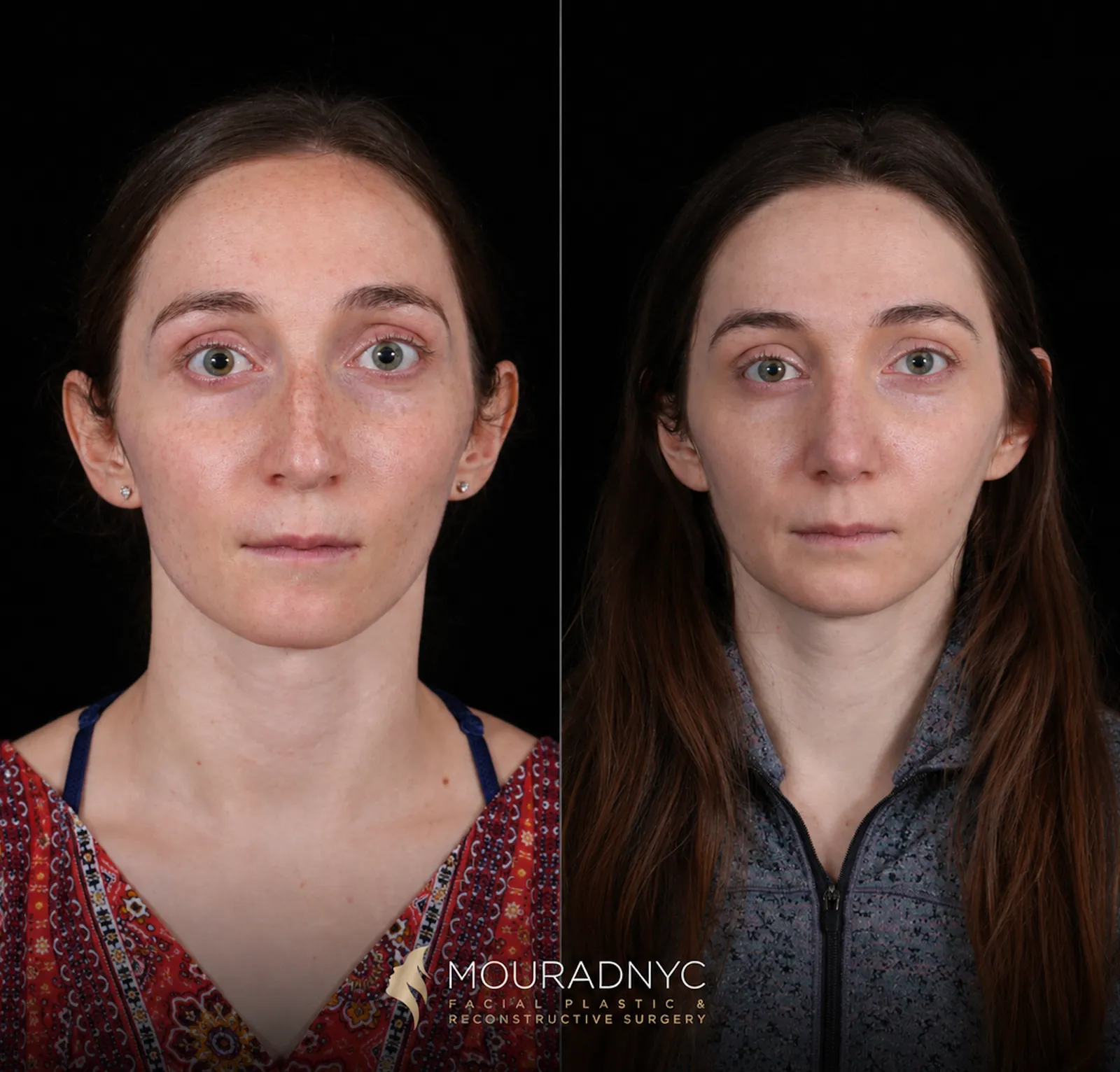
Primary Rhinoplasty + Broken Nose Repair · Female, 20s
Primary rhinoplasty for a female patient in her 20s that also addressed a nasal fracture (broken nose), refining the dorsal profile and nasal alignment after injury. Documented in frontal, oblique, and lateral views before and after surgery; photographed in standardized studio conditions with written consent on file. Results vary by patient; this case is representative, not predictive.
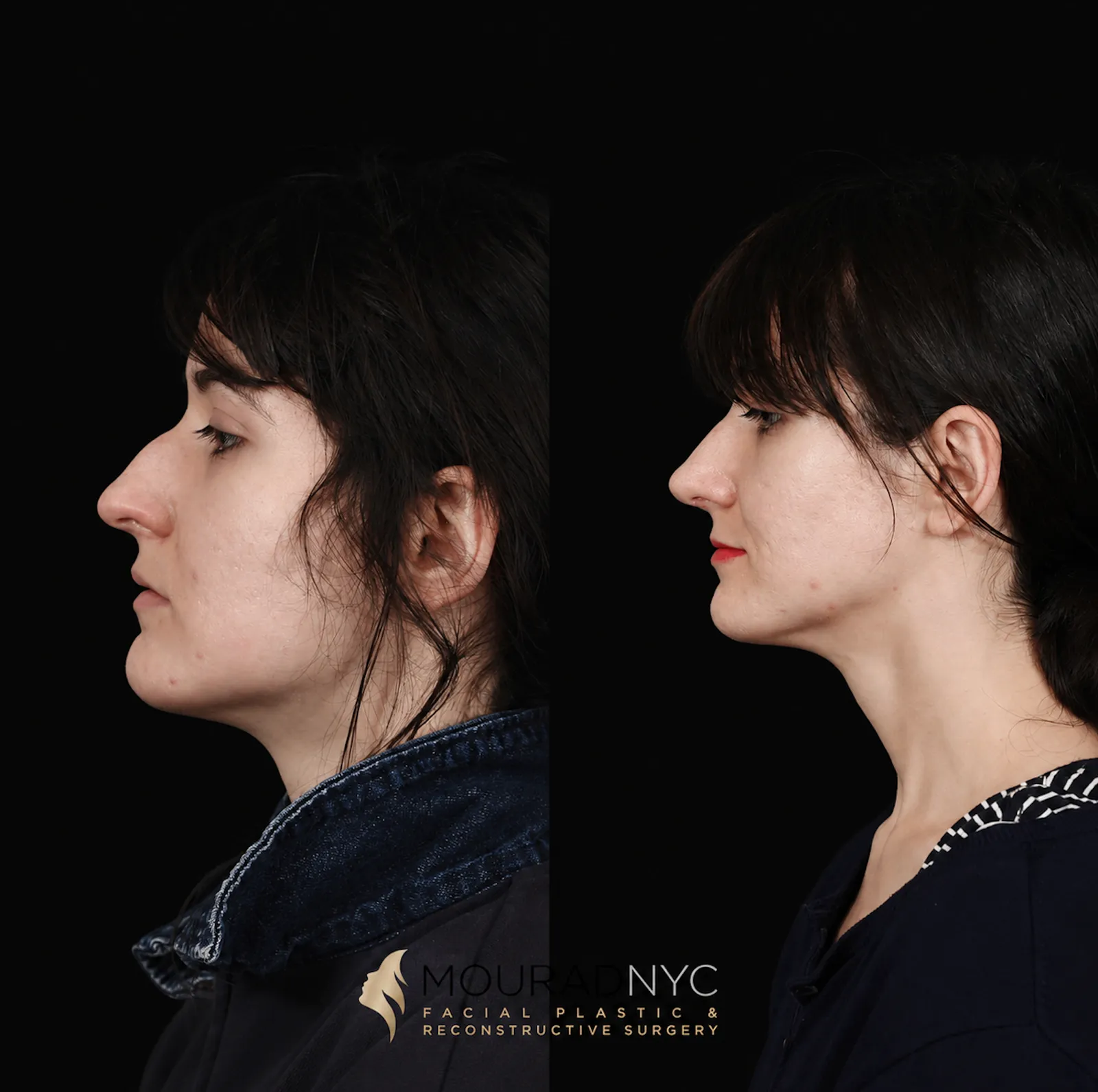
Pre and post-operative comparison · Photographed in standardized studio conditions · Written consent on file
06 · Recovery
What healing actually looks like.
Stage 01
First 24 Hours
After closed reduction, a small external splint stays in place for a week. Internal packing, if used, is minimal and well tolerated. Bruising peaks at day three.
Stage 02
Week 1
Through the first week, light activity is encouraged. Glasses are kept off the nasal bridge until cleared. Most patients return to office work within a few days.
Stage 03
Weeks 2 – 4
Through weeks two to four, swelling steadily resolves. The airway and the external shape become clearer. Contact sports remain deferred for several weeks.
Stage 04
Months 1 – 12
After open reduction, the recovery follows a full septorhinoplasty timeline — six to twelve months for final shape and full functional benefit.
Have a specific question?
Send a brief note describing your anatomy or concerns — the office will route it directly to Dr. Mourad for review.

Before You Arrive
Your consultation, prepared.
Bring photographs of your nose from before the injury if available.
Bring the records and imaging from the initial emergency evaluation.
Note the date and mechanism of injury accurately — timing affects the surgical plan.
List any prior nasal surgery or injuries.
Allow time for a complete external and internal nasal examination.
Do not be discouraged if your initial evaluation elsewhere recommended observation — second opinions are routine.
Patient Reviews
Broken Nose Repair Patient Experiences
Selected public patient reviews. Individual experiences vary.
“I can now say I can breathe better than I ever have”
Real patient experiences
Selected public reviews from patients of the practice.
Your privacy matters
We never share personal health information.
Board-certified expertise
Dual board-certified facial plastic and reconstructive surgeon.
Individual results vary. Reviews reflect individual experiences and are not a guarantee of outcome.
Frequently Asked
Patient questions, honestly answered.
Visible deformity, persistent nasal blockage, focal tenderness, or ongoing bleeding suggest a fracture rather than simple bruising. Swelling can hide displacement, so comparison photos and a hands‑on exam often clarify the situation. A septal exam is required to rule out a septal hematoma, which changes management. When findings are unclear, the clinician may recommend short‑interval recheck or targeted imaging.
Fresh displaced nasal fractures that need repositioning are often treated within 7–14 days while the bones remain mobile. Urgent assessment within 24–72 hours is needed to identify and drain septal hematomas. After two weeks, bones begin to heal in place and closed correction becomes less reliable. Timing is individualized based on swelling, fracture pattern, and airway symptoms.
Closed reduction repositions bones and cartilage without external incisions and is often possible for recent, mobile fractures. Open repair exposes fragments to allow precise realignment, fixation, or grafting when the fracture is comminuted or septal support is lost. Closed procedures are usually quicker with shorter recovery, but they are not appropriate when cartilage is missing or structural support is compromised. The surgeon chooses the approach after exam and, when indicated, imaging.
A septal hematoma is a collection of blood between the septal cartilage and its lining. It can compromise blood supply to the cartilage and cause permanent collapse if not drained. Signs include persistent nasal blockage, a soft fluctuant bulge inside the nose, worsening pain, or fever. Drainage is typically performed promptly in clinic or the OR to prevent cartilage loss and subsequent deformity.
CT is indicated for multi‑facial trauma, suspected orbital or skull‑base injury, or complex comminuted fractures. It is also helpful when clinical exam does not explain persistent obstruction or when planning delayed reconstructive surgery. Plain radiographs have limited value for isolated nasal bone fractures. Imaging decisions are tailored to the mechanism of injury and the physical findings.
After closed reduction expect splinting and office follow‑up at 1–2 weeks. Open structural repair usually involves 1–2 weeks of visible bruising and an external splint, with staged activity increases over 4–6 weeks. Contact sports and activities with facial impact are typically restricted for 6–8 weeks or longer, depending on healing. Final swelling and contour refinement can continue for 3–6 months.
Yes, revision after prior trauma is possible but often more complex due to scar tissue and altered cartilage. Reconstruction may require cartilage grafting, release of scar tethering, and more extensive structural support. Goals are realistic and prioritize improved function and symmetry rather than perfection. Revision planning commonly uses advanced imaging and longer operative time.
Coverage depends on whether the procedure is billed as medically necessary for trauma or functional airway repair versus cosmetic. Insurers typically request documentation such as ED notes, imaging, and a surgeon’s assessment showing functional impairment. Preauthorization and coding requirements vary by plan. The office can assist with records submission, but final coverage determinations are made by the insurer.
Clinical references
This page draws on published clinical practice guidelines and public-health references. These sources inform general patient education and do not replace an individual evaluation with Dr. Mourad.
- 01Ishii LE, et al. Clinical Practice Guideline: Improving Nasal Form and Function after Rhinoplasty. Otolaryngology–Head and Neck Surgery. 2017;156(2 suppl):S1–S30. AAO-HNSF guideline
- 02U.S. National Library of Medicine (MedlinePlus). Nose Injuries and Disorders. MedlinePlus
The Most Important Step
Your expert consultation.
A nasal trauma consultation evaluates the timing, the fracture pattern, the internal anatomy, and the cosmetic baseline — every factor matters when planning the right repair.