Double Board Certified · Periorbital Aesthetics
Blepharoplasty in NYC — refreshing the eyes without changing the gaze.
Eyelid surgery is one of the most delicate operations in facial plastic practice. Restraint is the defining virtue — small, anatomically-correct changes that refresh the eyes without altering the way a person looks.
ABFPRS
Facial Plastic & Reconstructive Surgery
ABOto
Otolaryngology — Head & Neck Surgery
AAFPRS
Fellowship Director
In Consultation
"The eyes are how others read our energy. A well-done blepharoplasty makes a person look rested — not different."

A Note from Dr. Mourad
"Eyelid surgery is one of the most delicate operations in facial plastic practice. Restraint is the defining virtue — small, anatomically-correct changes that refresh the eyes without altering the way a person looks."
— Dr. Moustafa Mourad, MD
Key takeaways
- Blepharoplasty addresses excess skin, herniated fat, and lax muscle of the upper and/or lower eyelids.
- Upper blepharoplasty removes hooding skin; lower blepharoplasty treats bags, hollows, and looseness.
- Modern lower-lid surgery often repositions fat rather than removing it, avoiding a hollowed under-eye.
- Eyelid surgery is usually cosmetic, though upper-lid surgery for skin that obstructs the visual field may be eligible for insurance.
- The aim is a rested, natural appearance — not a wide-eyed or hollowed look.
Overview
What is blepharoplasty?
Blepharoplasty — eyelid surgery — is a procedure that addresses redundant skin, herniated fat, and lax muscle of the upper and/or lower eyelids. Upper blepharoplasty removes excess upper-lid skin that hoods the eye; lower blepharoplasty addresses bags, hollows, and looseness of the lower lid.
Patients consider blepharoplasty when the eyes look tired, heavy, or older than they feel — when upper-lid hooding obscures the natural lid crease or sits on the lashes, or when lower-lid bags or fine crepey skin draw attention even when rested. The aim is a rested, natural appearance, not a wide-eyed or hollowed look.
Modern lower blepharoplasty often involves repositioning fat rather than simply removing it, to avoid the hollowed under-eye that can result from over-resection. Technique is matched to the anatomy — skin only, skin and muscle, transconjunctival, fat repositioning, or a combination.
An Established Academic Authority
Double board certification. Fellowship director. Published author. A surgeon's surgeon.
ABFPRS
Board Certified
American Board of Facial Plastic & Reconstructive Surgery
ABOto
Board Certified
American Board of Otolaryngology — Head & Neck Surgery
AAFPRS
Fellowship Director
American Academy of Facial Plastic and Reconstructive Surgery
Textbook
Published Author
Contributions to the academic literature of facial plastic surgery
Dual board certification in both Facial Plastic & Reconstructive Surgery and Otolaryngology — Head & Neck Surgery.
02 · Ideal Candidates
Who benefits most from this operation.
Candidacy is determined together at consultation. The most satisfied patients share three things in common.
I
Upper Lid Hooding
Excess upper-eyelid skin that touches or rests on the lashes, creates a heavy upper-face appearance, or interferes with peripheral vision.
II
Lower Lid Bags or Hollows
Lower-lid fat pseudoherniation (bags), tear-trough hollowing, or both — often requiring transposition of fat rather than removal.
III
Healthy & Realistic
Patients in good general health with realistic expectations about the subtle, refreshing nature of the change.
If this describes you, the next step is a quiet, unhurried conversation — not a sales call.
An Honest Note
When this operation may not be right for you.
Patients with significant brow descent may need brow lift first, or in combination — addressing only the upper lid in those patients rarely satisfies.
Active dry eye disease or significant ocular surface disorders require ophthalmologic optimisation before elective lid surgery.
Smokers face elevated risk of impaired healing and require a planned nicotine-free window.
Patients with thyroid eye disease or other periorbital pathology are managed in coordination with their treating physician.
03 · Approaches
The full range of options.
Blepharoplasty is rarely a single technique. The right plan combines upper and lower lid work, lid support, and — when proportions warrant — companion procedures to balance the upper face.
1 of 6 · Upper Blepharoplasty
04 · Technique
Structural vs reductive approaches.
Modern blepharoplasty is structural — preserving and repositioning anatomy whenever possible, removing only what is genuinely in excess.
Structural
Preserve & Reposition
On the lower lid in particular, fat is often repositioned over the orbital rim to fill the tear trough rather than excised. The shape of the lid is preserved and the under-eye contour is restored.
Conservative skin excision and gentle canthal support maintain the original eye shape — never opening it up or pulling it tight.
Reductive
Targeted Excision
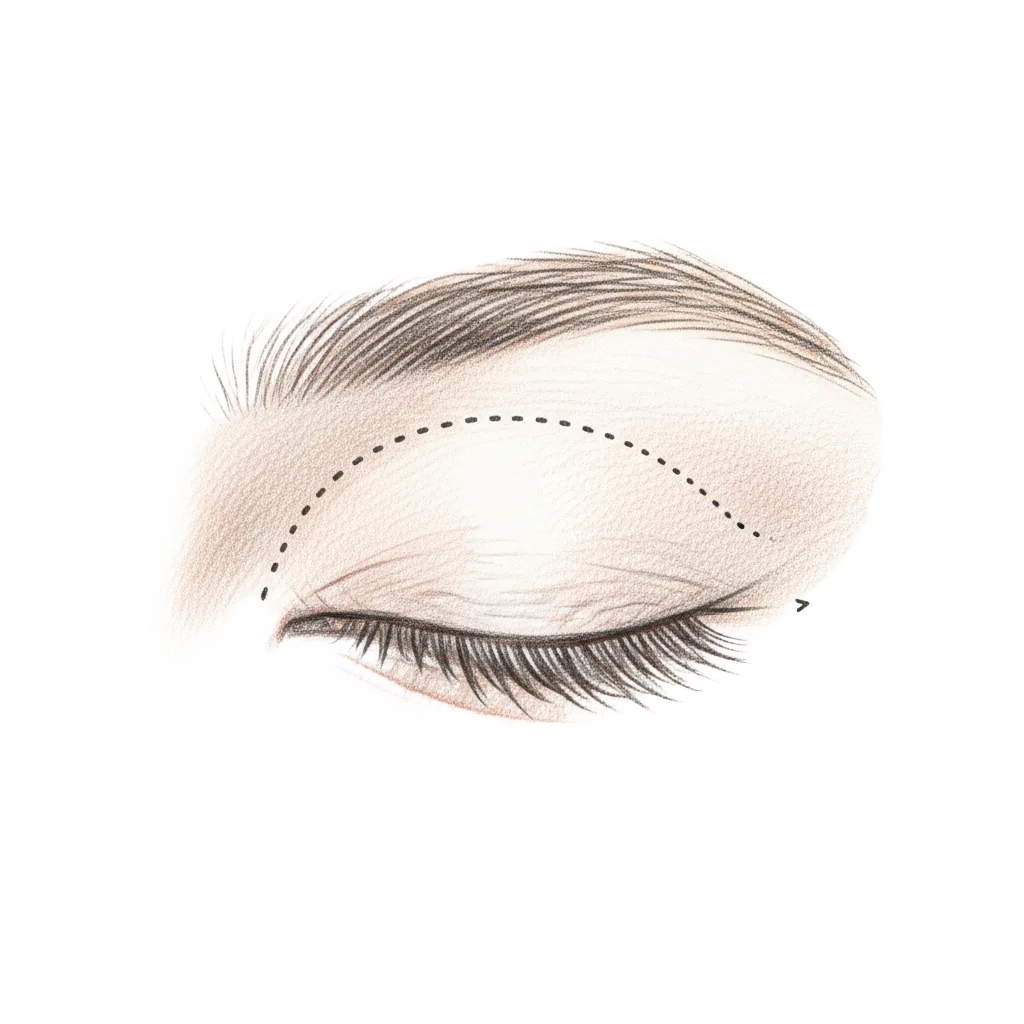
On the upper lid, the appropriate operation is usually a conservative excision of redundant skin through a hidden lid-crease incision. Muscle and fat are touched only where genuinely indicated.
Reductive technique done with restraint produces a clean, refreshed upper lid without any visible operative signature.
Illustrative diagrams. The right balance is patient-specific; restraint is the defining principle.
01 · Why Dr. Mourad
A surgeon trusted by surgeons for this operation.
Dr. Moustafa Mourad is double board-certified by the American Board of Facial Plastic & Reconstructive Surgery and the American Board of Otolaryngology — Head & Neck Surgery, and serves as an AAFPRS Fellowship Director.
The practice concentrates on the operations of the face, nose, and sinuses — and on the patients other surgeons have found challenging.
Every consultation is unhurried, every plan is individual, and no operation is recommended unless it is the right one.
Begin the conversation
Refresh the eyes — never change the gaze.
Cost, Financing & Insurance
Eyelid Surgery Cost, Financing & Insurance in NYC
Blepharoplasty cost depends on whether the upper eyelids, lower eyelids, or both are treated, the techniques required, the type of anesthesia, and the surgical setting. Each plan is individualized after an eyelid and periorbital evaluation.
Eyelid surgery is generally considered cosmetic and is typically self-pay. In some cases, upper eyelid surgery to address excess skin that obstructs the visual field may be eligible for insurance coverage when medically necessary and supported by appropriate testing. After consultation, our office provides a personalized estimate, and financing may be available for qualified patients.
What May Affect Cost
- Whether upper, lower, or both eyelids are treated
- Techniques required
- Functional vs cosmetic goals
- Type of anesthesia
- Surgical setting
- Insurance plan requirements
This information is educational and is not a guarantee of pricing, insurance coverage, reimbursement, financing approval, or surgical candidacy. A personalized estimate is provided after consultation. Insurance coverage depends on the patient’s plan, medical necessity, documentation, and carrier requirements. Financing terms are determined by third-party financing providers.
Before & After
Eyelid Surgery (Blepharoplasty) Before and After
Documented eyelid surgery (blepharoplasty) results from the Manhattan practice — including a focused blepharoplasty case and a combined facelift, neck lift, and eyelid surgery case — photographed in standardized studio conditions with written consent on file. Individual results vary with anatomy and goals.
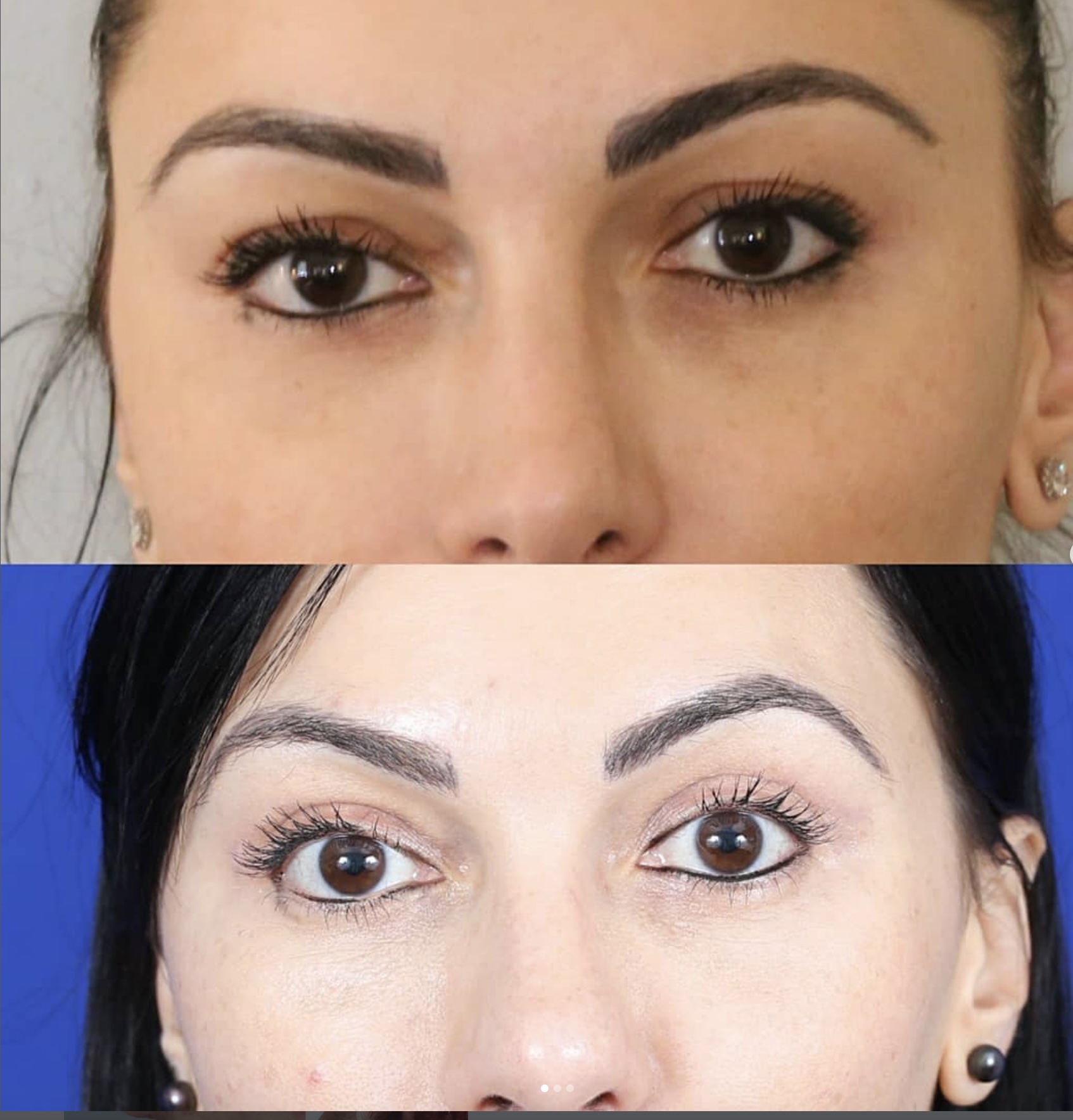
Blepharoplasty · Female, 30s
Eyelid surgery (blepharoplasty) for a female patient in her 30s to refresh the appearance of the eyes, addressing periorbital fullness while preserving a natural look. Documented in a frontal view before and after surgery; photographed with written consent on file. Results vary by patient; this case is representative, not predictive.
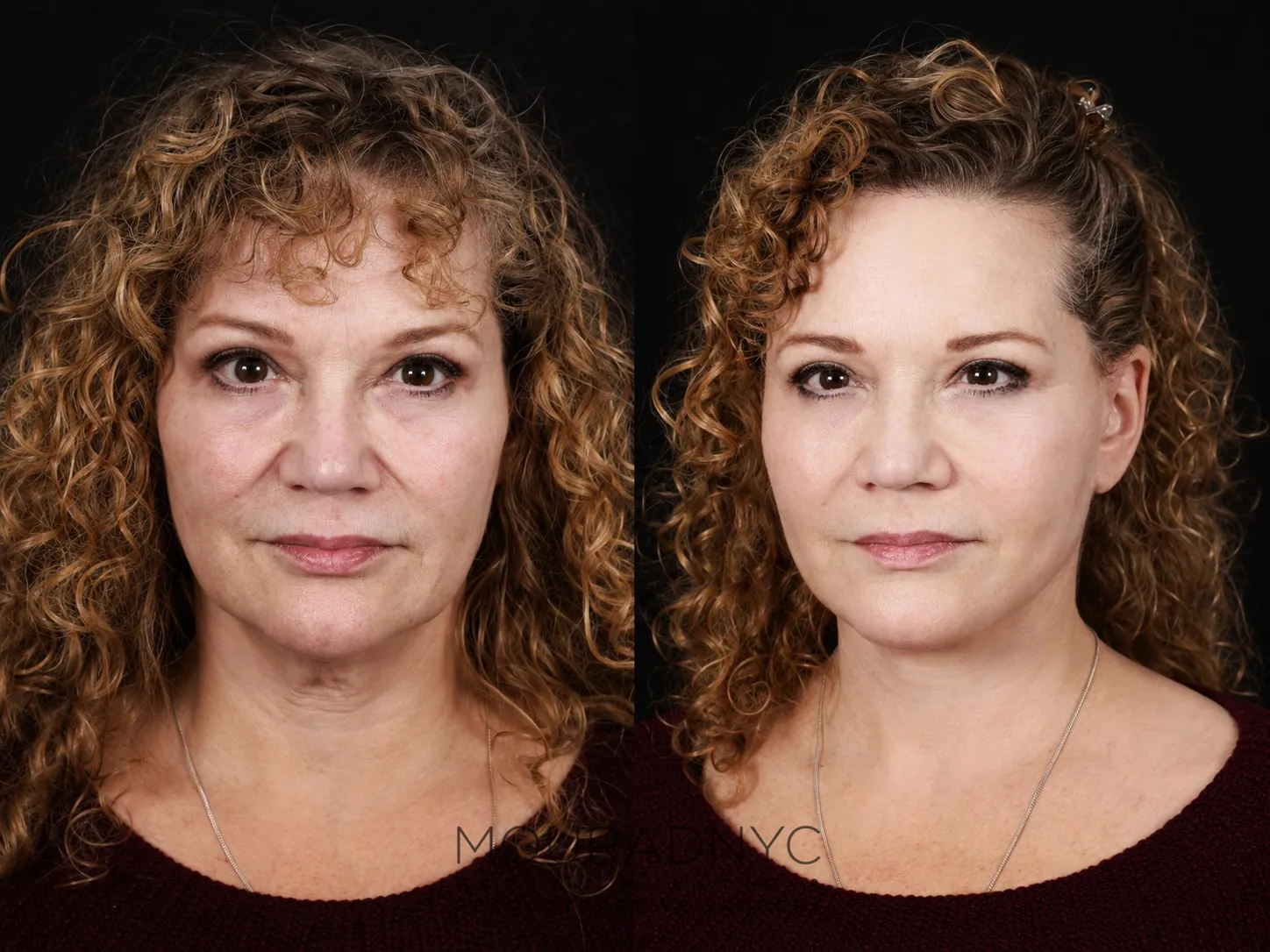
Facelift + Neck Lift + Blepharoplasty · Female, 50s
Facelift combined with a neck lift and blepharoplasty for a female patient in her 50s to address midface and jawline laxity along with periorbital aging. Documented in frontal and oblique views before and after surgery; photographed in standardized studio conditions with written consent on file.
Pre and post-operative comparison · Photographed in standardized studio conditions · Written consent on file
06 · Recovery
What healing actually looks like.
Stage 01
First 24 Hours
Cold compresses and head elevation through the first 24 hours. Discomfort is generally mild and well managed with non-narcotic medications.
Stage 02
Week 1
Through the first week, bruising and swelling steadily resolve. Sutures from upper-lid incisions are typically removed at five to seven days.
Stage 03
Weeks 2 – 4
Through weeks two to four, residual swelling fades and the refreshed appearance becomes clear. Light makeup is permitted as the incisions mature.
Stage 04
Months 1 – 12
Final result is appreciated through three to six months as the scars settle and the soft tissues fully adapt.
Have a specific question?
Send a brief note describing your anatomy or concerns — the office will route it directly to Dr. Mourad for review.

Before You Arrive
Your consultation, prepared.
Bring photographs of yourself from your 20s and 30s if available.
List any history of dry eye, prior eyelid surgery, or LASIK.
Note current medications, eye drops, and supplements.
Be prepared to discuss whether brow lift should be considered concurrently.
Allow 45 minutes for a focused periorbital and ocular examination.
Bring questions about scarring, downtime, and what to expect.
In Their Words
From patients of the practice.
My upper eyelids had started making me look exhausted even when I felt fine. After the procedure, my eyes look lighter and more awake. People notice something is different, but they can't tell what.
I had extra skin on my lids that made eyeliner almost impossible. Now my eyes look open again, and the scars healed beautifully. I wish I had done it sooner.
The improvement is subtle but really meaningful. I don't look like I had surgery; I just look less worn out. That was exactly the goal.
I traveled in for eyelid surgery because I wanted a careful, conservative result. My eyes still look like my eyes, just cleaner and more refreshed.
Individual experiences. Results and recovery vary by patient. Testimonials shared with written consent.
Frequently Asked
Patient questions, honestly answered.
Upper blepharoplasty addresses redundant eyelid skin and hooding that may obscure the fold or visual field. Lower blepharoplasty treats fat prominence, skin laxity, and orbicularis weakening beneath the eye. Many patients need only one level treated; others benefit from combined upper and lower work for balanced results. A focused clinical exam and photographic analysis determine the proper combination and sequencing.
Good candidacy depends on the anatomic driver of your complaint: skin excess, levator dysfunction (ptosis), or brow descent produce similar appearance changes but require different operations. Formal ptosis testing, brow position assessment, and evaluation of eyelid margin height are performed in clinic. If ptosis or brow descent contributes, those issues are treated first or in combination with blepharoplasty. A consultation is required to determine the correct diagnosis and surgical plan.
The transconjunctival approach accesses fat through the inner lid and leaves no external skin scar; it is best for patients with good skin tone and isolated fat prolapse. The subciliary (external) incision allows skin excision, direct orbicularis tightening, and more extensive resurfacing but produces a fine external scar placed just below the lash line. Choice depends on skin quality, laxity, and whether fat repositioning or skin tightening is required. Dr. Mourad selects the approach that balances preservation and structural support for each eyelid.
Most patients have maximal swelling and bruising during the first 3–7 days, with substantial improvement by 10–14 days. Many return to desk work in 7–10 days, while more strenuous activity is typically resumed at 3–4 weeks. Subtle swelling and contour refinement continue for 3–6 months, and final softening can take 6–12 months in some cases. Individual healing varies and depends on procedure extent and whether adjunctive skin resurfacing was performed.
Preoperative ocular surface assessment is essential because eyelid surgery can transiently worsen dry eye symptoms. Patients with significant dry eye or incomplete eyelid closure may need medical optimization before surgery or an altered surgical plan. Temporary irritation and lagophthalmos are uncommon but monitored closely; permanent closure problems are rare when eyelid support is preserved and canthopexy is used when indicated. Dr. Mourad coordinates care with an ophthalmologist when necessary.
Revision cases require detailed review of prior operative notes, incision placement, and pre‑ and postoperative photographs to inventory what was altered. Scar tissue, altered fat compartments, and weakened support structures increase technical complexity and lengthen operative planning. Revision strategies often emphasize structural support and conservative volume restoration rather than repeat excision. Timing is individualized; waiting 6–12 months after prior surgery is common to allow tissues to settle before revision.
Blepharoplasty is frequently combined with brow lifting or lower facial procedures when harmonic rejuvenation is desired. Brow position affects upper‑lid hooding; unrepaired brow descent can undermine an upper blepharoplasty. Combining procedures is decided after an anatomy‑first evaluation and discussion of risk, recovery, and goals. When combined, operative sequencing and support maneuvers are planned to minimize malposition and optimize long‑term stability.
Upper‑lid incisions are concealed within the natural eyelid crease and typically mature to a thin line. Lower‑lid subciliary incisions are placed just beneath the lashes and are designed to be unobtrusive; transconjunctival access leaves no external scar. Scar visibility depends on skin type, incision care, and individual healing. Dr. Mourad prioritizes incision placement and preservation techniques to minimize noticeable scarring.
Blepharoplasty produces a durable structural change to the eyelid and periorbital soft tissues, but intrinsic aging continues in skin and support tissues. Many patients appreciate sustained improvement for years; however, factors such as skin elasticity, sun exposure, and intrinsic aging influence longevity. Revision or adjunctive procedures may be appropriate decades later depending on changes and patient goals. During consultation, Dr. Mourad discusses realistic expectations for durability based on your anatomy.
Dr. Mourad evaluates eyelid crease height, canthal tilt, tarsal platform, and the relationship of the lid to the globe with attention to ethnic and individual variation. The plan preserves defining cultural and individual features while addressing structural concerns. Incision placement, fat handling, and support procedures are tailored to maintain natural anatomy. Photographic analysis and staged discussion ensure that functional and aesthetic priorities are aligned before surgery.
Explore Further
Related procedures & resources
Eyelid surgery is often considered alongside the brow and the wider face. These pages explain how the procedures relate.
Brow Lift
When upper-eyelid heaviness is driven by a descended brow, a brow lift may be the more appropriate step.
Read moreFacelift
For combined upper-face and lower-face rejuvenation.
Read moreBefore & After Gallery
Representative eyelid surgery cases, photographed with written consent on file.
Read morePatient Reviews
Read experiences from patients of the practice.
Read moreRequest a Consultation
Begin with an unhurried clinical evaluation.
Read moreThe Most Important Step
Your expert consultation.
A blepharoplasty consultation is a careful periorbital examination — evaluating skin, muscle, fat, lid position, brow position, and the ocular surface before any operation is recommended.