Dual Board-Certified · AAFPRS Fellowship Director · Modern Luxury Best of Manhattan 2026 · Castle Connolly Top Doctor
Rhinoplasty NYC — Recognized by Modern Luxury for Best Rhinoplasty
Dr. Moustafa Mourad performs primary rhinoplasty, revision rhinoplasty, preservation rhinoplasty, male rhinoplasty, ethnic rhinoplasty, and functional septorhinoplasty at 923 Fifth Avenue in Manhattan. Each plan begins with the patient's goals, a facial and nasal-airway examination, standardized photography, and a decision about what should be refined, reinforced, or left alone. The aim is a result that fits the face, preserves identity, supports breathing, and remains structurally stable as healing progresses. Read our guide on how to choose a rhinoplasty surgeon before scheduling.
ABFPRS
Facial Plastic & Reconstructive Surgery
ABOto
Otolaryngology — Head & Neck Surgery
AAFPRS
Fellowship Director

In Consultation
"The goal is enhancement, not transformation."
Before & After
Rhinoplasty results from the practice.

Rhinoplasty · 20s · Female
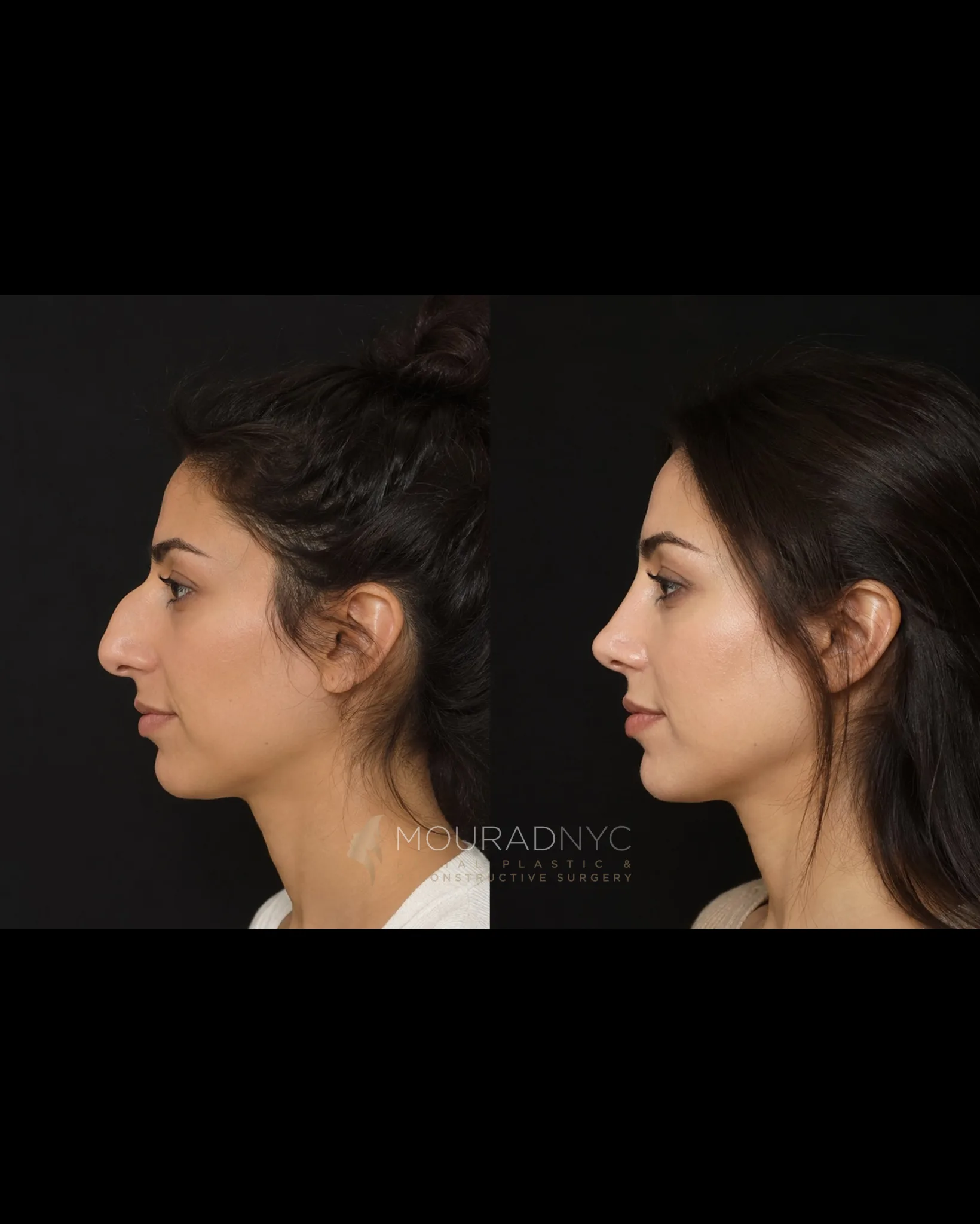
Rhinoplasty · 20s · Female
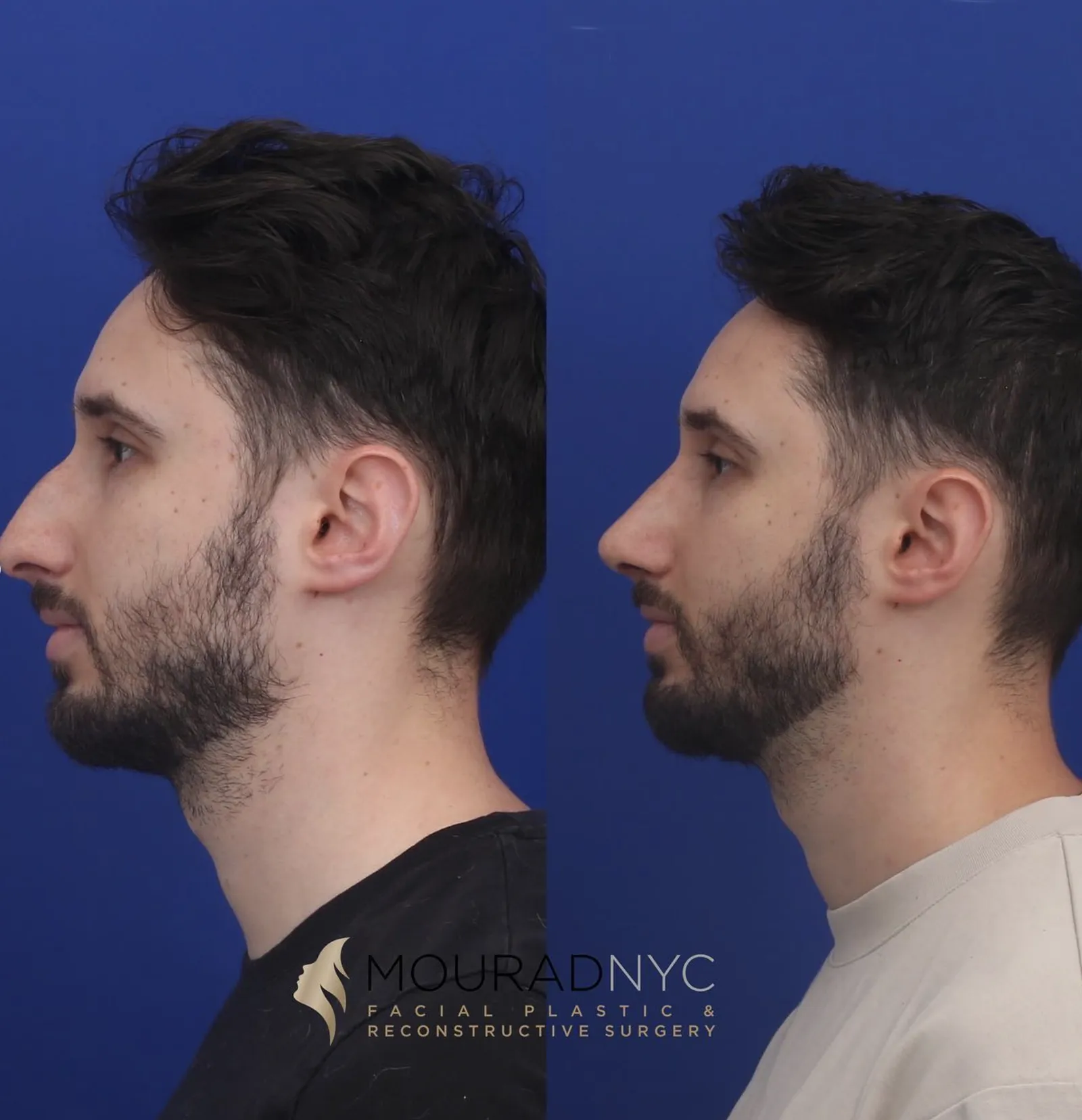
Rhinoplasty · 20s · Male
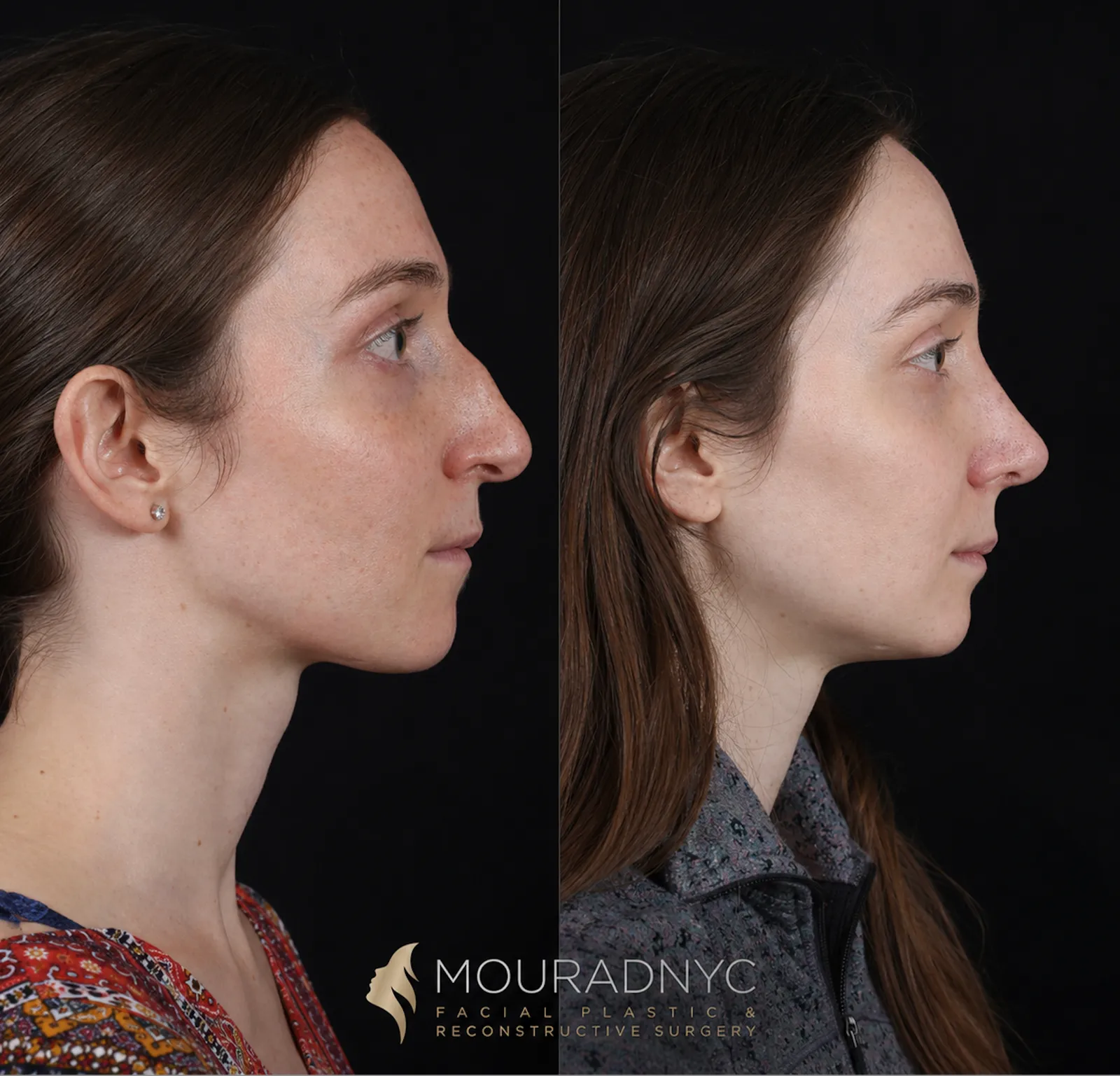
Rhinoplasty + Broken Nose Repair · 20s · Female
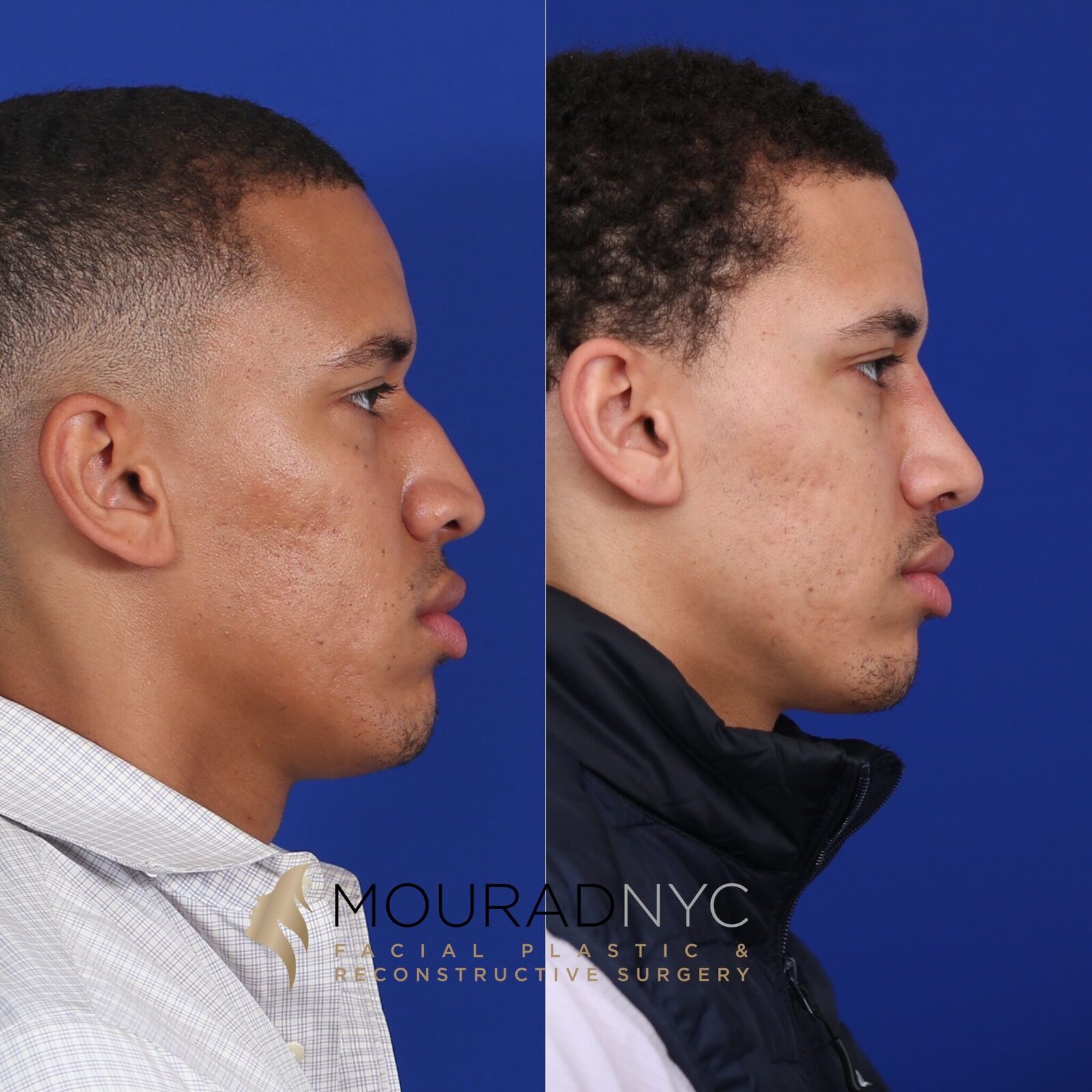
Ethnic Rhinoplasty · 30s · Male
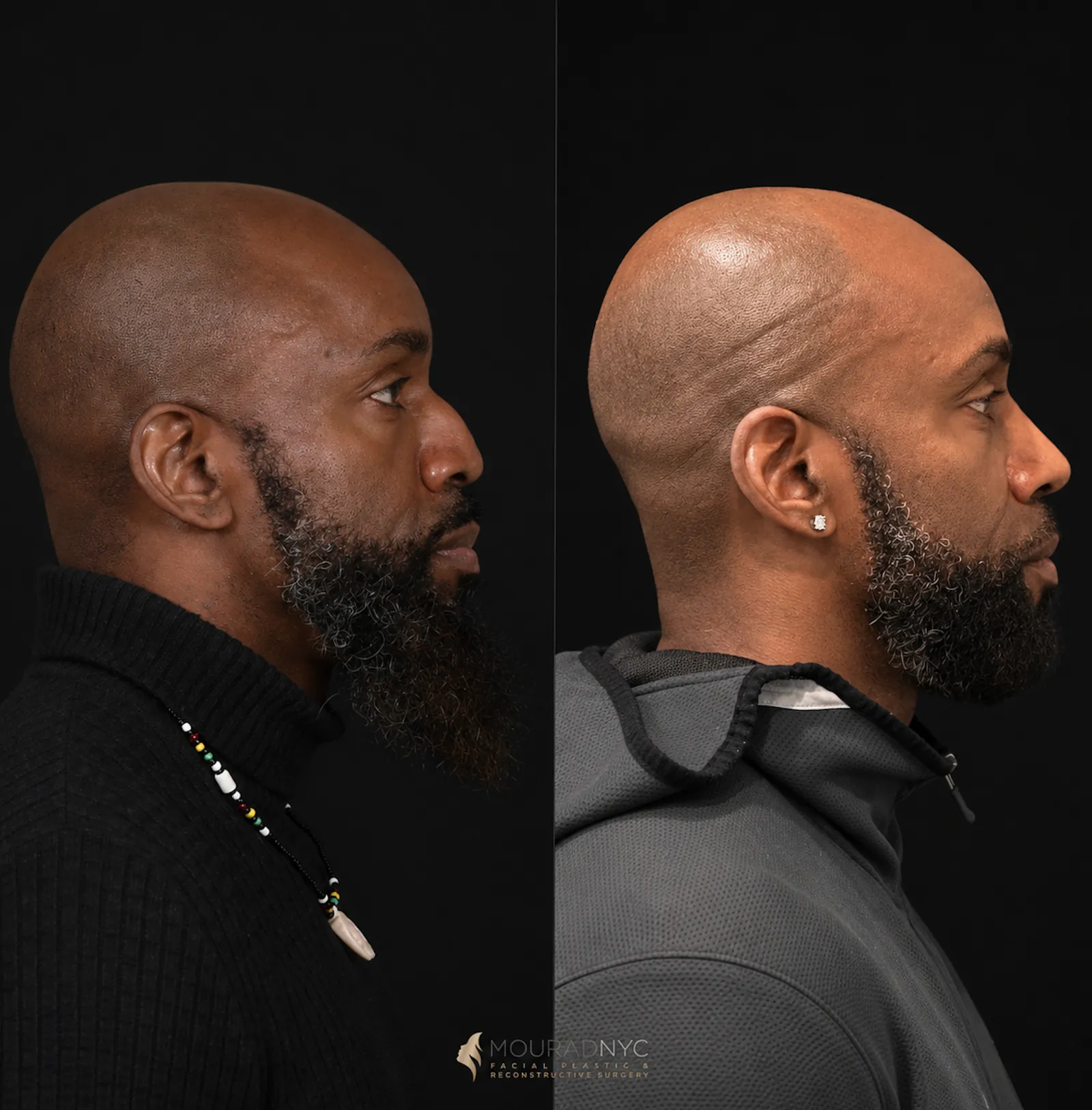
Ethnic Rhinoplasty · 40s · Male
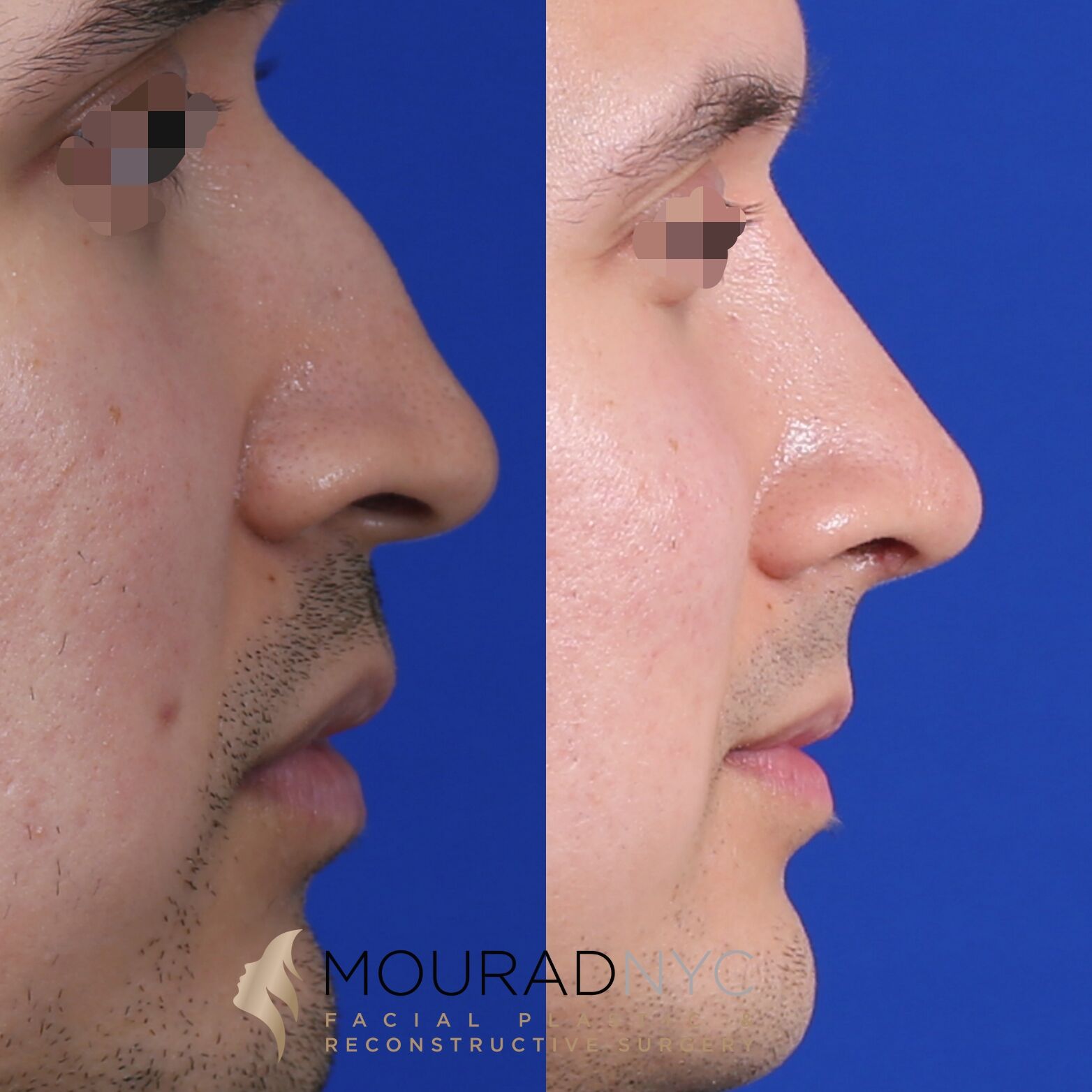
Revision Rhinoplasty · 30s · Male
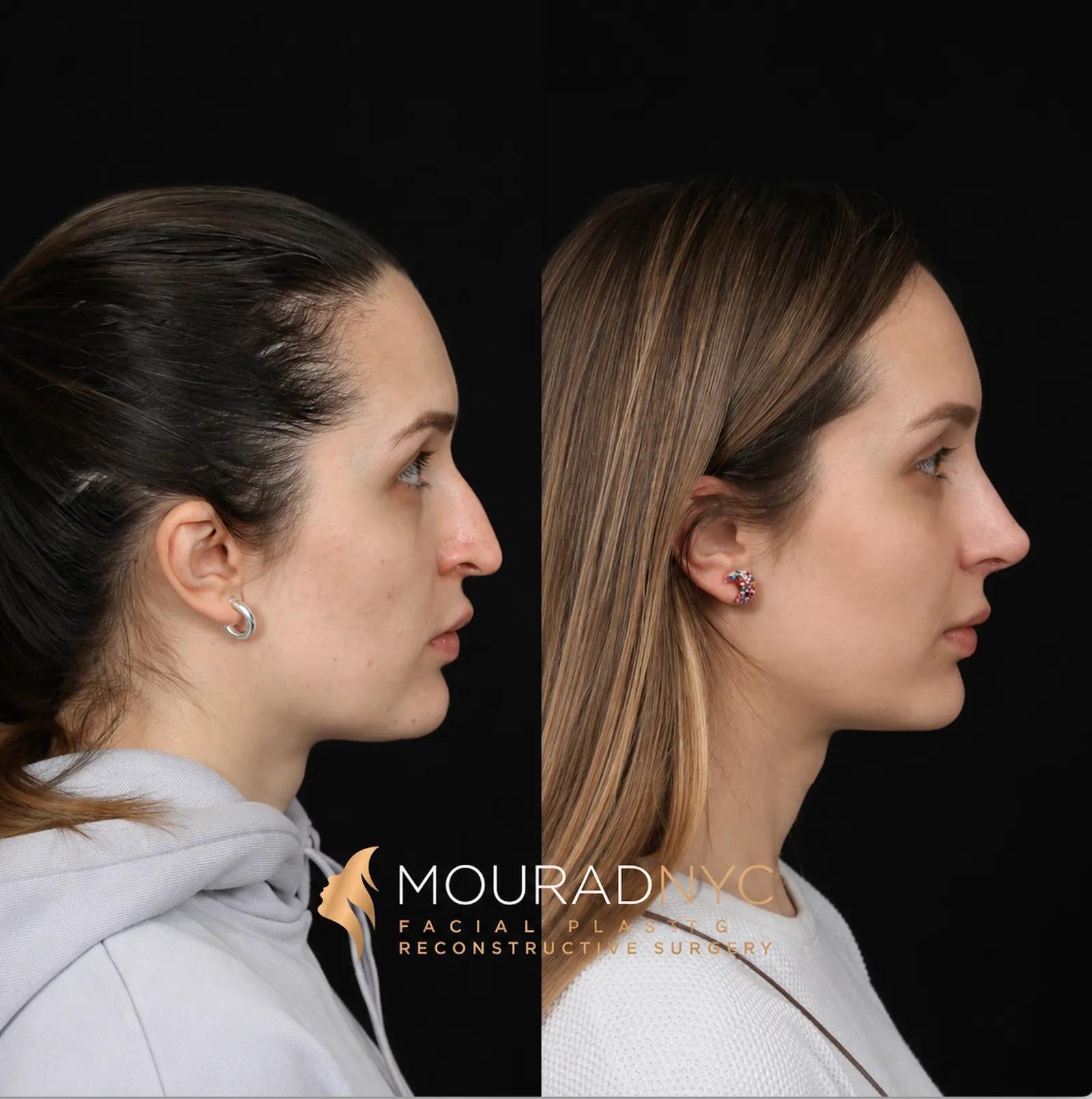
Revision Rhinoplasty · 30s · Female
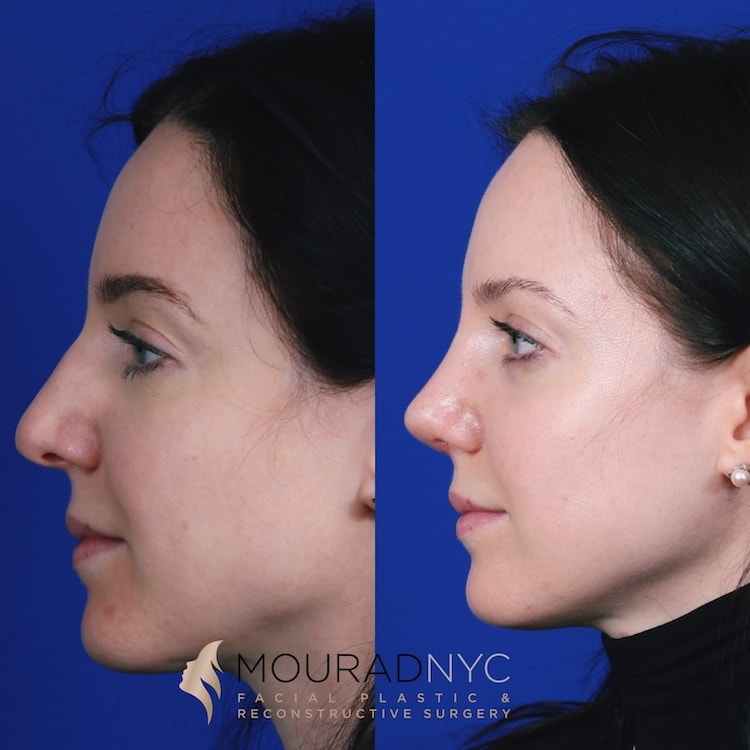
Rhinoplasty · 20s · Female
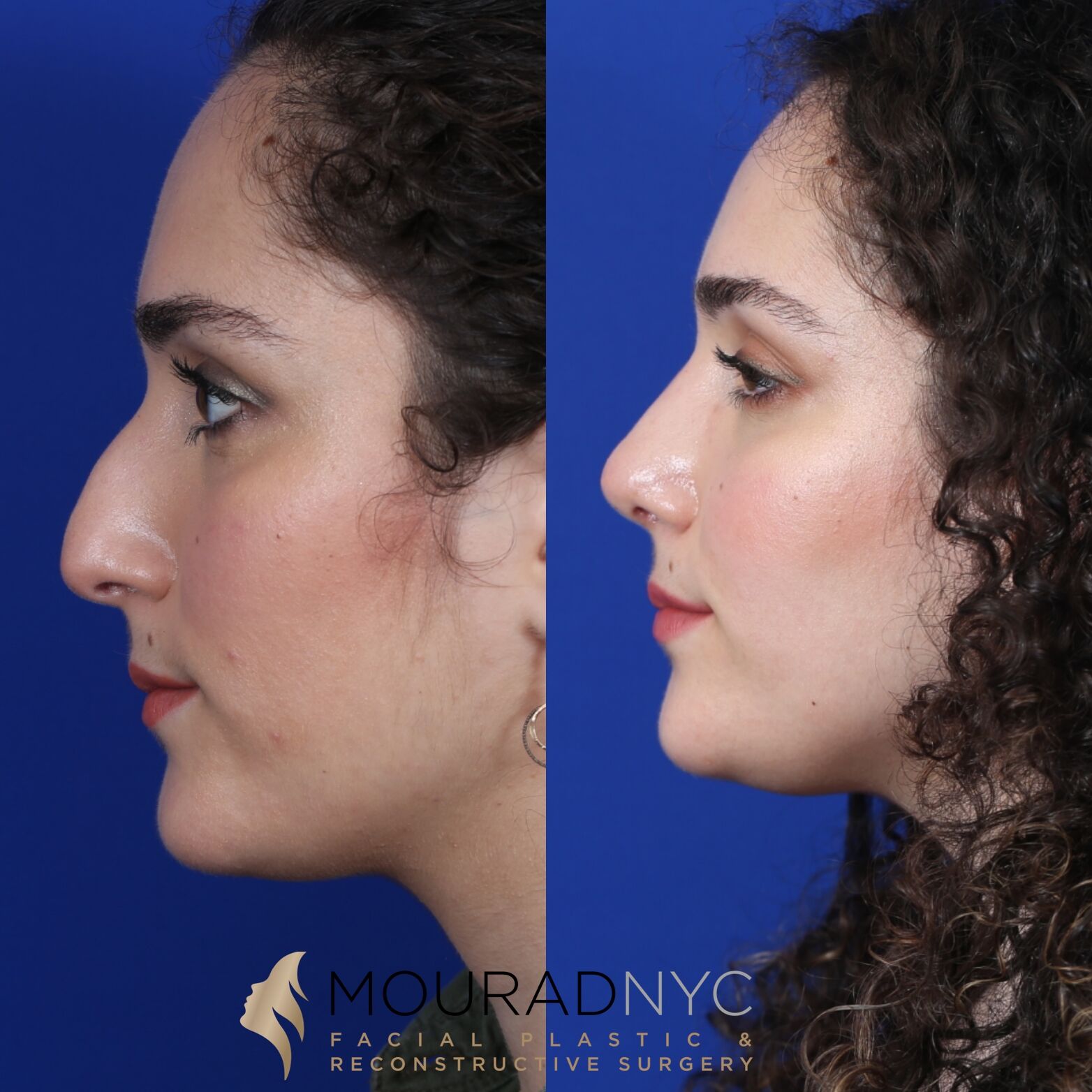
Rhinoplasty + Sinus Surgery · 20s · Female
Pre and post-operative comparison · Photographed in standardized studio conditions · Written consent on file · Individual results vary
These documented cases represent different starting anatomies, goals, sexes, skin envelopes, prior-surgery histories, and functional needs. They are included to show the range of planning—not one preferred nose shape. Every case was photographed with written consent; individual results vary, and no case predicts another patient's outcome.
Reading the Evidence
How to evaluate rhinoplasty before-and-after photographs
Rhinoplasty photographs are most useful when lighting, camera distance, head position, and facial expression are consistent. Review the front, profile, three-quarter, and base views rather than relying on one flattering angle.
The follow-up interval also matters. A photograph taken several weeks after surgery may show considerable swelling, especially in the tip. Primary rhinoplasty commonly continues to refine for a year, while revision surgery and thicker or less mobile skin may take longer.
When comparing cases, look for patients whose starting concerns resemble yours, but do not expect the same operation or result. Skin thickness, cartilage strength, prior surgery, facial proportions, healing, and personal goals all influence what is possible.

A Note from Dr. Mourad
"In Manhattan, I meet patients filled with apprehension about rhinoplasty. The most common concern — will I look unnatural? What I tell them is simple: preserving your identity is as essential as the refinement itself."
— Dr. Moustafa Mourad, MD, FACS
Rhinoplasty at a glance
- What it changes
- The bridge, tip, nostrils, projection, rotation, symmetry, support, and — when indicated — the internal nasal airway.
- Who it may help
- Patients seeking first-time cosmetic refinement, combined breathing and appearance surgery, post-traumatic correction, or revision reconstruction.
- Approach
- Open, endonasal, structural, preservation, or hybrid planning depending on anatomy — not a one-technique-fits-all operation.
- Anesthesia
- Usually general anesthesia in an accredited surgical setting; individualized at consultation.
- Early recovery
- A splint is commonly worn for approximately one week. Most patients plan about 10–14 days before public-facing work or important social events.
- Final refinement
- Major swelling improves early, but tip definition and scar maturation continue for many months.
- Location
- 923 Fifth Avenue, Suite 1A, New York, NY 10021.
Overview
What is rhinoplasty?
Patients seeking rhinoplasty in NYC often want more than a smaller or straighter nose — they want a result that looks natural, fits their face, and does not compromise breathing. Dr. Mourad evaluates the nose as both an aesthetic and a functional structure, assessing the bridge, tip, septum, nasal valves, skin thickness, prior surgery, and airway before recommending a surgical plan.
Rhinoplasty is surgery of the nose performed to refine its external appearance, improve its function, or both. Through carefully planned incisions — typically a small bridging incision on the columella combined with internal incisions, or internal incisions alone — the underlying bone and cartilage are reshaped, and the soft-tissue envelope is allowed to redrape over the new framework.
It is considered when a patient has a dorsal hump, a wide or off-center bridge, a bulbous, droopy, or asymmetric tip, an over- or under-projected nose, a post-traumatic deformity, breathing difficulty from a deviated septum or narrow nasal valves, or an unsatisfactory result from prior surgery. Aesthetic and functional goals are evaluated together, not as separate operations. For a recent nasal fracture, timing changes the plan — see broken nose repair options.
Modern rhinoplasty is a structural operation. Native cartilage is preserved and reinforced rather than aggressively reduced; when additional support is needed, cartilage grafts — septal, auricular, or costal — provide a durable framework. The goal is a natural-looking nose that fits the patient's face and breathes as well as it looks.
Meet Dr. Mourad
A rhinoplasty surgeon in NYC focused on natural structure, breathing, and long-term support.
Dr. Moustafa Mourad is a dual board-certified Facial Plastic and Reconstructive Surgeon and Otolaryngologist–Head and Neck Surgeon who serves as a Clinical Assistant Professor of Otolaryngology at New York Medical College. His clinical practice and teaching draw on facial anatomy, nasal function, reconstruction, and rhinoplasty because the nose is both an aesthetic feature and a breathing organ.
His approach is not to create the same nose on every patient, but to study each person’s bridge, tip, septum, nasal valves, skin thickness, facial proportions, ethnicity, prior trauma, and breathing pattern before recommending a plan. When a patient wants a cosmetic change, he evaluates whether that change can be achieved while preserving structural support. When breathing is involved, he plans septoplasty, turbinate reduction, or nasal valve support only when the anatomy indicates it.
His rhinoplasty philosophy is straightforward: the result should look like the patient, not like surgery. Refinement should be visible in facial balance, profile harmony, nasal tip definition, and airway stability — not in an over-reduced, pinched, or generic nose. Consultations are deliberately educational, so patients are shown what can realistically be changed, what should be preserved, and where the anatomy sets limits.
- Dual board-certified in Facial Plastic & Reconstructive Surgery and Otolaryngology–Head & Neck Surgery
- Clinical Assistant Professor of Otolaryngology at New York Medical College
- Practice focused on facial plastic, reconstructive, nasal airway, and sinus surgery
- Teaches fellowship-trained facial plastic surgeons through the AAFPRS fellowship
- Published author with peer-reviewed academic work spanning rhinoplasty, sinus, airway, and reconstruction
- Evaluates cosmetic goals and nasal breathing together, not in isolation

BEST of MANHATTAN
2026
Modern Luxury Best of Manhattan 2026
Recognized for Best Rhinoplasty in Manhattan
Modern Luxury named Dr. Moustafa Mourad of MouradNYC "Best Rhinoplasty" in its Best of Manhattan 2026 medical category. For patients comparing rhinoplasty surgeons in NYC, the recognition reinforces the page's central message: rhinoplasty should be planned around facial balance, breathing, cartilage support, and long-term stability.
Third-party recognition is not a guarantee of outcome. Every rhinoplasty plan is individualized.
02 · Why Dr. Mourad
What makes a rhinoplasty plan durable?
Patients commonly arrive with one feature they notice most: a hump, a drooping tip, a wide bridge, asymmetry, nostril shape, or difficulty breathing. Planning cannot stop with that one concern. If nostril shape or flaring is your main concern, see why nostrils flare.
Before recommending surgery, Dr. Mourad identifies the features that already fit the face and should be preserved. These may include a strong bridge, familial or culturally important characteristics, nasal length, tip character, nostril shape, or the relationship between the nose and upper lip.
The objective is not to erase recognizable features or reproduce a fashionable template. It is to make the smallest set of changes that meaningfully addresses the patient's priorities while maintaining support, facial balance, breathing, and identity. Those goals are defined before selecting an open, endonasal, preservation, structural, or hybrid approach. For how those choices differ, see our preservation versus structural rhinoplasty guide.
Dr. Mourad is board-certified by the American Board of Facial Plastic and Reconstructive Surgery and the American Board of Otolaryngology — Head and Neck Surgery. He also serves as an AAFPRS fellowship director in New York City. These credentials reflect dual training in both airway and aesthetic considerations and inform reconstructive reasoning, particularly in revision cases where scar and tissue loss change technical options. Donor-site implications and graft behavior are reviewed in detail so patients understand risks and trade-offs.
03 · Ideal Candidates
Who benefits most from rhinoplasty.
Good candidates present anatomic findings that match their stated goals and are medically optimized for elective surgery. Clinically relevant indicators include a deviated septum producing obstruction, valve weakness causing airflow limitation, dorsal excess or deficiency, and tip asymmetry that affects appearance or function. Candidates express realistic expectations and typically have adequate donor tissue when grafting is anticipated. For adolescents, documented skeletal maturity and mature decision-making are required, and counseling addresses growth-related variability.
I
Cosmetic Refinement
You would like to refine the appearance of your nose — a dorsal hump, a drooping, bulbous, or asymmetric tip, a bridge that is too wide or off-center, or a profile that feels out of balance with the rest of your face. The goal is a natural, proportionate nose that still looks like yours.
II
Functional Breathing Concerns
Your breathing is limited by the structure of your nose — a deviated septum, narrowed or collapsing nasal valves, or enlarged turbinates. Functional rhinoplasty restores the airway and is frequently combined with septoplasty or valve support in the same operation.
III
Revision or Complex Anatomy
You have had prior nasal surgery, depleted or weak cartilage, thin or scarred skin, or a post-traumatic deformity. These cases need structural rebuilding — often with cartilage grafting — and a more deliberate plan; see our revision rhinoplasty page.
Medically reviewed by Moustafa Mourad, MD, FACS — dual board-certified in Facial Plastic & Reconstructive Surgery and Otolaryngology–Head & Neck Surgery; Clinical Assistant Professor of Otolaryngology at New York Medical College; AAFPRS Fellowship Director. The medical review identifies the anatomy, evidence, limits, and questions patients should understand before choosing a procedure.
Last reviewed: June 2026
An Honest Note
When rhinoplasty may not be right for you.
Certain medical and psychosocial factors commonly defer or contraindicate elective rhinoplasty. Active nasal or systemic infection, uncontrolled diabetes, and bleeding disorders increase complication risk and generally require treatment before surgery. Active tobacco or nicotine use impairs mucosal healing and elevates wound complication rates; cessation is advised and may be required for safe surgery. Patients with unstable psychiatric illness or unmanaged substance misuse need additional evaluation and support before elective reconstructive or aesthetic procedures.
Anatomic limitations can preclude acceptable outcomes without escalated reconstruction. Extensive prior septal resection with minimal remaining cartilage or large septal perforations complicate standard grafting and may necessitate costal cartilage harvest and staged repair. Patients unwilling to accept longer recovery, donor-site implications, or the probability of staged operations may not be appropriate candidates for definitive improvement. These realities are discussed transparently to avoid unrealistic expectations.
Skin and soft-tissue conditions influence candidacy negatively when active or severe. Very thin skin with prior contour irregularities can increase the risk of visible defects, while fragile or scarred skin can heal poorly. Active inflammatory skin disease on the nose should be treated before elective surgery. Some patients whose goals are temporary contour change are better served with non-surgical options; when appropriate, these alternatives are presented during consultation as part of shared decision-making.
Expectations misalignment often disqualifies surgery until addressed. Patients seeking guaranteed aesthetic outcomes or immediate return to unrestricted activity without realistic recovery planning are counseled that surgery is inappropriate until expectations align with anatomic realities. If you plan to seek insurance coverage for functional correction, our insurance and functional nasal surgery documentation outlines documentation requirements and typical criteria for coverage.
04 · Approaches
Six paths through one procedure.
Rhinoplasty is one category of surgery, but the correct starting page depends on whether the nose has been operated on before, whether breathing is involved, which anatomy is being changed, and what the patient wants to preserve. These pathways explain the differences without turning technique names into marketing labels.
1 of 6 · Primary Rhinoplasty
Evaluation for selected adolescents based on physical maturity, patient-driven motivation, emotional readiness, and family support.
A focused in-office option for selected low-tip concerns. It elevates the tip but does not replace rhinoplasty when broader structural change is needed.
05 · Technique
Open vs closed rhinoplasty.
Approach selection balances exposure needs with reconstructive goals and individual anatomy. The open approach uses a small external columellar incision to provide direct visualization of tip cartilages and aid precise graft placement. The closed, or endonasal, approach places incisions inside the nostrils and suits more limited reshaping when access is sufficient. Preservation techniques aim to maintain dorsal continuity and avoid large hump resections when anatomy permits. Each choice affects visibility, scarring, and soft-tissue handling and is justified by specific anatomic factors.
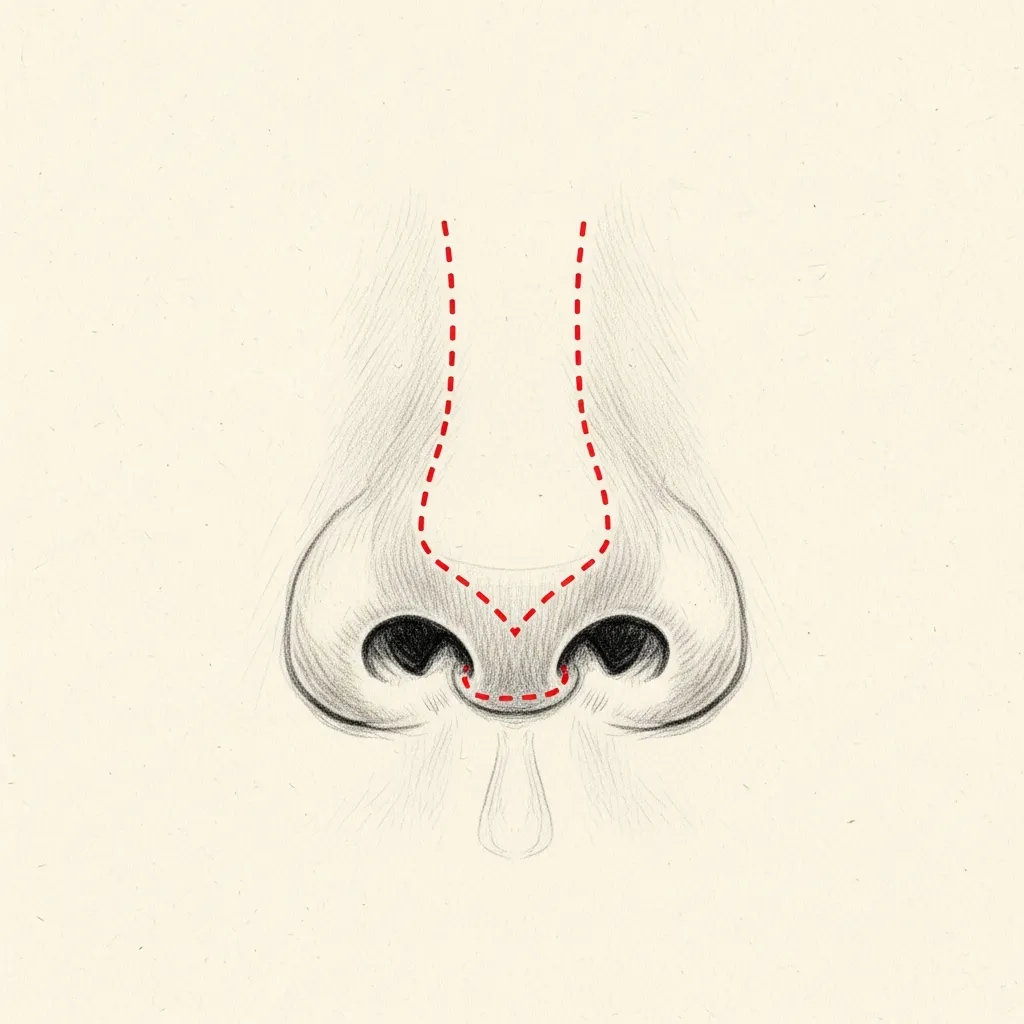
Open
Full Structural Visibility
Structural rhinoplasty focuses on rebuilding long-term support with grafts and anchoring techniques. Common grafts include spreader grafts (thin cartilage pieces placed between septum and upper lateral cartilages to widen the internal valve), columellar struts (supporting pieces between medial crura to stabilize tip projection), and batten grafts (reinforcements for weakened sidewalls). Structural methods are favored when tip stability or valve competence is the primary concern, notably in revision cases where native support is unreliable.
Preservation rhinoplasty preserves native dorsal framework and minimizes soft-tissue disruption, potentially reducing dorsal irregularities in appropriate patients. Preservation is not universally indicated; severe dorsal deviation, prior dorsal surgery, or substantial asymmetry commonly preclude its use. Hybrid strategies often combine preservation-minded dorsal techniques with targeted structural grafting at the tip or valve regions. The decision to pursue preservation depends on preoperative anatomy, airway requirements, and whether preserving continuity will not compromise long-term function.
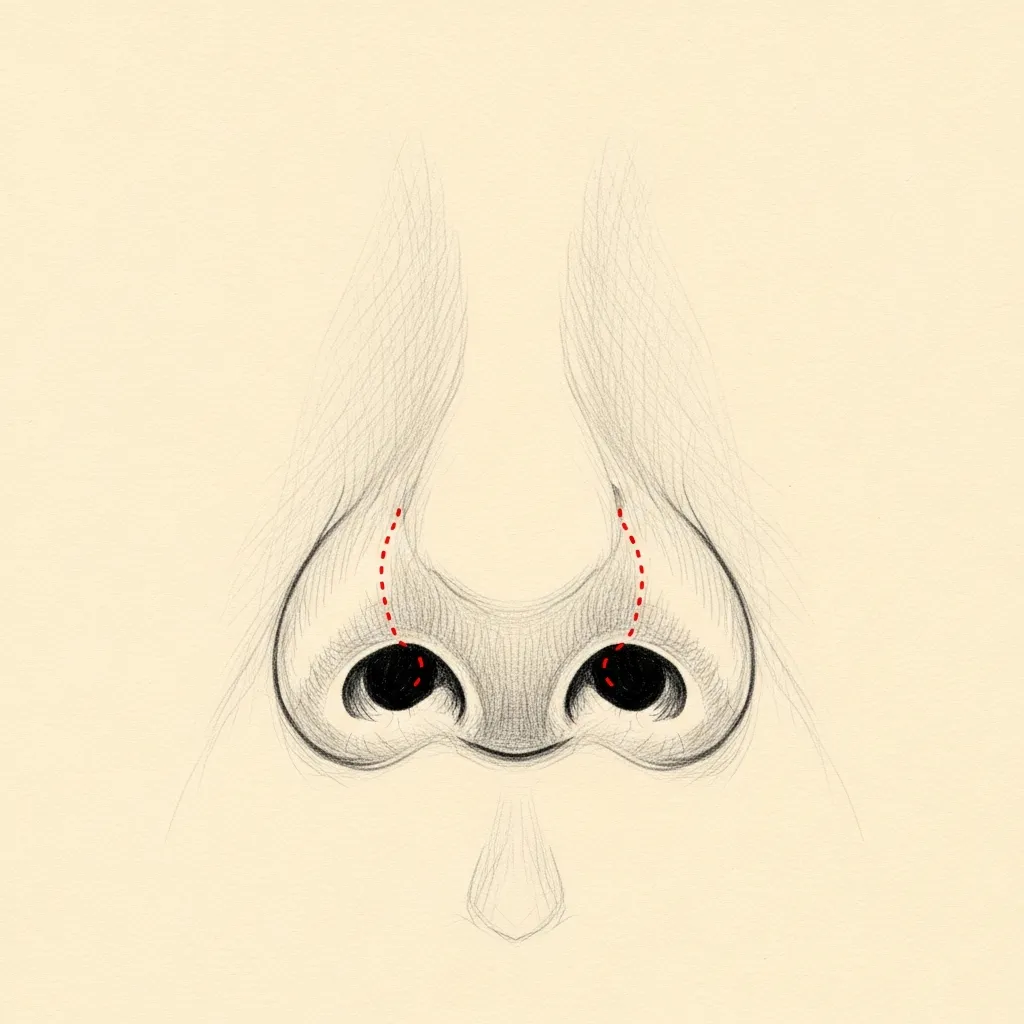
Closed
No External Incision
Graft source selection is case-specific and dictated by availability and mechanical needs. Septal cartilage is preferred when ample stock exists. Auricular cartilage (conchal cartilage) is useful for contouring when septal material is limited. Costal cartilage provides larger volumes and rigidity for major reconstructions or complex revisions. The surgeon discusses donor-site trade-offs, harvest morbidity, and long-term behavior during planning. For further detail on graft selection and dorsal preservation, review preservation rhinoplasty principles.
Illustrative diagrams. Incision design is individualized; the appropriate approach is determined at consultation.
Clinical Rhinoplasty Atlas
Anatomy, balance, and the structures that shape a natural nose
Rhinoplasty is not simply making the nose smaller. It is a structural operation that balances bone, cartilage, skin, facial proportion, and nasal airflow. This atlas explains the anatomy Dr. Mourad evaluates when planning rhinoplasty in NYC, including what can be refined, what must be supported, and what should be preserved.
Select a view, then choose a structure to read what it is and why it matters in planning.
Stylized educational schematic · not a patient image · not to scale
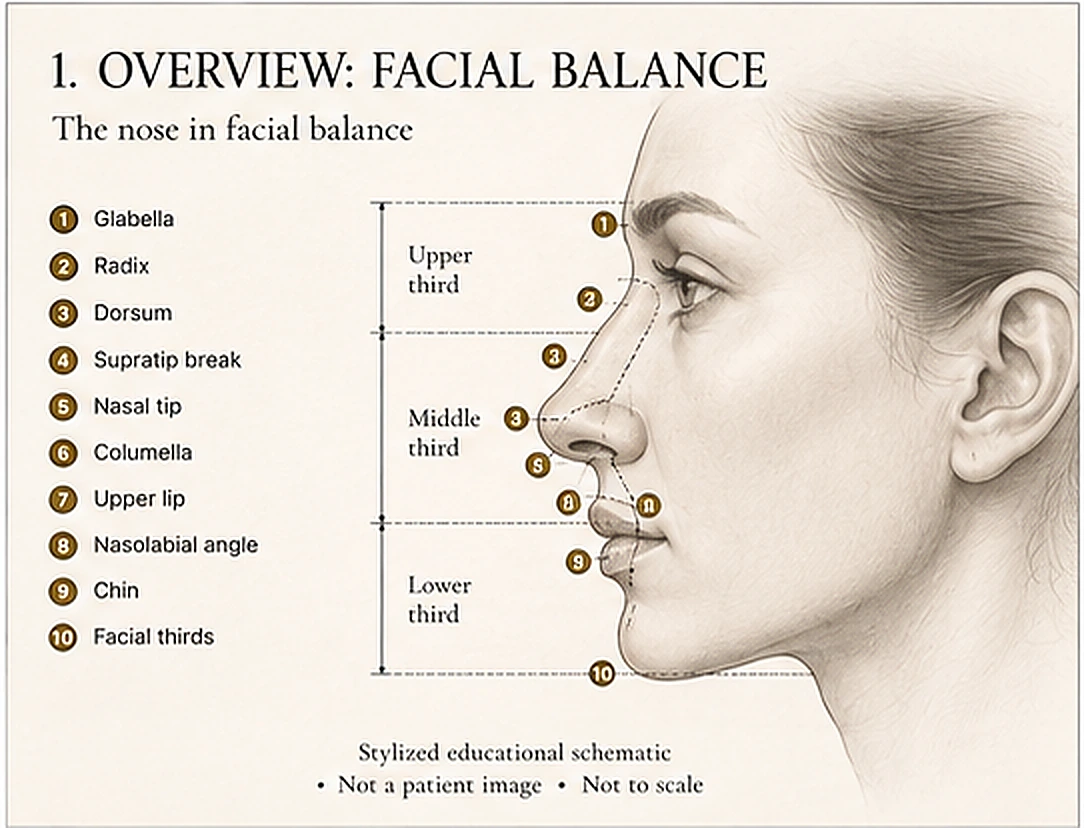
Stylized educational schematic · not a patient image · not to scale
The nose in facial balance
In this view — Shows the nose in relation to the brow, lips, chin, midface, and the vertical facial thirds.
Rhinoplasty planning begins with the whole face, not the nose alone. Dr. Mourad evaluates the nasal bridge, tip, width, projection, rotation, chin, lips, and midface together so refinement looks balanced rather than isolated. The goal is a nose that belongs to the patient's face.
Structure
Glabella
The lower forehead region above the nasal root.
Radix
The transition between the forehead and nose.
Dorsum
The bridge line of the nose.
Supratip break
The subtle transition above the nasal tip.
Nasal tip
The most projecting part of the nose.
Columella
The central tissue between the nostrils.
Upper lip
Affects the perceived nasolabial angle.
Nasolabial angle
The angle between the base of the nose and the upper lip.
Chin
Influences how nasal projection is perceived.
Facial thirds
Vertical balance of the face.
Structures in this view
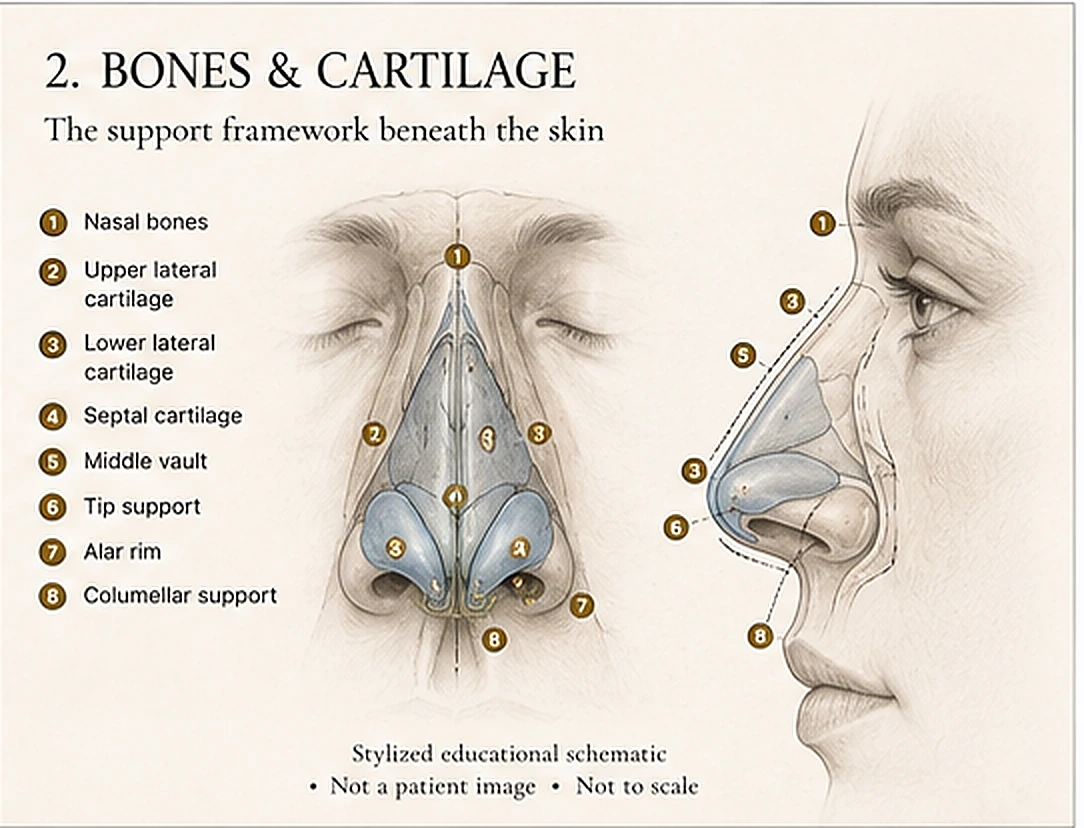
Stylized educational schematic · not a patient image · not to scale
The support framework beneath the skin
In this view — Shows the nasal bones, upper and lower lateral cartilages, septal cartilage, middle vault, and the tip and alar support.
The shape of the nose depends on an underlying framework of bone and cartilage. Rhinoplasty changes must be planned around support. Removing too much cartilage or destabilizing the middle vault can create long-term problems such as pinching, collapse, asymmetry, or breathing difficulty. Dr. Mourad plans refinement with long-term structural stability in mind.
Structure
Nasal bones
Form the upper bridge.
Upper lateral cartilage
Supports the middle vault and internal valve region.
Lower lateral cartilage
Shapes the tip and nostril rim.
Septal cartilage
Central support for both structure and airflow.
Middle vault
Transition zone between bridge and tip.
Tip support
Support system that affects projection and rotation.
Alar rim
Outer nostril rim support.
Columellar support
Central support beneath the tip.
Structures in this view
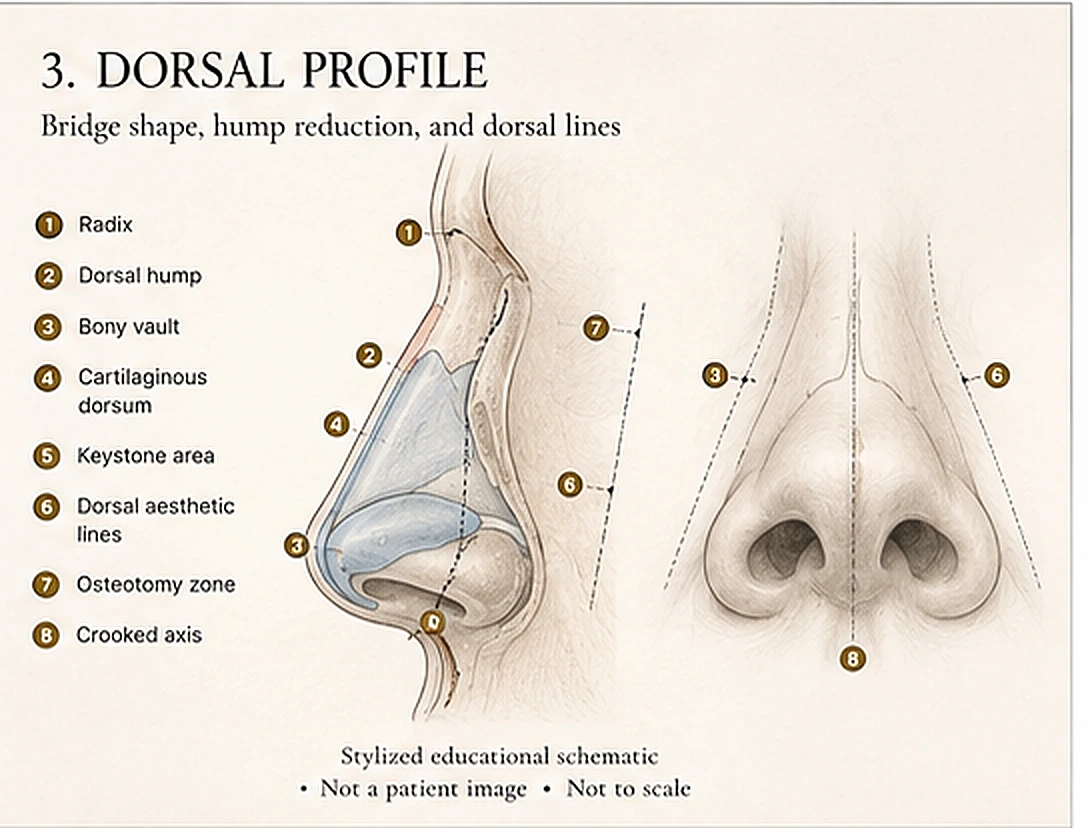
Stylized educational schematic · not a patient image · not to scale
Bridge shape, hump reduction, and dorsal lines
In this view — Shows the radix, dorsal hump, bony vault, cartilaginous dorsum, keystone area, and the dorsal aesthetic lines.
The nasal dorsum defines the bridge line from the radix to the tip. A dorsal hump, wide bridge, crooked bridge, or irregular profile may involve bone, cartilage, or both. Dr. Mourad evaluates whether the safest plan is preservation, structural reshaping, controlled narrowing, or a hybrid approach.
Structure
Radix
Upper starting point of the nasal bridge.
Dorsal hump
Excess height along the bridge.
Bony vault
Upper bridge formed by the nasal bones.
Cartilaginous dorsum
Lower bridge formed by cartilage.
Keystone area
Important transition zone between nasal bones and cartilage.
Dorsal aesthetic lines
Visual lines that define the bridge from the front.
Osteotomy zone
Area where controlled narrowing may be performed.
Crooked axis
Deviation of the bridge from the midline.
Structures in this view
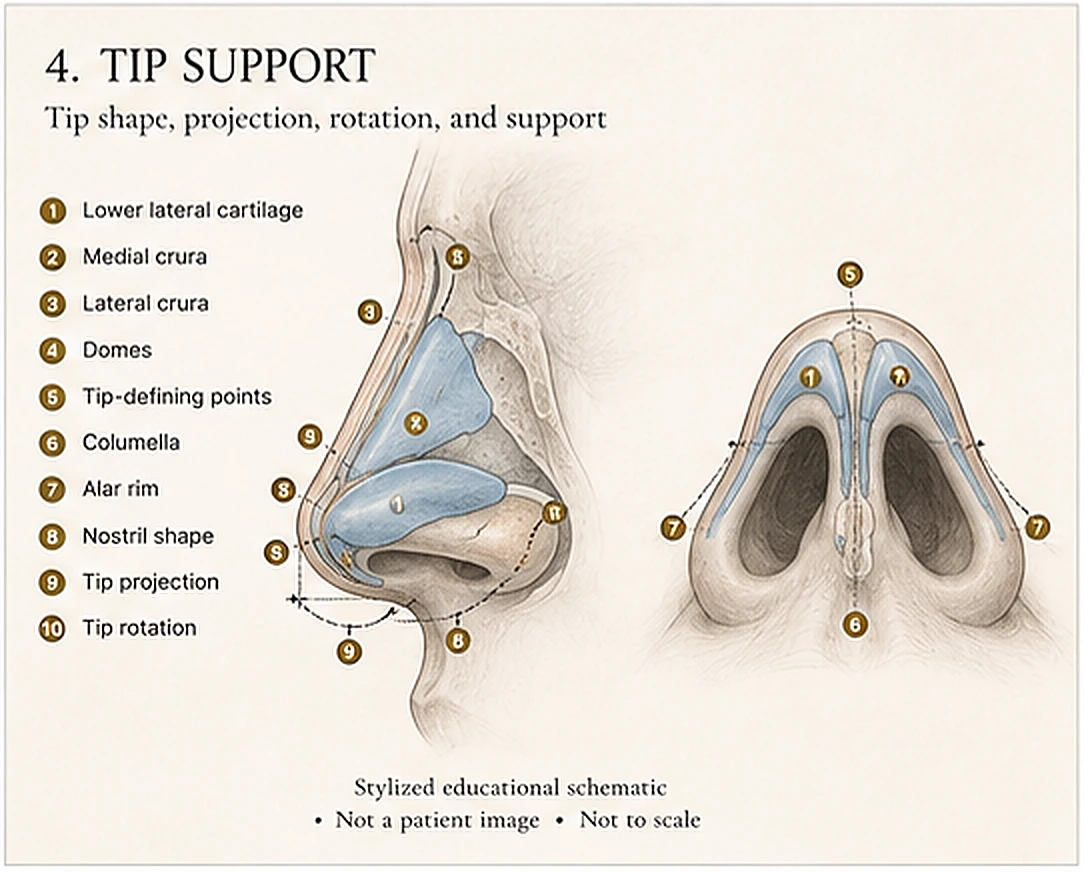
Stylized educational schematic · not a patient image · not to scale
Tip shape, projection, rotation, and support
In this view — Shows the lower lateral cartilages, medial and lateral crura, domes, columella, and the nostril rim.
The nasal tip is shaped by cartilage, skin thickness, projection, rotation, and support. A bulbous, drooping, pinched, under-projected, or over-rotated tip may require very different techniques. Dr. Mourad's goal is refinement without weakening the structures that hold the tip and nostril rim over time.
Structure
Lower lateral cartilage
Main cartilage framework of the nasal tip.
Medial crura
Central support columns of the tip.
Lateral crura
Side portions supporting the nostril rim.
Domes
Tip-defining bend points of the lower lateral cartilages.
Tip-defining points
Visible points that shape tip definition.
Columella
Tissue column between the nostrils.
Alar rim
Outer rim of the nostril.
Nostril shape
Contour influenced by cartilage and skin.
Tip projection
How far the tip projects from the face.
Tip rotation
How upward or downward the tip turns.
Structures in this view
Stylized educational schematic · not a patient image · not to scale
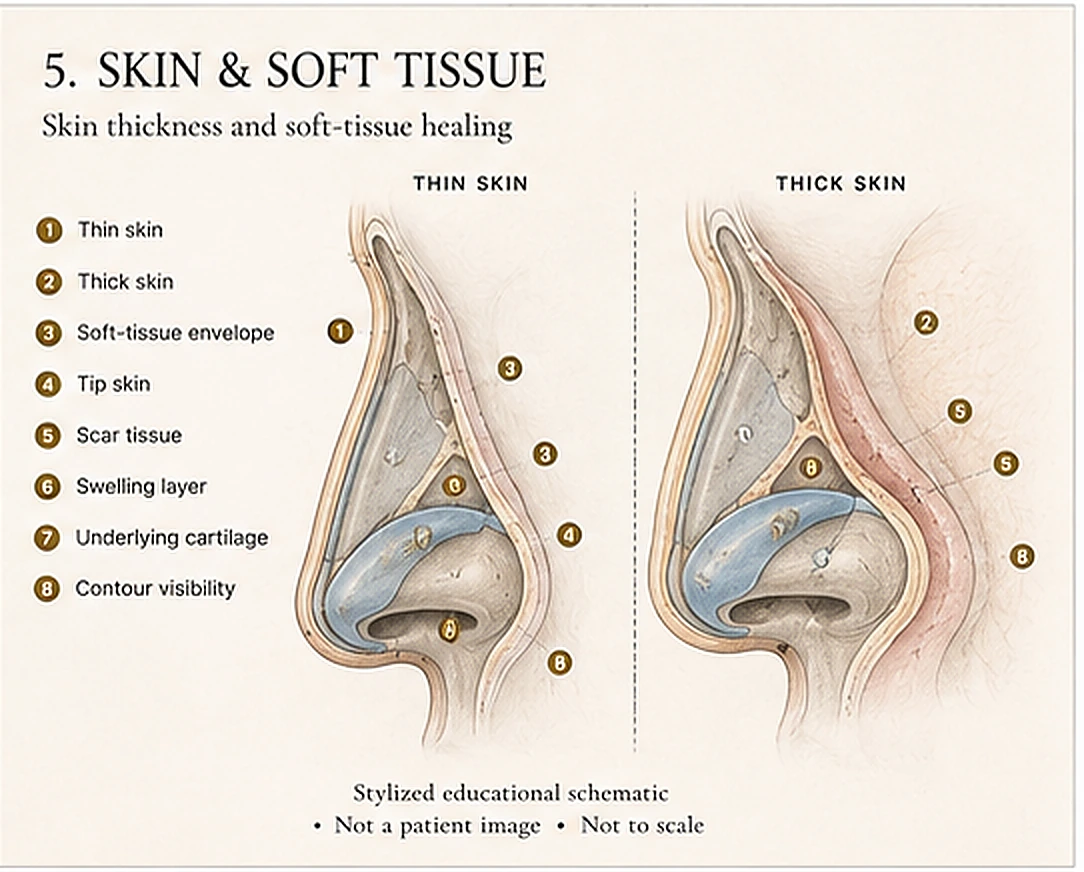
Skin thickness and soft-tissue healing
In this view — Shows the skin and soft-tissue envelope over the cartilage framework, and how thickness affects definition.
Skin thickness affects how much definition is visible after rhinoplasty. Thin skin can reveal small contour irregularities, while thick skin may limit tip definition and hold swelling longer. Revision cases may also involve scar tissue. Dr. Mourad evaluates the skin envelope before setting expectations for definition, swelling, and refinement.
Structure
Thin skin
May show fine contour details and small irregularities.
Thick skin
May limit visible definition and hold swelling longer.
Soft-tissue envelope
Skin and soft tissue covering the nasal framework.
Tip skin
Often the slowest area to refine after surgery.
Scar tissue
More common after prior rhinoplasty.
Swelling layer
Postoperative edema that changes over time.
Underlying cartilage
Framework beneath the skin.
Contour visibility
How much structure is visible through the skin.
Structures in this view
Stylized educational schematic · not a patient image · not to scale
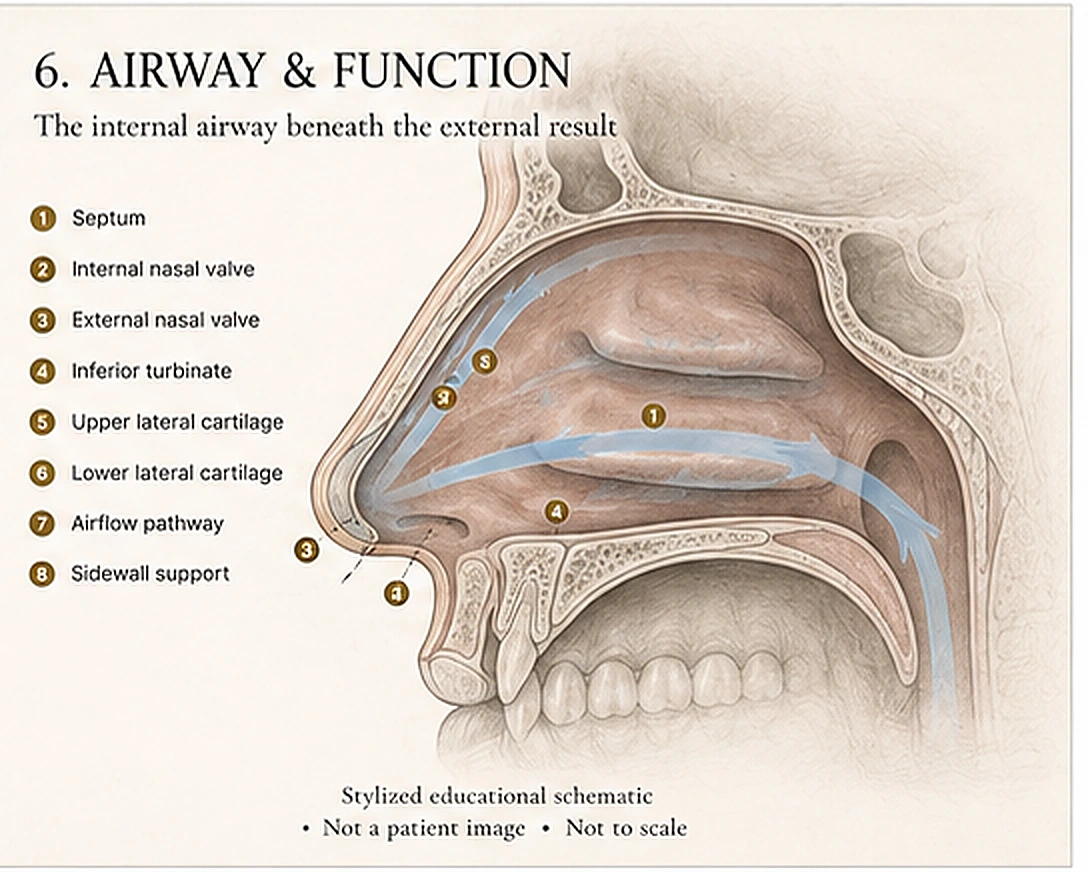
The internal airway beneath the external result
In this view — Shows the septum, internal and external nasal valves, inferior turbinate, and the airflow pathway.
The nose must breathe as well as it looks. Dr. Mourad evaluates the septum, nasal valves, turbinates, sidewall support, and airflow pathway before recommending a rhinoplasty plan. Cosmetic refinement may be combined with septoplasty, turbinate reduction, or nasal valve reconstruction when function is part of the problem.
Structure
Septum
Central wall dividing the nasal passages.
Internal nasal valve
Narrow internal airflow region.
External nasal valve
Nostril-level support zone.
Inferior turbinate
Sidewall tissue that warms and humidifies air.
Upper lateral cartilage
Contributes to internal valve support.
Lower lateral cartilage
Contributes to external valve and tip support.
Airflow pathway
Route air follows through the nose.
Sidewall support
Lateral support that helps prevent collapse.
Structures in this view
What Rhinoplasty Addresses
Six common reasons patients consider rhinoplasty.
Most rhinoplasty consultations begin with one of these concerns. Each is evaluated differently — and each connects to a dedicated page with fuller detail.
Bridge
A dorsal hump, a wide or low bridge, or dorsal lines that look irregular in photographs. Reduction is planned conservatively — preserving or rebuilding support — so the profile stays natural.
Tip
A bulbous, drooping, over-projected, or poorly defined tip. Tip refinement depends on cartilage strength and skin thickness, which is why the plan is individualized at examination.
Nostrils & base
Wide or flared nostrils, an asymmetric nasal base, or a columella that hangs or retracts. Base work is measured in millimeters and planned around the rest of the nose.
Trauma & asymmetry
A crooked nose after an old fracture, a twisted bridge, or asymmetry that never resolved. Post-traumatic correction usually involves both the septum and the external framework.
Breathing
Obstruction from a deviated septum, collapsed nasal valves, or enlarged turbinates — alone or alongside a cosmetic concern. Airway findings often change the surgical plan.
Revision
An unsatisfactory or compromised result from prior surgery — over-resection, support loss, new breathing problems, or a shape concern that persisted. Revision planning starts with what was done before.
06 · In Dr. Mourad's Words
Rhinoplasty videos.
Patient testimonials and short educational films from the Manhattan practice.
Rhinoplasty with Dr. Mourad
An overview of Dr. Mourad's approach to rhinoplasty in his Manhattan practice.
Patient Perspective
A patient discusses her experience before, during, and after surgery.
Inside the Consultation
How Dr. Mourad evaluates anatomy, goals, and surgical candidacy.
Planning & Cost
Planning for Rhinoplasty Cost
Primary Rhinoplasty
Primary rhinoplasty performed by Dr. Mourad commonly begins around $20,000, with many cases around $30,000. Selected limited cases may be lower after evaluation; more complex operations may be higher.
Primary rhinoplasty cost in NYCRevision Rhinoplasty
Revision rhinoplasty performed by Dr. Mourad commonly begins around $25,000, with many cases around $35,000. Pricing varies more widely with the complexity of prior surgery.
Revision rhinoplasty cost in NYCEstimated surgeon's fee. These are planning estimates, not quotes or guarantees. A personalized written estimate is provided after an in-person consultation and examination.
The figures shown represent the estimated surgeon's fee. Facility, anesthesia, laboratory testing, medical clearance, imaging, prescriptions, and other services may be billed separately.
MouradNYC is an out-of-network practice. Eligible medically necessary functional components may be submitted to insurance when the patient's plan includes applicable out-of-network benefits and plan requirements are met. Cosmetic portions remain self-pay. Coverage, authorization, deductibles, coinsurance, allowed amounts, and patient responsibility vary by plan and are not guaranteed. Verification and authorization do not guarantee payment.
Pricing last reviewed: June 2026.
Cost & insurance overview07 · Recovery
What healing actually looks like.
Stage 01
First 24 Hours
Day 0, the operative day, and the first 24 hours combine immediate post-anesthesia effects with expected surgical swelling and bruising. Typical symptoms include nasal congestion, light nasal bleeding or crusting, periorbital bruising, and mild to moderate pain controlled with prescribed medication. Patients should rest at home with limited ambulation and avoid bending at the waist, heavy lifting, and straining that raise intrathoracic pressure. Head elevation while sleeping and intermittent cold compresses over the cheeks reduce periorbital edema and discomfort and should be applied as instructed.
Stage 02
Week 1
Between postoperative day four and day seven most patients leave the highest-pain interval and see steady symptomatic improvement. Analgesic requirements commonly taper from prescription opioids or stronger agents to acetaminophen or milder oral medications as directed by the surgeon. External bruising and periorbital discoloration usually begin to fade but residual swelling remains visible, particularly across the nasal tip and dorsum. Nasal congestion persists because internal mucosal edema and crusting continue while the lining re-epithelializes. Expect variable sleep disruption; head elevation and nightly saline sprays help comfort and nasal hygiene during this interval.
Stage 03
Weeks 2 – 4
During weeks two through four most visible bruising has faded and many patients return to low-demand, nonpublic work when comfortable. Tip swelling commonly persists and can obscure fine contour changes; photographic comparison remains the most reliable way to track progress. Sensation across the dorsum and columella (skin between the nostrils) often remains altered; numbness or tingling typically improves slowly over months. Continue saline irrigation and topical emollients for mucosal moisture and crust control. If you note increasing pain, new drainage, or fever, contact the clinic promptly to evaluate for infection or wound issues.
Stage 04
Months 1 – 3
Between one and three months postoperative most early healing has completed and both breathing and external contour show steady improvement. Tip edema is slowest to resolve because cartilage holds fluid and remodels over months; expect residual fullness through this period. Many patients note meaningful improvement in nasal airflow if septal realignment or turbinate reduction was performed, though some intermittent obstruction can persist. Scar tissue remains immature and may feel firm; directed scar massage and topical therapies can soften tissues once incisions are fully epithelialized. Continue sun protection and avoid elective procedures that might stress healing tissues without clearance.
Stage 05
Months 6 – 12
From six to twelve months postoperative slow tissue remodeling largely determines final contour and nasal support. Cartilage gradually relaxes from operative shaping and grafts further integrate with adjacent tissue. Many patients observe substantial reduction in residual swelling by six months, with ongoing refinement through month twelve. Tip definition typically sharpens as edema resolves and scar softens, while dorsal contour settles and subtle irregularities may emerge. Because remodeling is protracted, surgeons avoid early revision and rely on standardized photographic comparison before considering further surgery.
Six Months to a Year
Long-term healing.
Rhinoplasty results evolve through predictable phases rather than appearing immediately. Early postoperative appearance primarily reflects edema and bruising; as soft tissues thin and cartilage remodels, contour refinement follows. By three to six months many structural changes are visible, and by twelve months most patients reach a near-final appearance. The nasal tip is typically the slowest element to refine because cartilage retains fluid and has intrinsic memory that relaxes gradually. Regular standardized photographs at multiple angles help the surgeon and patient objectively monitor maturation and to determine whether secondary treatment is appropriate.
Functional and aesthetic outcomes are interdependent because structural support influences both contour and airflow. Maneuvers that restore or strengthen tip support and valve integrity often stabilize nasal breathing and reduce the risk of late collapse. Conversely, dorsal smoothing or augmentation changes intranasal dynamics and can affect airway behavior. The durability of outcomes depends on tissue quality, reconstructive strategy, and choice of graft material. Autologous cartilage (patient’s septum, ear, or rib) typically integrates and provides long-term support, whereas synthetic materials have different risk profiles that the surgeon discusses in detail during planning.
Subtle irregularities can continue to improve as scars soften and soft tissues thin over many months. Minimally invasive measures, such as temporary hyaluronic acid fillers, are sometimes used selectively to camouflage minor contour defects during the remodeling phase, but they are temporary and do not replace structural support when anatomy is deficient. When late deformity or functional deficit becomes apparent, the surgeon generally favors waiting until tissues have matured, commonly at or beyond twelve months, before undertaking definitive revision. This timing reduces the risk of correcting transient postoperative findings.
Long-term maintenance considers aging, trauma, and progressive tissue change rather than implying permanence. A durable rhinoplasty emphasizes preservation and reinforcement of support structures rather than maximal tissue removal. Periodic clinical follow-up for one to two years after complex reconstruction is reasonable, with longer surveillance when donor-site harvest or staged reconstructions were performed. The surgeon focuses on conservative cartilage use in any secondary procedure to preserve remaining support and to minimize the risk of future compromise.

Safety & Consent
Risks, safety, and informed consent.
Rhinoplasty carries specific risks that the surgeon reviews during informed consent. Early complications include postoperative bleeding and expanding hematoma, wound infection, adverse anesthesia reactions, and delayed wound healing. Later problems may include septal perforation (a through-and-through hole in the nasal septum), persistent or recurrent nasal obstruction, contour irregularity, graft displacement or partial resorption, and the potential need for revision surgery. Olfactory disturbance (changes in smell) and skin envelope problems are possible. Candid surgical planning, meticulous technique, and appropriate patient selection reduce risk but do not eliminate it, and early detection improves management options.
Bleeding prevention focuses on careful intraoperative hemostasis and clear postoperative instructions to avoid Valsalva, heavy exertion, and nose blowing. If significant postoperative bleeding or an expanding hematoma develops, the surgeon evaluates promptly and may perform controlled nasal packing or return to the operating room when indicated. Infection risk is minimized by sterile technique and selective perioperative antibiotics; if infection occurs, management typically includes targeted antibiotics and drainage when necessary. Septal perforation prevention rests on preserving mucosal flaps, avoiding excessive septal resection, and respecting prior surgical anatomy during dissection.
Contour irregularities and persistent obstruction remain common reasons for later procedure. Contour problems can result from asymmetric cartilage reshaping, inadequate graft support, or scar contracture; management options include observation, nonsurgical camouflage with short-term fillers, or structural revision with autologous grafting. Persistent obstruction may arise from residual septal deviation, turbinate hypertrophy (enlargement of the internal turbinates), or internal and external valve collapse. Preoperative airway mapping and intraoperative stabilization techniques aim to address functional and aesthetic goals together. Revision cases involve greater complexity due to scar tissue and prior grafts, and they often require staged reconstruction.
Red flags requiring immediate contact include expanding facial swelling or a tense hematoma, sudden or progressive visual changes, fever above 101.3°F (38.5°C), uncontrolled pain despite prescribed medication, and any wound breakdown or purulent drainage. For breathing difficulty or chest pain seek emergency care. Donor-site specific risks include chest wall pain and pneumothorax after costal cartilage harvest, and ear deformity or persistent numbness after conchal harvest; these are minimized by appropriate harvest technique and postoperative care. All operative decisions and risk discussions occur during an in-person consultation with Dr. Moustafa Mourad.

Before You Arrive
Your consultation, prepared.
Bring photographs of your nose from earlier in life if you have them.
Note any breathing difficulty — when it began, when it is worst.
List any prior nasal surgery, trauma, or related procedures.
Bring questions. Consultations are designed for a real conversation.
Allow 60 minutes; expect a thorough physical examination.
No decisions are made at the first visit — that is by design.
The Most Important Step
Your expert consultation.
To begin planning, request an in-person consultation so Dr. Moustafa Mourad can perform a hands-on anatomic assessment and discuss individualized options. Dr. Mourad is board-certified by the American Board of Facial Plastic and Reconstructive Surgery and the American Board of Otolaryngology—Head and Neck Surgery; he also serves as an AAFPRS fellowship director in New York City. Bring prior operative reports, clear preoperative photographs, and any prior imaging because these materials materially affect reconstructive choices, graft sourcing, and operative risk. Telemedicine can provide initial screening, but definitive operative planning typically requires in-person exam and, when indicated, endoscopic inspection.
Patient Reviews
Rhinoplasty Patient Experiences
Selected public patient reviews. Individual experiences vary.
“almost 5 years post op and i have still never breathed better before this.”
Real patient experiences
Selected public reviews from patients of the practice.
Your privacy matters
We never share personal health information.
Board-certified expertise
Dual board-certified facial plastic and reconstructive surgeon.
Individual results vary. Reviews reflect individual experiences and are not a guarantee of outcome.
Continue Exploring
Related rhinoplasty resources.
Does rhinoplasty also improve breathing?
It can. Because the structures that shape the nose are the same ones that carry airflow, a rhinoplasty can be planned to refine appearance and restore breathing in the same operation when both are concerns — this is often called a functional rhinoplasty or septorhinoplasty.
When breathing is the only concern, a functional procedure such as septoplasty or nasal valve repair may be more appropriate; the right plan depends on what is found at examination.
What makes a rhinoplasty look natural?
A natural result comes from preserving or rebuilding structural support rather than simply removing tissue, keeping the new shape in proportion with the rest of the face, and respecting the features that make the nose fit the person. Over-resection is what produces the pinched, scooped, or operated look.
This is why modern techniques emphasize repositioning and reinforcing cartilage — the aim is a nose that looks unoperated and breathes well.
How does Dr. Mourad plan rhinoplasty differently for each patient?
Each plan begins with the individual anatomy — skin thickness, cartilage strength, septal position, airway function, and facial proportions — rather than a standard set of maneuvers. The examination maps what should change, what should be preserved, and what the airway requires, and the operation is sequenced around those findings.
Ethnic identity, prior trauma, and functional needs all shape the plan, which is reviewed with the patient before anything is scheduled.
When is rhinoplasty cosmetic, functional, or both?
Rhinoplasty is cosmetic when it changes only the appearance of the nose, functional when it corrects an anatomic breathing problem such as a deviated septum or valve collapse, and both when one operation addresses appearance and airway together. The distinction matters clinically and for insurance, since only documented functional work may be submitted for review.
Many patients seeking a cosmetic change also have an untreated airway problem — identifying both at consultation avoids a second operation later.
Septoplasty in NYCForm & Function
Appearance and breathing are evaluated together.
The structures that shape the nose are the same ones that carry airflow. The septum forms the central wall of the nose; when it is deviated, it can narrow one or both nasal passages. The nasal valves — the narrowest segments of the airway just inside the nostrils and beneath the middle of the bridge — depend on cartilage support to stay open. The turbinates, shelf-like structures along the sidewall, can enlarge and crowd the airway further.
Because of this shared anatomy, every rhinoplasty consultation includes an airway examination. When a cosmetic concern and a structural breathing problem coexist, a single combined operation — septorhinoplasty — can address both, sharing one anesthesia and one recovery. When breathing is the only concern, a focused functional procedure is usually more appropriate than rhinoplasty.
Frequently Asked
Rhinoplasty NYC FAQs
No. Nose job is a common term for rhinoplasty. Your consultation should clarify whether the proposed surgery is cosmetic, functional, reconstructive, or a combination, and which parts of the nose will actually be treated.
Cost depends on whether the surgery is primary, preservation-based, or revision, and on factors such as cartilage grafting, septoplasty, anesthesia, and facility fees. Cosmetic work is self-pay; as an out-of-network practice, the functional portion may be submitted to insurance when it is medically necessary and the patient's plan includes applicable out-of-network benefits, though coverage is not guaranteed. See the Rhinoplasty Cost in NYC guide for detail. A personalized written estimate follows an in-person consultation.
Clinical references
This page draws on published clinical practice guidelines and public-health references. These sources inform general patient education and do not replace an individual evaluation with Dr. Mourad.
- 01Ishii LE, et al. Clinical Practice Guideline: Improving Nasal Form and Function after Rhinoplasty. Otolaryngology–Head and Neck Surgery. 2017;156(2 Suppl):S1–S30. PMID: 28145823. DOI: 10.1177/0194599816683153. AAO-HNSF guideline
- 02van Zijl FVWJ, et al. Evaluation of Measurement Properties of Patient-Reported Outcome Measures After Rhinoplasty: A Systematic Review. JAMA Facial Plastic Surgery. 2019;21(2):152–162. PMID: 30605215. DOI: 10.1001/jamafacial.2018.1639. PubMed
- 03Chen K, Zhou L. The Effect of Functional Rhinoplasty on Quality of Life: A Systematic Review and Meta-Analysis. Aesthetic Plastic Surgery. 2024;48(5):847–854. PMID: 37173413. DOI: 10.1007/s00266-023-03390-3. PubMed
- 04Rudy S, Moubayed SP, Most SP. Midvault Reconstruction in Primary Rhinoplasty. Facial Plastic Surgery. 2017;33(2):133–138. PMID: 28388792. DOI: 10.1055/s-0036-1598016. PubMed
This page is for general educational purposes and is not medical advice. Individual results vary, and the information here does not guarantee a particular outcome or surgical candidacy. Surgical planning is determined only after an in-person evaluation with Dr. Mourad. Patient photographs are shown with written consent.