Double Board Certified · Functional Nasal Surgery
Deviated Septum — a structural cause with a structural answer.
A deviated septum is one of the most common — and most under-diagnosed — causes of chronic nasal obstruction. The cartilage and bone that divides the nose has moved off the midline, narrowing one or both airways and changing how breathing feels with every breath.
ABFPRS
Facial Plastic & Reconstructive Surgery
ABOto
Otolaryngology — Head & Neck Surgery
AAFPRS
Fellowship Director

In Consultation
"Many patients have lived with one-sided breathing problems for so long that they have stopped noticing them. The diagnosis is often a relief."

A Note from Dr. Mourad
"A deviated septum is one of the most common — and most under-diagnosed — causes of chronic nasal obstruction. The cartilage and bone that divides the nose has moved off the midline, narrowing one or both airways and changing how breathing feels with every breath."
— Dr. Moustafa Mourad, MD
Overview
What is a deviated septum?
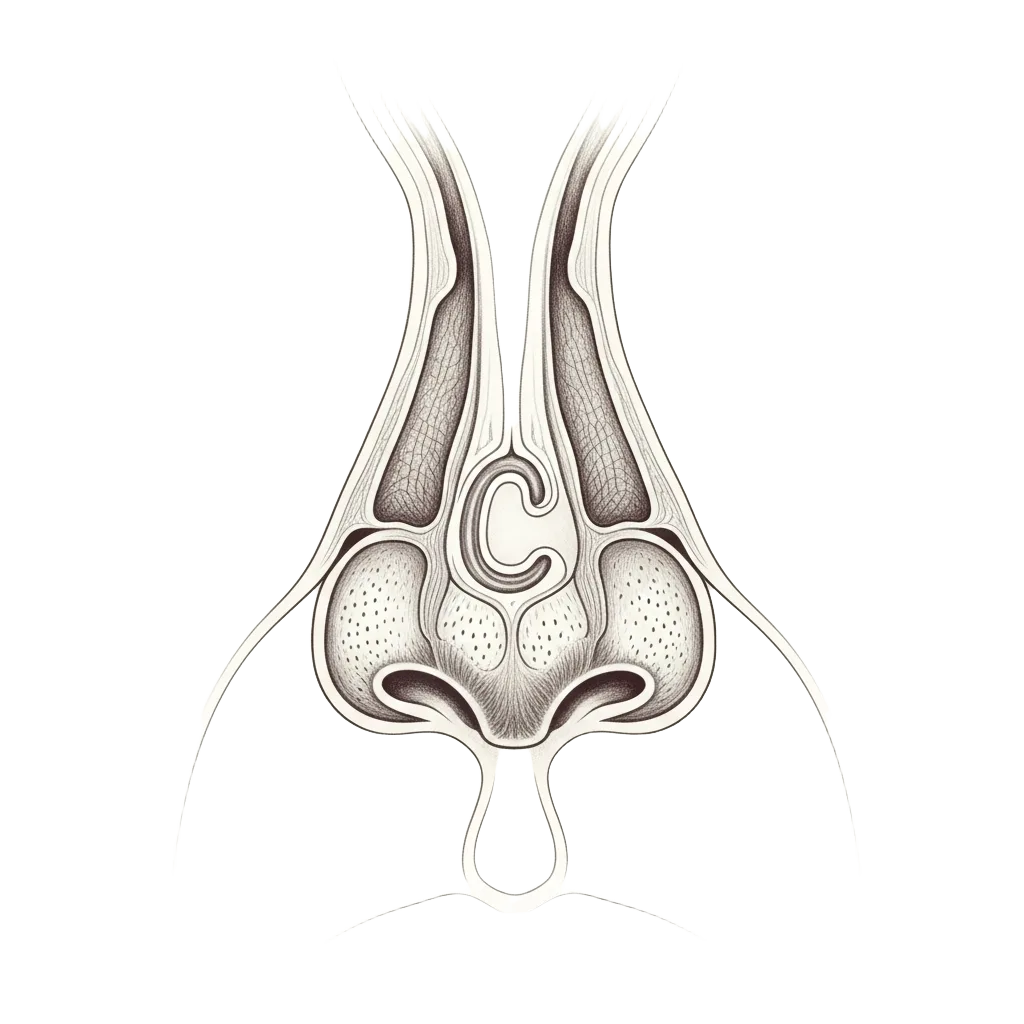
A deviated septum is a structural deformity in which the wall of cartilage and bone that divides the two nasal passages is shifted off the midline. Most septums have some degree of deviation; the condition becomes clinically relevant when the deviation narrows one or both airways enough to obstruct breathing or contribute to other symptoms.
Septal deviation can be congenital — present from birth or developed during craniofacial growth — or post-traumatic, following a blow to the nose at any age. The deviation may involve the cartilaginous, bony, or both portions of the septum, and is often accompanied by compensatory enlargement of the inferior turbinate on the opposite side.
Common symptoms include nasal obstruction (often one-sided), recurrent sinus infections, post-nasal drip, snoring and disturbed sleep, recurrent nosebleeds, and difficulty exercising. Diagnosis is made on examination, supplemented by nasal endoscopy and, when relevant, CT imaging.
An Established Academic Authority
Double board certification. Fellowship director. Published author. A surgeon's surgeon.
ABFPRS
Board Certified
American Board of Facial Plastic & Reconstructive Surgery
ABOto
Board Certified
American Board of Otolaryngology — Head & Neck Surgery
AAFPRS
Fellowship Director
American Academy of Facial Plastic and Reconstructive Surgery
Textbook
Published Author
Contributions to the academic literature of facial plastic surgery
Dual board certification in both Facial Plastic & Reconstructive Surgery and Otolaryngology — Head & Neck Surgery.
Castle Connolly Top Doctor — Plastic Surgery, 202602 · Symptoms
How this condition typically presents.
Three patterns are most common. Patients often recognise themselves in one or more of these.
I
One-Sided Obstruction
Difficulty breathing through one side of the nose more than the other, often worse when lying on a particular side at night.
II
Mouth Breathing & Snoring
Mouth breathing on waking, dry mouth, snoring, and sometimes a noticeable reduction in aerobic capacity.
III
Recurring Sinus Issues
Frequent sinus infections, sinus pressure, or chronic congestion that does not respond fully to medical therapy.
03 · Diagnosis
How the diagnosis is made.
Diagnosis begins with a careful history — when symptoms started, what makes them better or worse, and what has been tried.
Examination includes anterior rhinoscopy and, where appropriate, nasal endoscopy with a small flexible scope to visualise the deeper nasal cavity and sinus outflow tracts.
Imaging — typically a focused sinus CT — is obtained when the examination and history warrant it, and is reviewed in detail at the visit.
04 · Treatment Options
Treatments matched to the diagnosis.
Treatment is individual. The right answer ranges from continued medical therapy to a focused minimally-invasive procedure to definitive structural surgery.
01 · Why Dr. Mourad
Diagnosis first, treatment second.
Dr. Moustafa Mourad is double board-certified in Facial Plastic & Reconstructive Surgery and in Otolaryngology — a combination uniquely suited to evaluating both the structural and the medical components of nasal and sinus disease.
Every evaluation begins with a careful history, examination, and — where indicated — endoscopy and imaging. The diagnosis is made before any treatment plan is discussed.
Medical therapy is exhausted before surgery is recommended. When surgery is the right answer, the operation is the one your anatomy and disease actually require.
When to Seek Care
When to seek care promptly.
Severe facial pain, high fever, or visual changes — these warrant urgent evaluation.
Significant facial swelling or redness around the eye — evaluate immediately.
New or worsening obstruction after a recent injury — evaluate within days.
Persistent symptoms beyond a few weeks despite over-the-counter measures — a careful evaluation is reasonable.
Outlook
What to expect.
When the diagnosis is correct and the right treatment is applied, the outlook is generally good. Many patients describe meaningful improvement in sleep, exercise tolerance, and day-to-day energy.
When symptoms persist despite treatment, the workup is re-opened. Persistent symptoms with no answer almost always mean the diagnosis is incomplete.

Living Well
Day-to-day measures that help.
Daily saline irrigation, control of indoor allergens, and good sleep hygiene meaningfully reduce day-to-day symptoms for most patients.
Medical therapy, when prescribed, works best when used consistently rather than as needed — this is one of the most common reasons treatment seems to fail.
Frequently Asked
Patient questions, honestly answered.
Structural blockage is often reproducible, positional, or persistently worse on one side and does not fully clear with decongestants. Allergic or inflammatory causes typically fluctuate with exposures and often improve with a 4–8 week trial of intranasal corticosteroid therapy. Clinic assessment uses anterior rhinoscopy and nasal endoscopy to inspect the septum, turbinates, and valves; selective objective tests such as allergy testing or acoustic rhinometry may be useful. An in‑person exam is required to separate structural from mucosal contributors and to plan appropriate treatment.
Yes. Initial management for mucosal contributors usually includes daily intranasal corticosteroid sprays for 4–8 weeks plus saline irrigations. Short topical decongestant trials can help identify reversible congestion but are not appropriate long term. If symptoms persist despite adequately directed medical therapy and objective exam findings show anatomic obstruction, surgical options such as septoplasty or turbinate reduction are considered. The decision to refer for surgery is individualized and made after clinical reassessment.
Septoplasty is an internal operation focused on straightening the septum and improving airflow; it is not intended as a cosmetic reshaping. Small external changes can occur if septal support altering procedures affect tip position, which is discussed during planning. When external form or tip support needs correction, combined septorhinoplasty is planned to address both function and appearance. Any potential external impact is reviewed and documented during the in‑person consultation.
In the first week you can expect significant congestion and crusting while early healing occurs; splints or packing, if used, are removed within 3–7 days. By 2–4 weeks most patients note gradual easing of congestion and return to light activity. Functional improvement often becomes clearly noticeable by 1–3 months as mucosa heals. Final refinement of airflow and any cosmetic changes may continue up to 6–12 months depending on the extent of reconstruction.
Common short‑term issues include bleeding, nasal crusting, transient numbness, and infection, all managed with established perioperative protocols. Septal hematoma is an uncommon but urgent complication requiring prompt drainage to prevent cartilage loss. Septal perforation is a known risk, particularly in revision cases or when mucosa is thin; careful technique and preoperative planning reduce this risk. Revision surgery can be more complex due to scarring and altered cartilage availability, and these differences are discussed during consent.
Patients with an active sinonasal infection or untreated acute sinusitis should defer elective septal surgery until infection is controlled. Those with uncontrolled medical comorbidities that increase anesthesia risk, untreated bleeding disorders, or anticoagulation without clearance from the managing physician are not immediate candidates. Severe uncontrolled allergic rhinitis should be optimized with medical therapy before considering surgery. Pregnancy is generally a reason to postpone elective nasal surgery; when needed, coordination with other specialties is arranged and optimization steps are documented.
Inferior turbinate hypertrophy frequently coexists with septal deviation and can be the dominant contributor to airflow limitation. Internal or external nasal valve dysfunction amplifies obstruction even with a mild septal deviation. Effective evaluation inspects all compartments and often requires combined procedures—turbinate reduction or valve repair—at the time of septoplasty. Tailoring the plan to these interacting anatomic elements improves functional outcomes.
A deviated septum increases nasal resistance and may worsen mouth breathing or reduce CPAP tolerance, but septal surgery is not a standalone cure for obstructive sleep apnea. Correction of nasal obstruction can improve subjective nasal breathing and adherence to positive airway pressure in some patients. Formal sleep assessment and coordination with sleep medicine are recommended prior to deciding whether nasal surgery should be part of an overall sleep apnea treatment strategy. Shared planning ensures airway goals are realistic and evidence‑based.
The Most Important Step
Get an expert evaluation.
A careful evaluation by a double board-certified physician is the right first step. The conversation is unhurried, the diagnosis is honest, and treatment is matched to what you actually have.