State of the Art in Facelift Technique: 2025 Updates
Today’s facelifts aren’t about one “signature” method. They’re guided by an adaptable algorithm that respects retaining ligaments, tissue glide zones, and the 3D balance between the midface, jawline, and neck.
Deep-plane, high-SMAS, and ligament-release refinements
Deep-plane, high-SMAS, and ligament-release refinements
- The deep-plane lift remains the go-to for real midface elevation and a crisp jawline. In 2025, surgeons focus on selective release of key retaining ligaments (zygomatic, masseteric, mandibular) while preserving vital perforators—protecting flap perfusion and reducing ischemia risk.
- High-SMAS options offer safer malar reshaping in patients with thinner skin or less malar fat. And yes, plane changes are now normal—surgeons transition between SMAS, deep-plane, and sub-SMAS by region rather than sticking to a rigid playbook.
- Subplatysmal neck work is individualized: conservative deep fat reduction, selective digastric addressing, and careful submandibular gland management when it’s indicated and consented.
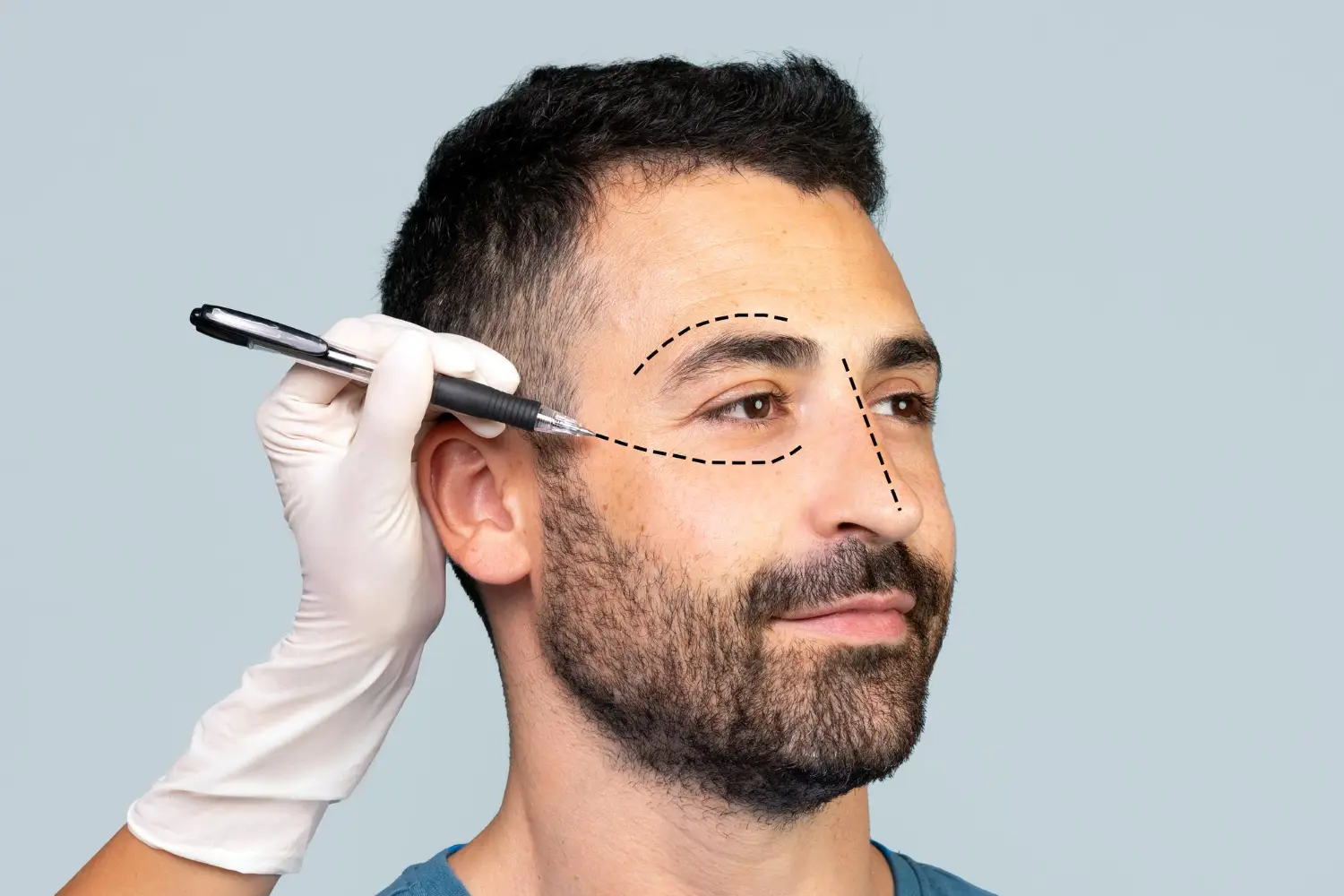
- Planning starts with vector mapping for the midface, jowl, and neck—because each zone glides differently over the deep fascia. “Vector stacking” sequences multi-plane lifts to create balanced tension without over-pulling any one direction.
- Surgeons increasingly use anatomic “glide zones” to guide release and re-suspension. Example: lateral vectors for the lower face paired with superolateral vectors for the malar segment—restoring the ogee curve without pulling the mouth sideways.
- Short-scar and limited-incision methods have matured. Hybrid lifts—targeted deep-plane release through smaller incisions plus lateral SMAS plication—are on the rise for mild-to-moderate aging with a faster bounce-back.
- The neck still sets the tone. Integrated cervicoplasty matters. Lateral SMAS work is paired with midline corset platysmaplasty or deeper neck maneuvers when bands, deep fat, or visible glands are part of the picture.
- Awake or “wide-awake” facelifts—using tumescent infiltration with focused field blocks—are mainstream for select patients. High-frequency nerve blocks (greater auricular, lesser occipital, auriculotemporal, infraorbital, mental) cut opioid needs and stabilize hemodynamics.
- Sedation with dexmedetomidine and multimodal analgesia (acetaminophen, NSAIDs when appropriate, gabapentinoids) support opioid-sparing care.
- ERAS-style protocols include preop carb loading, tight blood pressure control, tranexamic acid when indicated, normothermia, antiemetic bundles, and early mobilization.
Energy-Based Devices, Imaging, and Intraoperative Technologies
Devices don’t replace surgery—they refine it. The aim: precise soft-tissue remodeling, objective planning, and real-time safety checks.
Focused ultrasound and bipolar RF for SMAS tightening and dermal remodeling
Focused ultrasound and bipolar RF for SMAS tightening and dermal remodeling
- Microfocused ultrasound and bipolar RF are used strategically to contract fibroseptal networks and stimulate neocollagenesis. Around surgery, they’re usually staged pre- or post-op to improve skin quality (not applied directly to fresh flaps).
- For not-yet-surgical patients, combinations (bipolar RF + ultrasound) can nudge tightening and thicken dermis—often improving future surgical candidacy.
- Laser- and RF-assisted lipolysis help refine the jawline and submental area. In 2025, surgeons are conservative near the mandibular border to protect the marginal mandibular nerve—favoring low-energy, continuous-motion passes with temperature monitoring.
- In select necks with mild laxity, laser coagulation can assist skin retraction—especially when planning a short-scar approach.
- ICG near-infrared angiography is increasingly used to visualize flap perfusion and guide tension, quilting, or drain choices—particularly in smokers, revision cases, or extended undermining.
- High-frequency ultrasound (15–22 MHz) supports safer cannula passage, nerve-sparing in tricky zones, and preop mapping of vessels or prior filler areas.
- AI-based morphometrics and 3D photography quantify vector changes, mandibular angle definition, and malar projection—supporting clearer counseling and objective outcome audits.
- Endoscopic techniques shine for brows and selected midface releases—fewer/lighter incisions, same key releases.
- Miniaturized tools—low-profile retractors, angled endoscopic scissors, fine bipolar tips—boost precision and reduce tissue trauma.
- Micro-robotic assistance is in research for tremor reduction and enhanced endoscopic control; routine use is still limited (for now).
Ethics, Regulation, and Practice Management Considerations
More tools mean more responsibility—clinically, ethically, and operationally.
Regulatory pathways for PRP/PRF, SVF, and exosomes (FDA, EMA/EU MDR)
Regulatory pathways for PRP/PRF, SVF, and exosomes (FDA, EMA/EU MDR)
- PRP/PRF: In the U.S., devices that produce PRP/PRF may be FDA-cleared; the final blood product must be used within labeling and standard-of-care. In the EU, MDR rules apply similarly to devices.
- SVF: Enzymatic SVF is generally treated as more-than-minimally manipulated (U.S. Section 351), usually requiring IND/BLA pathways. Many regions restrict use to approved trials.
- Exosomes/EVs: No exosome products are FDA-approved for aesthetic indications. Using or marketing them outside trials risks enforcement. Ethically, that means clear disclosure, regulatory adherence, and no overpromising.
- Consent should spell out technique, adjuncts (and off-label status when relevant), expected recovery, and risks. Visuals that map vectors and anticipated changes go a long way.
- Keep claims anchored to peer-reviewed evidence. Increasingly, practices share de-identified dashboards (hematoma rates, revisions, PROMs) to build trust.
- Facelifts are primarily self-pay. Biologics like PRP/PRF and fat grafting are typically cash-based add-ons; insurance coverage is uncommon unless there’s a reconstructive indication.
- Cost-effectiveness improves with smart bundling, fewer redundant device passes, and matching the right adjuncts to the right patients (e.g., nanofat for photoaging vs microfat for structural deficits).
- Practices are auditing disposables and favoring reprocessable tools when safe and compliant. Sterilization is tuned to protect delicate endoscopic instruments.
- Energy use is tracked—devices with smart standby and strong life-cycle support get the nod.
- Supply chains are diversified: multiple vendors for cannulas, sutures, PRP kits, plus validated substitutes to weather shortages without compromising care.


From Our Blog

What Is a Deep Plane Facelift and Why Do Top Surgeons Prefer It?
The deep plane facelift has become the go-to choice for many top facial plastic surgeons—and for good reason. Instead of just pulling skin tight, it works where aging actually happens: in the deeper support layers of the face.
READ THE ARTICLE
What’s the Safest Age to Get a Facelift—and When Is It Too Early?
There isn’t a magic birthday for a facelift. The “safest” age is when your anatomy and skin will clearly benefit more from surgical lifting than from nonsurgical fixes—and when your health makes an elective procedure low risk.
READ THE ARTICLE
Mini Facelift vs. Full Facelift: Technical Differences, Candidacy, and Outcomes
A facelift isn’t one single operation—it’s a range of techniques tailored to how (and where) you’re aging. “Mini facelift” and “full facelift” are common labels, but they point to very different levels of dissection, how deeply tissue is moved, and how much work is done in the neck.
READ THE ARTICLE
Is a Facelift Worth It Compared to Non-Surgical Alternatives? A Clinical, Economic, and Patient-Centered Analysis
Interest in facial rejuvenation has never been higher, but the menu of options—from injectables and energy devices to deep-plane facelifts—can feel overwhelming. Patients often ask a deceptively simple question: is a facelift “worth it” compared to non-surgical treatments?
READ THE ARTICLE