Anatomy and Principles of the Deep Plane Facelift
To understand why the deep plane approach works, you need a quick tour of the facial layers.
- SMAS (superficial musculoaponeurotic system): The fibromuscular layer that envelops the facial expression muscles and connects to the platysma in the neck. Think of it as the primary “liftable” scaffold.
- Retaining ligaments: Fibrous tethers that anchor mobile soft tissue to bone. Key players include:
- Zygomatic (malar) ligaments over the cheekbone (McGregor’s patch)
- Masseteric ligaments over the masseter muscle
- Mandibular ligament at the jowl–prejowl interface
- Orbicularis retaining ligaments along the eyelid–cheek junction
- The sub-SMAS (deep) plane: A relatively avascular glide plane between the SMAS/platysma and the deeper parotid–masseteric fascia. Operating here lets the surgeon mobilize the midface and lower face as one unit.
Vector-based lifting and ligament release
As we age, tissues drift downward and toward the mouth. Cue deeper nasolabial folds, hollowed midface, jowls, and neck bands. The deep plane facelift reverses those vectors by:
- Releasing specific retaining ligaments to free up tethered tissues
- Elevating the SMAS, malar fat pad, and platysma together as a composite flap
- Securing them along superior–lateral vectors to bring back cheek projection and sharpen the jawline
Midface suspension and malar fat pad mobilization
Here’s the big perk of the deep plane: direct midface impact. By releasing the zygomatic and orbicularis retaining ligaments, the surgeon can free and lift the malar fat pad and soft tissues over the cheekbone. That restores youthful cheek fullness and softens the nasolabial fold—without depending solely on fillers or skin traction.
How deep plane differs from SMAS plication and skin-only lifts
- Skin-only lifts: Trim skin, skip the SMAS. Results can be short-lived—and look tight—because the skin is bearing the load.
- SMAS plication/imbrication: Tighten or fold the SMAS without extensive releases. Great for many, but less midface mobilization and often less durable in heavier tissues.
- Deep plane facelift: Dissects beneath the SMAS, releases key ligaments, and elevates a composite flap (SMAS + malar tissues). It more powerfully addresses midface descent and tends to look natural because skin and SMAS move together.
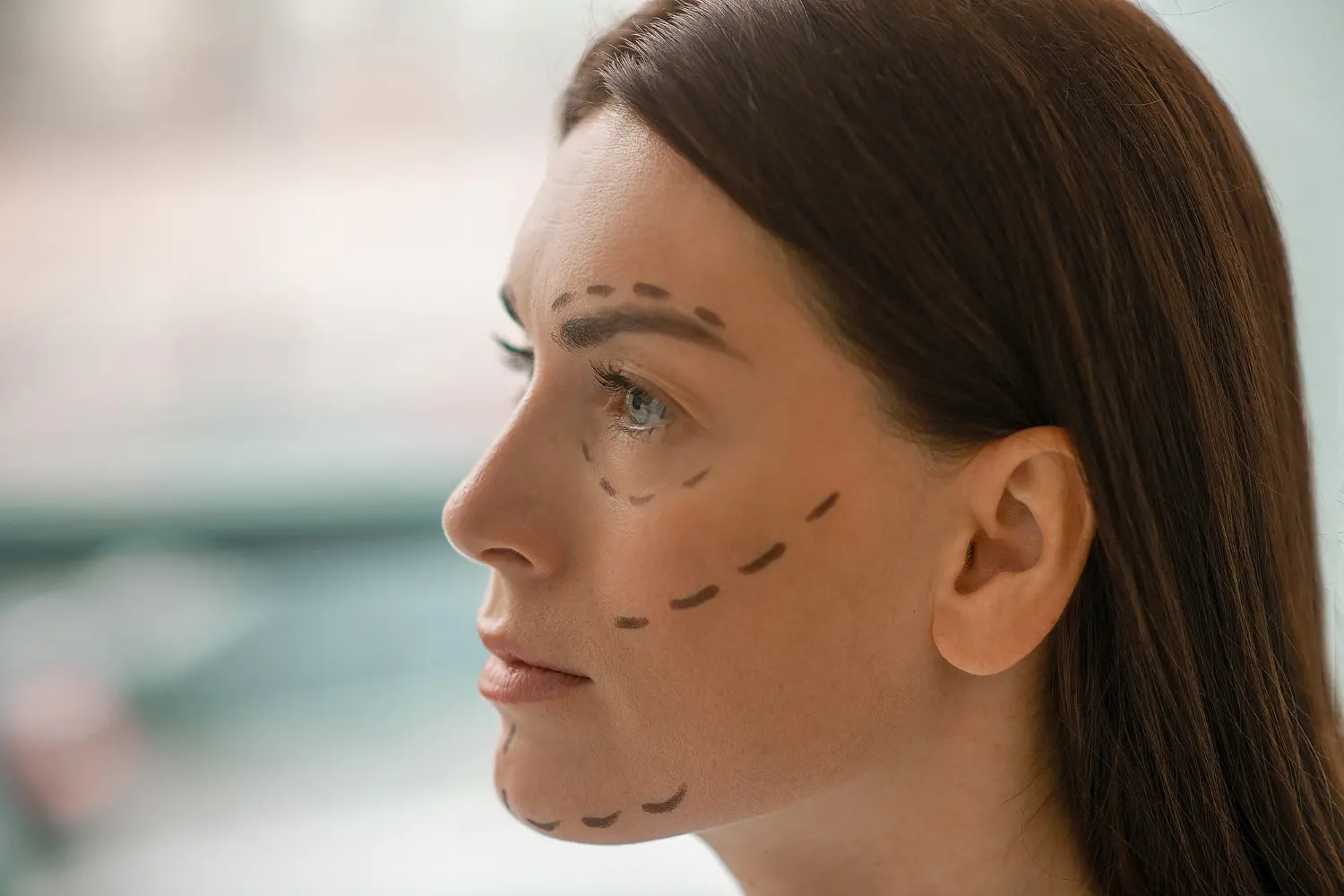
Clinical Outcomes and Evidence Base
Natural aesthetics: dynamic expression and contour continuity
Because the deep plane repositions support layers—not just skin—facial expression remains natural. Patients look like themselves, just refreshed: smoother lid–cheek transitions, fuller cheek contour, crisper mandibular border. And because there’s less skin tension, you’re less likely to see elevated hairlines, widened scars, or earlobe distortion.
Durability and midface rejuvenation versus alternative methods
In peer-reviewed series and expert consensus, you’ll typically see:
- More reliable midface elevation than SMAS plication alone
- Longer-lasting jawline and neck definition in heavier tissues or significant ligament laxity
- Less need for midface fillers afterward
Complication rates, nerve safety, and revision statistics
In experienced hands, deep plane complication rates are comparable to other advanced facelifts:
- Hematoma: About 1–5% (higher in men and those with uncontrolled hypertension). Careful blood pressure control and antiemetics help reduce risk.
- Temporary nerve weakness (neuropraxia): 1–4% transient branch weakness from traction or swelling; permanent injury is uncommon (<0.5% in experienced series).
- Skin compromise/necrosis: <1% in nonsmokers; nicotine and excessive skin tension raise risk.
- Alopecia along incisions: 0.5–2%, minimized by beveling hair-bearing incisions and gentle closure.
- Infection and seroma: Low with modern technique and perioperative protocols.
Limitations of the technique and when alternatives are appropriate
- Mostly skin redundancy, minimal descent? A skin-plus-SMAS plication may be enough.
- Severe skin damage (sun damage) or massive weight loss? You may need more extensive skin work and resurfacing alongside any SMAS work.
- Higher medical risk or tight downtime? Consider limited-incision, office-based options—accepting more modest results.
- Volume-driven aging? Fat grafting or implants may take the lead, even with a limited lift.

Choosing a Surgeon and Practical Considerations
Training, board certification, and case volume metrics
Look for focused facial training and deep plane experience. In the U.S., that often means:
- Board certification from the American Board of Plastic Surgery (ABPS) or the American Board of Facial Plastic and Reconstructive Surgery (ABFPRS)
- Fellowship training in facial aesthetics with deep plane techniques as a core component
- Solid case volume—ask how many deep plane facelifts they perform yearly and request standardized before-and-afters
Consultation essentials: goals, morphologic analysis, and expectations
A thorough consult should cover:
- Detailed facial analysis: midface support, ligament laxity, neck anatomy, skin quality
- Surgical vectors, incision placement, and scar camouflage
- Realistic outcome modeling (photo morphs help—but aren’t guarantees)
- A tailored plan for adjuncts (fat grafting, neck work, skin treatments)
- Recovery planning, time off work, and home support for the first 24–48 hours
Facility accreditation, anesthesia protocols, and cost transparency
- Facility: Choose an accredited operating suite (AAAASF, AAAHC, or The Joint Commission) with full emergency capability.
- Anesthesia: Often general anesthesia or IV sedation with local—based on your needs and the surgeon’s approach.
- Costs: Ask for an itemized quote (surgeon’s fee, anesthesia, facility, garments, follow-ups). Clarify revision policy and what aftercare includes.
Long-term maintenance: skin health, sun protection, and timing of touch-ups
Surgery repositions tissues; it doesn’t stop aging. To keep your results looking their best:
- Use daily broad-spectrum sunscreen and evidence-based skincare (retinoids, antioxidants)
- Maintain a stable weight and avoid nicotine
- Consider periodic non-surgical maintenance (neuromodulators, light resurfacing) to preserve texture and prevent etched lines
- Expect longevity: many enjoy a decade or more of improvement. “Touch-ups” are individualized—sometimes smaller lifts or volume adjustments.


From Our Blog

What Is a Deep Plane Facelift and Why Do Top Surgeons Prefer It?
The deep plane facelift has become the go-to choice for many top facial plastic surgeons—and for good reason. Instead of just pulling skin tight, it works where aging actually happens: in the deeper support layers of the face.
READ THE ARTICLE
What’s the Safest Age to Get a Facelift—and When Is It Too Early?
There isn’t a magic birthday for a facelift. The “safest” age is when your anatomy and skin will clearly benefit more from surgical lifting than from nonsurgical fixes—and when your health makes an elective procedure low risk.
READ THE ARTICLE
Mini Facelift vs. Full Facelift: Technical Differences, Candidacy, and Outcomes
A facelift isn’t one single operation—it’s a range of techniques tailored to how (and where) you’re aging. “Mini facelift” and “full facelift” are common labels, but they point to very different levels of dissection, how deeply tissue is moved, and how much work is done in the neck.
READ THE ARTICLE
Is a Facelift Worth It Compared to Non-Surgical Alternatives? A Clinical, Economic, and Patient-Centered Analysis
Interest in facial rejuvenation has never been higher, but the menu of options—from injectables and energy devices to deep-plane facelifts—can feel overwhelming. Patients often ask a deceptively simple question: is a facelift “worth it” compared to non-surgical treatments?
READ THE ARTICLE