Evolving Paradigms in Facial Rejuvenation: From Skin Excision to Volume Restoration
Early facelifts zeroed in on excising and tightening skin. They helped laxity, sure—but they could look pulled, deepen shadows, and fade fast. Why? They ignored deflation and the way different fat compartments age and empty.
- Volumetric aging of the face: Aging isn’t just descent (ligament laxity, SMAS attenuation); it’s deflation, too (atrophy and shifting of superficial and deep fat compartments). Think hollow temples, tear troughs, and midface; flatter cheeks; a deeper nasolabial fold; and pre-jowl sulcus. Superficial compartments (nasolabial, jowl, lateral cheek) and deep ones (deep medial cheek, SOOF) deflate at different rates—creating telltale step-offs and shadows.
- Rationale for autologous fat augmentation: Fat is biocompatible, easy to harvest, and capable of long-term integration. Bonus: adipose tissue carries stromal vascular fraction (SVF) and adipose-derived stem cells that may improve skin quality via paracrine signaling.
- Evidence and outcomes: Modern cohort studies and systematic reviews commonly report 40–70% volumetric retention at 1 year, with stabilization by 3–6 months. Patients who have a facelift plus fat grafting usually score higher on midface and periorbital aesthetics and report greater satisfaction. High-quality randomized trials are still limited, but the data trend toward more natural-looking, longer-lasting results when volume restoration accompanies rhytidectomy.
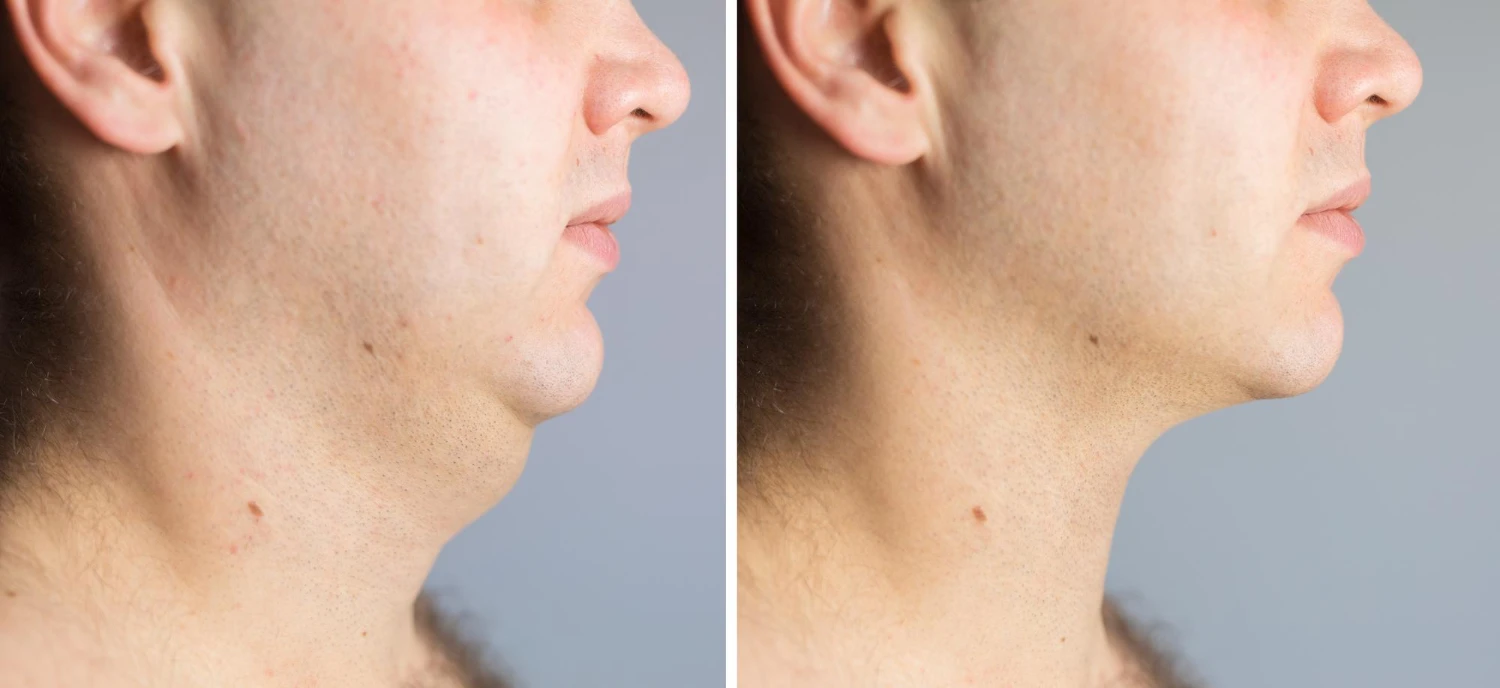
Technical Considerations: Harvest, Processing, and Injection Strategies
Technique drives consistency. Minimize trauma, contamination, and poor injection habits—your results will thank you.
Donor site selection and tumescent infiltration:
Donor site selection and tumescent infiltration:
- Common sites: lower abdomen, flanks, inner/outer thighs, knees.
- Infiltrate with a diluted tumescent solution (e.g., 1,000 mL lactated Ringer’s or saline with 1 mg epinephrine [1:1,000,000] and 0.05–0.1% lidocaine), staying within safe lidocaine dosing. Wait 10–15 minutes for vasoconstriction.
- Manual aspiration with a 10–20 mL syringe and a 2.4–3.0 mm harvest cannula at low negative pressure (~−0.5 atm) reduces shear stress.
- Power-assisted liposuction can work at low settings if gentle and in a closed sterile circuit.
- Goal: remove blood, tumescent fluid, and free lipids while preserving viable adipocytes and SVF.
-
Options:
- Decanting: simple and low-tech—great for larger volumes.
- Centrifugation: the classic Coleman protocol (about 1,200 g for 3 minutes) separates oil (top), purified fat (middle), and aqueous/blood (bottom). Discard the top and bottom.
- Filtration systems: closed-loop filters standardize washing and sizing, reduce contamination, and save time.
-
Product types:
- Structural fat: standard particle size for deep volumization.
- Microfat: smaller parcels (~0.7–1.2 mm) for fine work (tear trough, lips, perioral).
- Nanofat: mechanically emulsified, essentially without viable adipocytes; used intradermally for skin quality—not volume.
- Use blunt cannulas (typically 18–22G for structural fat; 22–25G for microfat).
- Place microdroplets retrograde with constant motion—no boluses. Layer in multiple planes for smooth contours and reliable revascularization.
-
Anatomic zones and typical planes:
- Temple: deep to the superficial temporal fascia (in the deep temporal fossa), with a wary eye on the frontal branch; conservative volumes to avoid bulges.
- Periorbital/tear trough: preperiosteal medially and sub–orbicularis oculi laterally with tiny aliquots; avoid the medial canthus and angular artery territory.
- Midface: deep medial cheek fat (DMCF) and SOOF on bone; then a superficial subcutaneous blend to soften the lid–cheek junction.
- Nasolabial region: superficial to the SMAS along the alar base–to–commissure segment; avoid intravascular injection.
- Jawline/pre-jowl: pre-jowl sulcus, anterior mandible, and chin; deep on periosteum for projection, subcutaneous for contour.
- Lips/perioral: microfat only; conservative volumes to limit lumpiness.
- Use blunt cannulas, aspirate before injecting, inject slowly at low pressure, and stay in the correct plane. Avoid high-risk vascular zones (glabella, nasal dorsum). Intravascular injection can cause embolic events—treat prevention like gospel.

Complications, Longevity, and Postoperative Management
Graft survival and overcorrection:
- A small early overcorrection (10–20%) is common to offset expected resorption—except in delicate zones like eyelids, lips, and temples, where restraint is key.
- Most resorption happens within 3–6 months; after that, volume is relatively stable. Long-term? Volumes can track with weight changes—living adipocytes still respond to metabolism.
- Contour irregularities and asymmetry: minimized by microdroplet technique and multi-plane layering; managed with massage, steroid microinjections, or touch-up grafting.
- Oil cysts/fat necrosis: firm nodules that may need aspiration, needling, or limited excision if they persist.
- Vascular events: rare but serious. Intravascular injection can cause skin necrosis or, periorbitally, retinal artery occlusion and vision loss. Prevention is everything: blunt cannulas, slow low-pressure injection, precise planes. Have an emergency protocol ready (stop injection, warm compresses, ophthalmology pathway).
- Infection: uncommon with closed systems; treat early with culture-directed antibiotics.
- Nerve injury: unlikely from grafting when planes are respected; more relevant to the facelift itself.
- Avoid pressure on grafted areas for 1–2 weeks; sleep with your head elevated. Skip prolonged icing over freshly grafted zones—perfusion matters.
- Keep weight stable; no smoking (it harms graft take and flap perfusion).
- Standard facelift care: incision hygiene, watch for hematoma, and keep blood pressure in check.
- Follow-up commonly at: 1 week, 6 weeks, 3 months, and 6–12 months, with photos for objective comparison.
- Staged touch-ups: consider small-volume refinements after 3–6 months once the volume plateaus.
- Patient-reported tools (e.g., FACE-Q) consistently show high satisfaction for contour and naturalness when fat grafting is added.
- Cost-effectiveness: Yes, operative time increases by about 30–60 minutes—but over years, it’s often more economical than serial HA fillers, especially for patients who frequently maintain midface and temple volume.
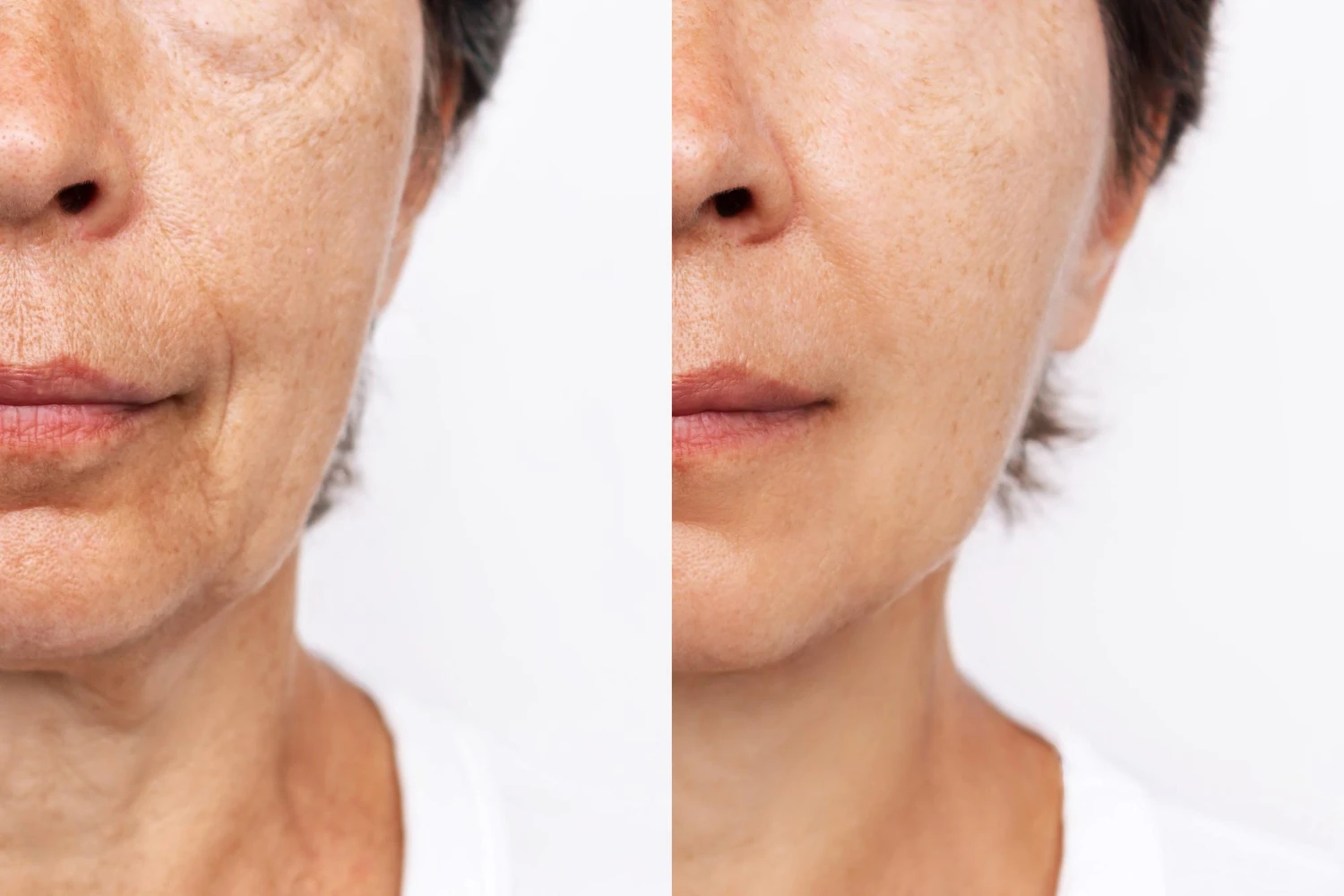

From Our Blog

What Is a Deep Plane Facelift and Why Do Top Surgeons Prefer It?
The deep plane facelift has become the go-to choice for many top facial plastic surgeons—and for good reason. Instead of just pulling skin tight, it works where aging actually happens: in the deeper support layers of the face.
READ THE ARTICLE
What’s the Safest Age to Get a Facelift—and When Is It Too Early?
There isn’t a magic birthday for a facelift. The “safest” age is when your anatomy and skin will clearly benefit more from surgical lifting than from nonsurgical fixes—and when your health makes an elective procedure low risk.
READ THE ARTICLE
Mini Facelift vs. Full Facelift: Technical Differences, Candidacy, and Outcomes
A facelift isn’t one single operation—it’s a range of techniques tailored to how (and where) you’re aging. “Mini facelift” and “full facelift” are common labels, but they point to very different levels of dissection, how deeply tissue is moved, and how much work is done in the neck.
READ THE ARTICLE
Is a Facelift Worth It Compared to Non-Surgical Alternatives? A Clinical, Economic, and Patient-Centered Analysis
Interest in facial rejuvenation has never been higher, but the menu of options—from injectables and energy devices to deep-plane facelifts—can feel overwhelming. Patients often ask a deceptively simple question: is a facelift “worth it” compared to non-surgical treatments?
READ THE ARTICLE