What Is Sinus Surgery?
Sinus surgery focuses on improving breathing and relieving chronic sinus problems caused by blockages, inflammation, or structural issues within the nasal passages. While some procedures can also enhance nasal appearance, the primary goal with sinus surgery is to restore proper airflow and function.
At Mourad NYC, Dr. Mourad performs both functional and reconstructive sinus procedures designed to address each patient’s unique needs. Depending on the case, surgery can involve refining the nasal structure, correcting a deviated septum, or clearing obstructed sinus pathways. Sinus surgery is performed under general anesthesia in a fully accredited surgical facility. The procedure typically lasts between one to three hours. Using either an open or closed approach, Dr. Mourad makes precise adjustments to the cartilage, bone, and soft tissue to achieve balanced, natural results that support both form and function.
After the procedure, a small splint might be placed to stabilize the nose and aid in healing. Most patients return home the same day. Dr. Mourad and his team provide detailed post-operative guidance and follow-up care to support a smooth recovery and long-term comfort.
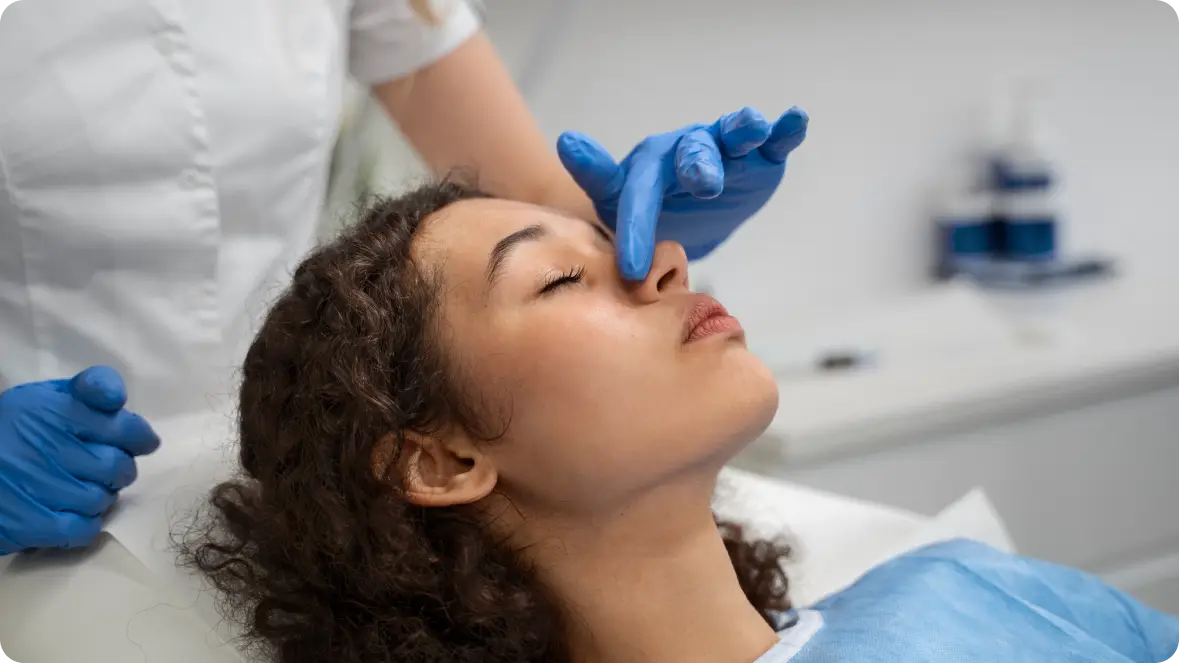
What To Expect After Your Procedure
If you have sinus surgery, here’s a general guide of what you can expect during recovery.
Days 1 to 3: Initial Healing
You’ll likely experience some swelling, congestion, and mild discomfort around your nose and eyes. Bruising can appear during this time, especially near the nasal bridge. Dr. Mourad provides detailed post-op instructions to help manage these symptoms and promote healing.
Week 1: Early Recovery
Most of our patients notice gradual improvement by the end of the first week. Swelling and bruising start to fade, and breathing becomes easier as the nasal passages clear. If nasal packing or splints are used, they are often removed around this time. Many people feel ready to return to work or school within 7 to 10 days.
Weeks 2 to 4: Visible Changes
Swelling continues to go down, revealing more of your refined nasal shape. You can resume light exercise and daily activities, but it’s best to avoid strenuous workouts until cleared by Dr. Mourad. Any external incision from an open approach (placed discreetly along the columella) heals and fades gradually, while closed procedures leave no visible marks.
Months 2 to 6: Ongoing Refinement
Your nose keeps adjusting during this stage as residual swelling continues to resolve, especially around the nasal tip. The contours continue to smooth out, and your results appear more natural each month, blending with your natural features.
What Should I Avoid During Recovery?
During recovery, it’s best to take things slow and give your body time to heal. Avoid strenuous activities such as heavy lifting, running, or intense exercise for at least two weeks, or until Dr. Mourad clears you to resume them. These activities can actually raise your blood pressure and increase the risk of bleeding.
You should also avoid blowing your nose for the first week or two. Gentle saline rinses are often recommended instead to keep the nasal passages clear.
When it comes to sleep, try to avoid placing your head completely flat on the pillow. Instead, it’s best to elevate your head for the first one to two weeks to reduce swelling and congestion.
Finally, steer clear of smoky or dusty environments, hot showers, or steam rooms in the early stages of healing, as these can irritate your sinuses.
Are there Risks with Surgery?
Yes, every surgery carries some risk. The risk of sinus and rhinoplasty procedures includes possible issues such as nasal congestion, breathing difficulty, skin sensation changes, or asymmetry. Revision surgery is rarely needed. Dr. Mourad minimizes risks through detailed planning and careful technique to support a smooth recovery and a balanced, lasting result.
Are You a Candidate For Sinus Surgery?
During your consultation, Dr. Mourad will look closely at your nose (both the functional and cosmetic aspects) and create a plan that aligns with your goals. You might be a candidate for sinus surgery if you:
- Experience chronic sinus infections that don’t improve with medication
- Have frequent nasal congestion or difficulty breathing through the nose
- Suffer from facial pressure, headaches, or post-nasal drip caused by sinus blockages
- Have a deviated septum or nasal polyps contributing to sinus issues
- Have already tried non-surgical treatments without long-term relief
- Are in good overall health and have been medically cleared for surgery


From Our Blog

What Is a Deep Plane Facelift and Why Do Top Surgeons Prefer It?
The deep plane facelift has become the go-to choice for many top facial plastic surgeons—and for good reason. Instead of just pulling skin tight, it works where aging actually happens: in the deeper support layers of the face.
READ THE ARTICLE
What’s the Safest Age to Get a Facelift—and When Is It Too Early?
There isn’t a magic birthday for a facelift. The “safest” age is when your anatomy and skin will clearly benefit more from surgical lifting than from nonsurgical fixes—and when your health makes an elective procedure low risk.
READ THE ARTICLE
Mini Facelift vs. Full Facelift: Technical Differences, Candidacy, and Outcomes
A facelift isn’t one single operation—it’s a range of techniques tailored to how (and where) you’re aging. “Mini facelift” and “full facelift” are common labels, but they point to very different levels of dissection, how deeply tissue is moved, and how much work is done in the neck.
READ THE ARTICLE
Is a Facelift Worth It Compared to Non-Surgical Alternatives? A Clinical, Economic, and Patient-Centered Analysis
Interest in facial rejuvenation has never been higher, but the menu of options—from injectables and energy devices to deep-plane facelifts—can feel overwhelming. Patients often ask a deceptively simple question: is a facelift “worth it” compared to non-surgical treatments?
READ THE ARTICLE