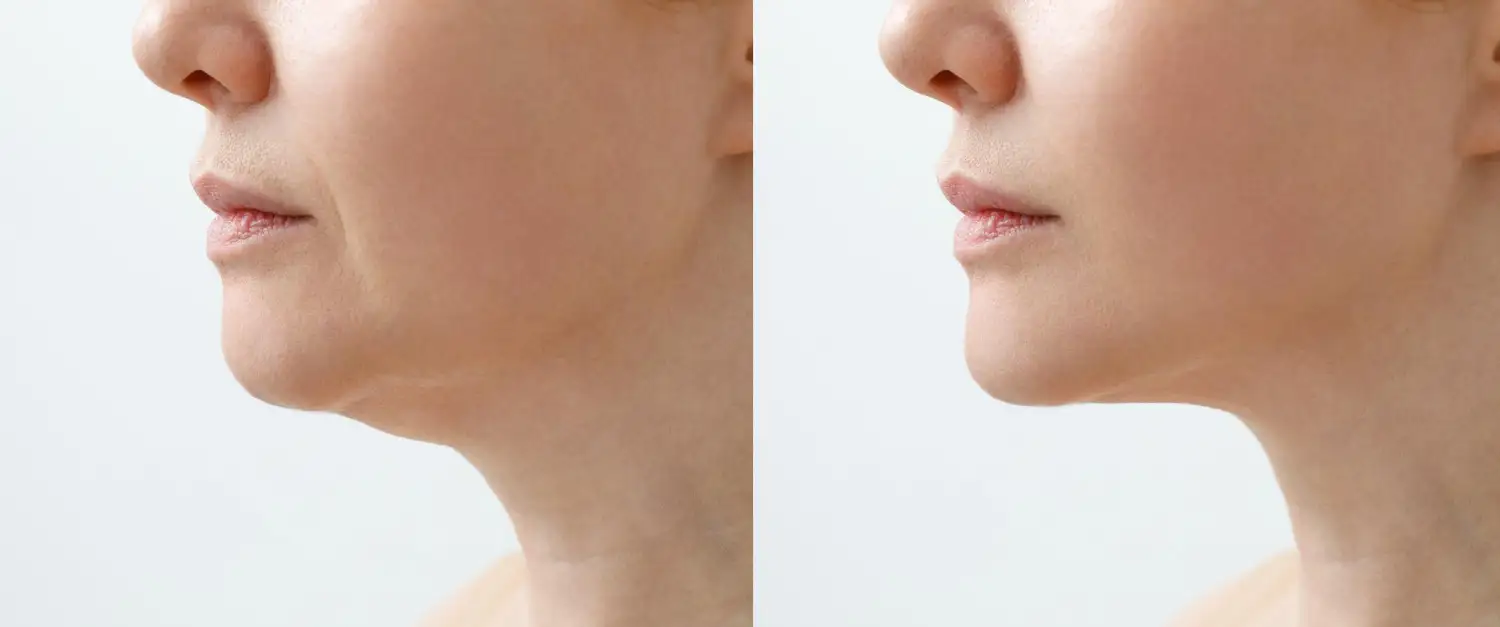
Facelift Results Under the Microscope: Before-and-After Photography Standards
December 30, 2025
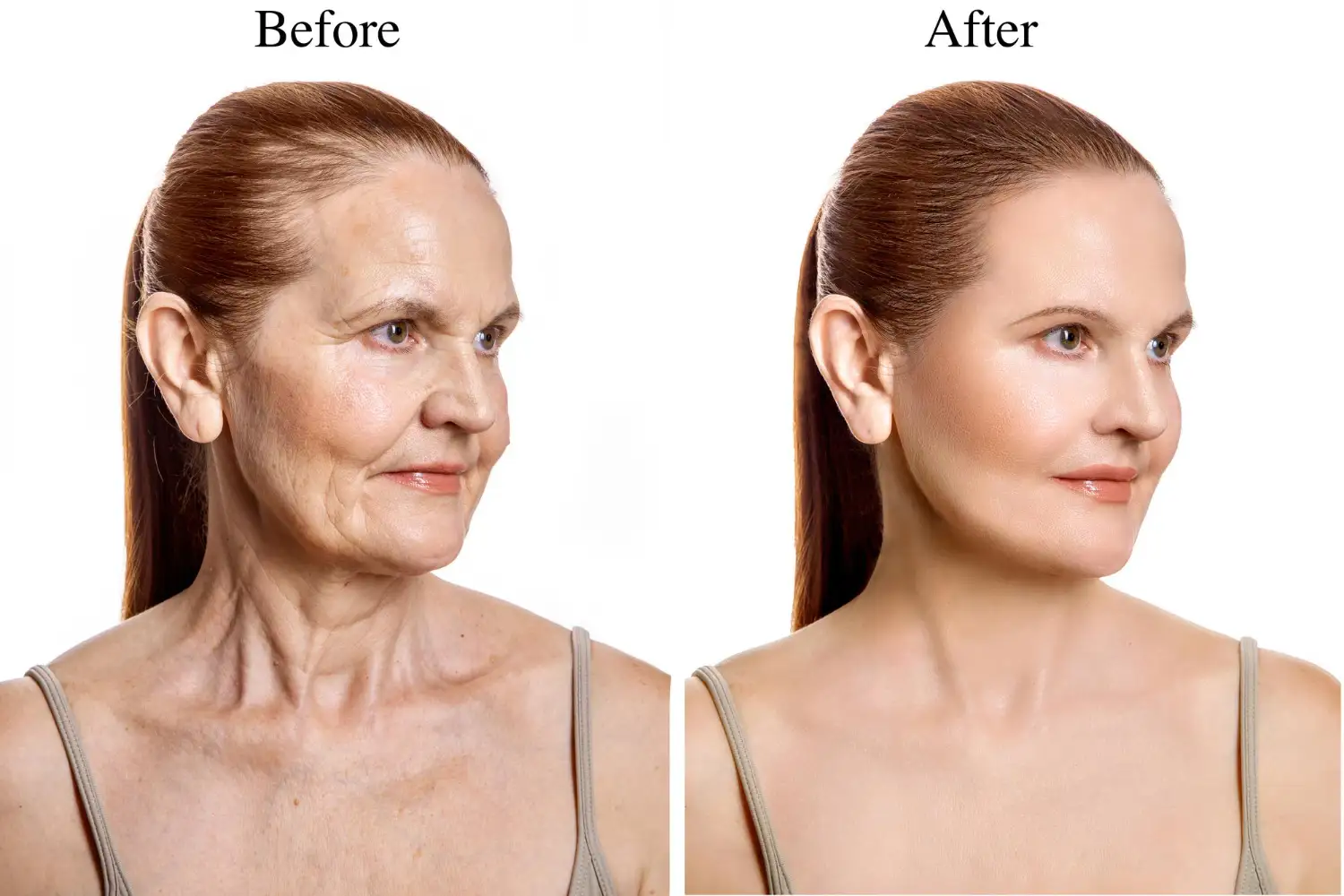
In facial plastic surgery, strong before-and-after photos are the currency of trust. Nowhere is that truer than with facelifts (rhytidectomy), where millimeters—and even the direction of pull—tell the story. Consistent, unbiased, verifiable photography isn’t a “nice-to-have.” It’s the backbone of honest patient education, meaningful clinical audit, and defensible research. Below is a practical, standards-driven blueprint for building a reproducible photo workflow designed specifically for facelift documentation.
Why Image Standardization Matters in Facelift Outcome Assessment
Consistent photography isn’t just about aesthetics; it’s about measurement. When images are reproducible, they become data you can actually interpret.
- Clinical utility and communication value
- Audit and QI: Standardized, longitudinal photos let you evaluate scar placement, recurrence of jowling, and cervicomental angle changes over time—across cohorts and techniques.
- Research: High-fidelity visuals enable objective comparisons (e.g., SMAS plication vs deep plane), pooled analyses, and multi-center collaboration.
- Patient education: Meticulous, repeatable images reassure patients that results are authentic and representative—not cherry-picked or enhanced.
- Recognizing and controlling bias
- Pose and head tilt can sharpen a jawline or hide platysmal bands—without any surgery.
- Camera distance and focal length change facial proportions; move closer and noses/chins balloon, step back and features flatten.
- Makeup and hair can cover scars or mask skin-quality changes.
- Timing artifacts—early edema, erythema, residual swelling—can flatter or punish results depending on when you shoot.
- The fix? A disciplined protocol that locks down these variables (and documents any deviations).
- Objective versus subjective evaluation
- GAIS (Global Aesthetic Improvement Scale) is simple and useful, but without standardized images it’s prone to expectation bias.
- FACE-Q, a validated patient-reported outcome tool, captures satisfaction and quality-of-life changes photos can’t.
- Blinded reviewer protocols—independent raters, paired images, random order—only mean something if the photos are shot under identical conditions.
- Linking photography to outcomes science
- Reproducible images can be mapped to complications (hematoma, neuropraxia, scar hypertrophy) and technique variables (incision design, SMAS work). That’s how you move from anecdote to true quality improvement.
Imaging Hardware and Exposure Control: Building a Reproducible Capture Platform
Precision comes from controlling the entire imaging chain—sensor to screen
- Camera body and sensor selection
- Full-frame vs APS-C: Both work. Full-frame usually gives more dynamic range and cleaner files at base ISO; APS-C is cost-effective and excellent in controlled lighting.
- Dynamic range: Aim for ≥13 stops at base ISO to keep highlights (forehead/specular areas) and shadows (hairlines/preauricular) intact.
- RAW capture: Always shoot RAW. It preserves highlight latitude, stabilizes white balance, and allows non-destructive global exposure tweaks without altering clinical content.
- Lens choice and perspective integrity
- Use 85–135 mm on full-frame (≈55–90 mm on APS-C). That range keeps geometry honest and facial proportions true.
- Prefer primes for consistency and sharpness; if you use a zoom, lock it at a marked focal length.
- Apply the same lens profile corrections to every image—no subject-specific distortion fixes that might skew contour.
- Manual exposure discipline
- Lock the exposure triangle: ISO 100–200, aperture f/8–f/11 (for sharpness from nasal tip to tragus), and a stable shutter.
- With strobes: 1/125–1/200 s (within sync) to freeze motion and avoid ambient contamination.
- White balance: Set a Kelvin value matched to your lights (e.g., 5600 K for flash) and shoot a gray card at the start of each session to anchor color.
- Histogram management: Protect highlights on the forehead and malar eminences while preserving midtones for skin texture.
- Data integrity and file management
- Preserve EXIF: Date/time, lens, focal length, and exposure matter for audits and legal defensibility.
- Standardized filenames: Use a consistent schema like PatientID_Date_View_Series_Side_Stage. Example: 04721_2025-10-14_ROblique_FF_Pre.CR3
- Version control: Store RAWs read-only. Make non-destructive edits and export derivatives with meaningful tags (e.g., _WBcal_sRGB_2048px).
- DICOM workflows: Optional but powerful—DICOM standardizes metadata and integrates with PACS/EMR. If you’re not using DICOM, maintain checksums (SHA-256) and a clear audit trail for every file.

Patient Positioning and View Reproducibility: Controlling the Human Variables
Standard views and consistent head alignment are essential for judging soft-tissue shifts, redundancy, and cervicomental contour.
- Canonical views for facelift documentation
- Frontal (neutral gaze, full face)
- Right and left oblique (30–45°)
- Right and left true profile (90°)
- Submental (neck extended to show the cervicomental angle and submandibular region)
- Optional: Close-ups of incision lines (preauricular, postauricular, temporal hairline) under the same lighting.
- Head position and alignment
- Use the Frankfort horizontal (canthomeatal) plane: align the line from the inferior orbital rim to the superior external auditory meatus parallel to the floor.
- Keep the interpupillary line level; a hot-shoe bubble level and a wall-mounted guide help.
- Consider posture aids: a marked floor mat, an adjustable stool with back support, and a reference bar behind the patient.
- Distance and magnification control
- Fix camera-to-subject distance (e.g., 1.8–2.2 m depending on focal length). Mark tripod placement and verify with a measuring tape to a wall target.
- Keep tripod height consistent so the lens center sits at nasion/mid-face level for every view.
- Scaling references: Match magnification by aligning facial landmarks to a framing guide (e.g., hairline to sternal notch in a fixed crop). Physical rulers are usually avoided for facial aesthetics but are great for incision close-ups.
- Expression and grooming controls
- Expression: Neutral face, eyes open, mouth gently closed with light centric occlusion. No smile. No frown. No brow lift.
- Hair: Pulled off the face and behind the ears to show pre- and postauricular areas. Remove accessories that cast shadows.
- Jewelry and eyewear: Remove anything reflective or obstructive.
- Makeup: No makeup—ever. Provide wipes and mattifying papers to reduce shine.
- Facial hair: Document the baseline; keep it consistent across visits (or note any changes).
A quick script keeps everyone aligned: “Stand on the footprints. Look straight ahead. Mouth closed, face relaxed. Bring your chin level—nice and easy. Hold still while we take five views.”
Lighting, Background, and Color Management: Ensuring Consistent, Interpretable Images
Light determines what we can see. For facelifts, the goal is to reveal contour, texture, and color—faithfully and without glare.
- Illumination setups
- Dual softboxes at 45°: Two identical soft sources, equidistant at ~45°, slightly above eye level and angled down. Soft shadows, good shape, no drama.
- Background separation: Keep the subject ~1–1.5 m off the backdrop to minimize shadows and edge glow.
- Cross-polarized vs non-polarized light:
- Non-polarized soft light is standard for contour/volume changes.
- Cross-polarization (linear polarizers on lights + circular polarizer on the lens at 90°) removes specular glare and highlights subsurface chromophores—great for scar erythema and tone analysis. If you can, capture both standard and cross-polarized sets at each timepoint.
- Avoid specular hotspots: Flag lights or tweak angles to prevent blown highlights on the forehead, nose, and malar region.
Anatomic analysis
- SMAS status: assess mobility and adhesion patterns; note prior plication sites or grafts.
- Platysma integrity: check for anterior banding with animation and the lateral sling along the jawline.
- Malar fat pad position: a midface still “sitting low” after a lateral pull suggests inadequate release or off-target vectors.
- Hairline and earlobe landmarks: document sideburn position, temporal recessions, and any lobule traction.
- Neck compartments: distinguish subcutaneous from subplatysmal fullness; assess digastric muscle bulk or submandibular gland prominence.
Risk stratification
- Comorbidities: hypertension, diabetes, anticoagulants, thyroid disease—all affect hematoma risk and wound healing.
- Smoking and nicotine exposure: major risk for skin flap ischemia—strict cessation before and after surgery is non-negotiable.
- ASA class and anesthesia risk inform the setting and monitoring needs.
- Skin type and scarring history: Fitzpatrick type, prior hypertrophic scars/keloids, and pigment risk shape scar strategy.
Expectations and metrics
- Align goals with validated tools:
- FACE-Q for patient-reported outcomes (satisfaction, quality of life).
- Merz Facial Assessment Scales for objective grading of contours and folds.
- Photographic standardization: consistent lighting, angles, and—if available—3D imaging provide a reliable baseline and a clear counseling aid.
Surgical Strategies to Optimize Results and Prevent Overcorrection
Revision work rewards restraint and precision. The aim: restore deep support, recalibrate vectors, and keep skin tension low.
SMAS and deep-plane revision
- Release versus plication: if prior plication caused tethering or a lateral sweep, a controlled release and conversion to a deep-plane or high-SMAS approach can help. Conversely, limited re-plication can work when mobility is good but prior fixation has relaxed.
- Vector recalibration: overly horizontal pulls exaggerate a lateral sweep. In revision, shift to more oblique-superior vectors to elevate the malar area and jowl without pulling the perioral region off track.
- Limited undermining: in scarred fields, protect perfusion with targeted undermining and traction–countertraction. Avoid broad skin undermining; let the SMAS carry the lift so the skin rests with minimal tension.
Example: a patient with early midface descent and “pulled” lateral cheeks after a lateral-pull facelift often improves with deep-plane release of the zygomatic and masseteric retaining ligaments, then a more vertical vector to reposition the malar fat pad.
Neck optimization
- Medial platysmaplasty: for persistent anterior bands; suture approximation tones down dynamic banding.
- Lateral platysma suspension: re-establishes a clean mandibular line and complements medial work.
- Subplatysmal fat: conservative excision sharpens the cervicomental angle—avoid over-resection that can hollow or “skeletalize” the neck.
- Digastric/submandibular gland considerations: address digastric hypertrophy cautiously; for submandibular gland ptosis or prominence, consider suspension or partial reduction in select cases—balancing contour gains against potential dry mouth.
Deformity management
- Lateral sweep: fix with deep-plane release and vertical vectoring; more lateral tightening only makes it worse.
- Pixie ear: recreate a free lobule by advancing postauricular skin and anchoring the lobule to the mastoid fascia—not the cheek skin.
- Hairline distortion: use trichophytic incisions to restore a natural hairline or perform hairline advancement/lowering when needed; consider hair transplantation for focal alopecia.
- Temporal hollowing: camouflage with microfat grafting or precisely placed HA/CaHA; restore contour rather than chasing it with extra tightening.
- Perioral tension: dial back SMAS vectors that converge near the oral commissure; add volume to the pre-jowl sulcus and marionette area to rebalance.
Intraoperative safeguards
- Meticulous hemostasis: combine bipolar cautery with smart tumescent use. Hematoma is the top driver of early revision—don’t invite it.
- Drain strategy: closed-suction drains or quilting sutures reduce dead space when appropriate; pair with compressive dressings and strict blood-pressure control.
- Nerve protection: planes are altered in revision—know your landmarks (zygomatic arch, SCM, tragal pointer). Be extra cautious around the marginal mandibular and frontal branches. Gentle spreading beats sharp cutting in scarred tissue.
- Layered closure: re-drape skin with zero tension; let deep dermals do the heavy lifting so epidermal edges meet without blanching. This helps avoid widened scars and pixie ear.
Nonsurgical Adjuncts and Minor Revisions for Refinement
Not every concern needs a scalpel. When sequenced well, nonsurgical options can extend results and steer you away from overcorrection.
Volumization and contour harmonization
- Hyaluronic acid (HA) fillers: precise refinements at the tear trough–malar transition, pre-jowl sulcus, and lateral chin; reversible if needed.
- Calcium hydroxylapatite (CaHA): structure for the mandibular angle and lateral cheek; dilute for biostimulation in the lower face/neck.
- Poly-L-lactic acid (PLLA): a stimulatory volumizer for broader deflation—used in staged sessions.
- Microfat/nanofat grafting: autologous options that integrate well; microfat restores volume, nanofat can improve skin quality via stromal vascular fraction.
Timing tip: hold most fillers until 3–6 months post-facelift—let swelling settle and tissues stabilize first.
Skin quality and texture
- Fractional lasers (CO2/Er:YAG): smooth rhytids, perioral lines, and dyschromia; staged resurfacing can boost rejuvenation without more lifting.
- RF microneedling: tightens dermis and refines texture—especially for mild recurrent laxity and neck crepiness.
- Focused ultrasound: consider for late-stage maintenance—not during early healing.
- Chemical peels: TCA or blended peels for pigment and fine lines—always with strict sun protection.
Neuromodulators and selective chemodenervation
- Platysma bands: low-dose botulinum toxin for dynamic bands when surgery isn’t on the table (or between stages).
- DAO modulation: softens marionette shadows and improves lower-face balance without extra traction.
- Masseter balance: careful dosing for hypertrophy can slim facial width and sharpen the jawline.
Scar and alopecia management
- Hypertrophic scar therapy: serial triamcinolone (with or without 5-FU) plus silicone gel/sheets and pressure taping
- PRP: adjunct for scar remodeling and hairline/donor-site support.
- Trichophytic scar revision: for widened or irregular temporal scars; consider hair grafting for stubborn spots.
Protocols to Avoid Overcorrection and Ensure Durable Outcomes
Balanced tension philosophy
- SMAS-first approach: let deep support do the work—too much skin tension causes the “pulled” look, wide scars, and pixie ear.
- Conservative vectors: favor oblique-superior midface vectors and tailored lateral neck vectors; avoid one-size-fits-all horizontal pulls.
- Volume restoration: often, “tightening” is really compensation for deflation. Replace volume thoughtfully rather than over-tightening tissues.
Staging and decision algorithms
- Start with the least invasive effective step:
- Minor irregularity or hollowing: filler or microfat first.
- Persistent anterior band: targeted platysma work.
- Lateral sweep/midface descent: deep-plane release with vector correction.
- Build re-evaluation checkpoints at 6–12 weeks after each step—this helps prevent stacking interventions into overcorrection.
Case example: at 9 months, a patient with mild recurrent jowling may do best with microfat to the pre-jowl and RF microneedling to the lower face, holding off on surgery. Reserving a revision for clear, progressive laxity avoids unnecessary tightening.
Postoperative monitoring
- Early detection of over-tightening: watch for oral commissure distortion, lobule traction, or a tethered smile. Address vector imbalance early with massage, selective suture release (rare), and volume tweaks.
- Edema control: elevate, use cold therapy for 48 hours, then start lymphatic massage when appropriate—this helps reduce fibrosis and contour irregularities.
- Scar management: tape, silicone therapy, and gentle massage from weeks 3–4; escalate to steroid/5-FU if hypertrophy appears.
Documentation and risk management
- Informed consent: be clear about the added complexity, risks, and realistic outcomes of revision surgery—including possible nerve weakness, hematoma, and variable scar behavior.
- Photography: standardized, high-quality images before and after the primary and any secondary procedures are essential for planning and quality control.
- Outcome audits: track patient-reported outcomes (FACE-Q) and complication rates; use that data to refine indications and protocols.
Conclusion
A revision or touch-up after a facelift isn’t an admission of failure—it’s a thoughtful response to biology, technique, and time. The most reliable results come from disciplined assessment, anatomic problem-solving, and a steady commitment to balanced tension and natural vectors. Prioritize deep-plane support over skin traction, replace lost volume when “laxity” is really deflation, and stage interventions so you don’t compound errors. Patients should give healing time to play out—and choose a surgeon who can explain a plan grounded in anatomy and data.
Handled with restraint and precision, a touch-up can polish an already excellent result—and a well-planned revision can restore harmony—without slipping into the trap of overcorrection.
Schedule Your Appointment with Dr. Mourad
If you are considering facial plastic surgery and want results that enhance your natural beauty without looking overdone, schedule a consultation with Dr. Moustafa Mourad today. You will receive personal, expert guidance at every step—from your first visit to your final result.
From Our Blog

December 30, 2025 | Dr. Moustafa Mourad | Uncategorized
Facelift Revision: When to Consider a Touch-Up and How to Avoid Overcorrection
A great facelift can refresh the face and neck for 10 years or more. But aging doesn’t stop, everyone’s anatomy is a little different, and healing has a mind of its own. For some patients, a second, smaller procedure—a revision or touch-up—can sharpen the result, fix early issues, or correct an imbalance that showed up during recovery. The trick is knowing when to step in, what to do, and how to do it with a light hand—so you don’t drift into overcorrection.
READ THE ARTICLE
December 30, 2025 | Dr. Moustafa Mourad | Uncategorized
How AI Is Changing Facelift Planning: From 3D Simulation to Predictive Healing Models
Artificial intelligence is reshaping aesthetic surgery far beyond photo filters and those glossy before–after galleries. In facelift planning especially, AI now covers the whole journey—from high-fidelity 3D capture and biomechanical simulation to models that predict when swelling will settle and how scars will mature.
READ THE ARTICLE
December 30, 2025 | Dr. Moustafa Mourad | Uncategorized
Postoperative Taping, Massage, and Lymphatic Care: What Actually Works
Swelling, pain, and scarring after surgery—everyone deals with them. Patients want a smoother, faster recovery; clinicians want tools that are safe, evidence-based, and realistic to use in clinic. The problem? There’s a lot of noise out there, especially around taping, massage, and “lymphatic” techniques.
READ THE ARTICLE
December 23, 2025 | Dr. Moustafa Mourad | Uncategorized
The Future of Facial Rejuvenation: Biologic Facelifts, PDRN, and Stem Cell Integration
Facial rejuvenation is evolving from traditional lifting toward biologic, regenerative approaches that rebuild skin quality from within. This article explores biologic facelifts, PDRN, and stem cell–informed strategies, highlighting the science, protocols, and real-world considerations shaping the future of aesthetic medicine.
READ THE ARTICLE