Debunking Persistent Myths With Evidence
Myth: Facelifts create an overly tight, “pulled” appearance
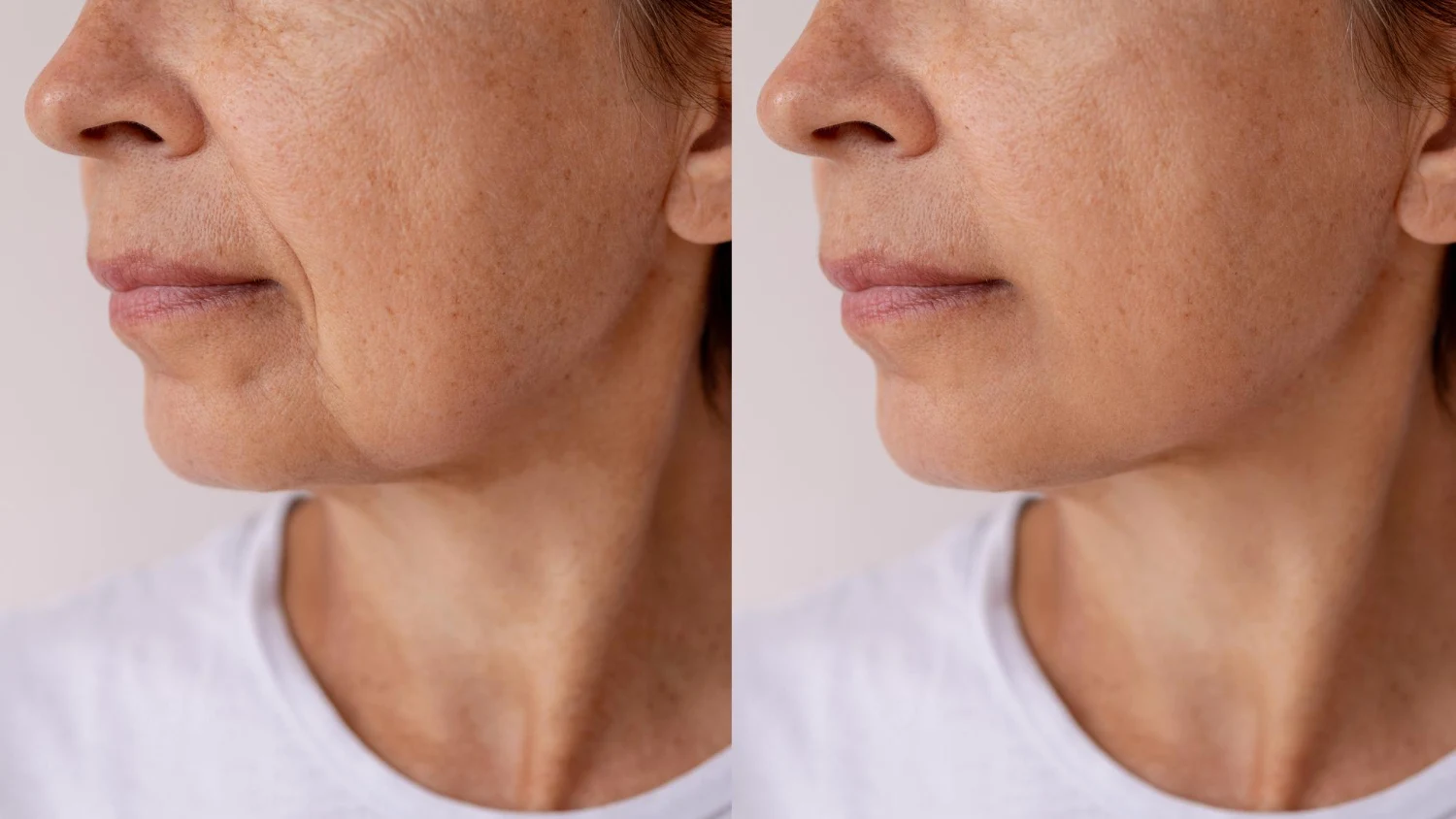
Reality: That “wind-tunnel” look mostly came from older, skin-only lifts that tightened the surface without moving the deeper support. Today’s techniques focus on the SMAS (superficial musculoaponeurotic system) and deep-plane layers. By elevating and repositioning these deeper tissues along youthful vectors—rather than cranking the skin tight—surgeons restore contour and support. The skin is then re-draped with minimal tension, preserving natural movement and expression.
Myth: Facelifts are only for people over 60
Reality: It’s about anatomy, not a birthday. Plenty of patients in their 40s and 50s develop early jowling, jawline blunting, or neck banding from ligament laxity and shifting fat compartments. The right procedure at the right time can be conservative yet effective—often delaying (or softening) more advanced changes down the road.
Myth: Injectables and devices can fully replace a facelift
Reality: Fillers, neuromodulators, and energy-based devices are excellent tools, but they can’t fix significant tissue descent or neck laxity. Non-surgical treatments shine for fine lines, targeted volume restoration, and skin quality. When deeper structures have shifted, surgical repositioning remains the go-to for true jawline and neck rejuvenation.
Myth: Scars are obvious and recovery takes months
Reality: Incisions are placed to hide around the ear and hairline, with careful beveling to preserve hair follicles and natural contours. Most people feel comfortable being out and about in 10–14 days; swelling keeps refining over several weeks. Scars keep maturing for months, typically fading into thin, inconspicuous lines.
Reality: That “wind-tunnel” look mostly came from older, skin-only lifts that tightened the surface without moving the deeper support. Today’s techniques focus on the SMAS (superficial musculoaponeurotic system) and deep-plane layers. By elevating and repositioning these deeper tissues along youthful vectors—rather than cranking the skin tight—surgeons restore contour and support. The skin is then re-draped with minimal tension, preserving natural movement and expression.
Myth: Facelifts are only for people over 60
Reality: It’s about anatomy, not a birthday. Plenty of patients in their 40s and 50s develop early jowling, jawline blunting, or neck banding from ligament laxity and shifting fat compartments. The right procedure at the right time can be conservative yet effective—often delaying (or softening) more advanced changes down the road.
Myth: Injectables and devices can fully replace a facelift
Reality: Fillers, neuromodulators, and energy-based devices are excellent tools, but they can’t fix significant tissue descent or neck laxity. Non-surgical treatments shine for fine lines, targeted volume restoration, and skin quality. When deeper structures have shifted, surgical repositioning remains the go-to for true jawline and neck rejuvenation.
Myth: Scars are obvious and recovery takes months
Reality: Incisions are placed to hide around the ear and hairline, with careful beveling to preserve hair follicles and natural contours. Most people feel comfortable being out and about in 10–14 days; swelling keeps refining over several weeks. Scars keep maturing for months, typically fading into thin, inconspicuous lines.
Candidacy, Consultation, and Surgical Planning
Facial Aging Analysis: Retaining Ligaments, Fat-Compartment Descent, and Skin Quality
A thorough assessment pinpoints what’s actually driving the aged look:
- Ligament laxity and vector: Zygomatic, masseteric, and mandibular retaining ligaments shape where jowls and folds appear.
- Fat compartments: Different compartments descend and deflate at different rates; volume plans should be compartment-specific, not one-size-fits-all.
- Skin envelope: Elasticity, sun damage, and thickness guide incision design and whether resurfacing should be part of the plan.
Photographic Standardization and 3D Imaging for Treatment Mapping
Consistent, high-quality photos—frontal, oblique, lateral—with controlled lighting set a reliable baseline and help align expectations. Many practices now use 3D imaging to illustrate vector changes, plan asymmetry correction, and document outcomes objectively. Helpful? Very.
Risk Stratification: Comorbidities, Medications, Smoking, and VTE Considerations
Safety starts long before surgery day.
- Medical optimization: Control hypertension (a major hematoma risk), manage diabetes, and assess thyroid and cardiovascular status as needed.
- Medications and supplements: Anticoagulants, antiplatelets, NSAIDs, and certain supplements that affect coagulation may require coordination with the prescribing physician.
- Nicotine cessation: Ideally at least four weeks before and after surgery to reduce risks of skin necrosis and delayed healing.
- Venous thromboembolism (VTE): Risk scoring (e.g., Caprini) guides prevention—early ambulation, mechanical compression, and chemoprophylaxis when appropriate.
Goal Setting and Informed Consent: Realistic Outcomes and Trade-offs
The consultation should prioritize what matters most—jawline sharpness, neck refinement, midface lift—and match those goals to the scope of surgery. Patients should understand:
- What surgery can and cannot achieve
- Expected downtime and milestones
- Scar locations and the maturation timeline
- Potential complications and how they’re managed
- The role of maintenance treatments

Outcomes, Longevity, and Selecting the Right Surgeon
Durability of Results: Tissue Repositioning vs Ongoing Intrinsic and Extrinsic Aging
A facelift repositions descended tissues to a more youthful configuration—and that structural change lasts. Aging doesn’t stop, of course. Skin quality, genetics, sun exposure, and weight fluctuations all play a role in how results evolve. Many patients still see visible benefits 8–12 years later, with a gentle fade rather than a hard reset back to baseline.
Maintenance Strategy: Sun Protection, Skincare, Neuromodulators, and Energy-Based Therapies
- Daily sunscreen, retinoids, antioxidants, and targeted pigment control protect your investment.
- Neuromodulators help with dynamic lines that surgery doesn’t address.
- Select energy-based treatments (RF microneedling, light devices) maintain tone and texture.
- Weight stability and healthy habits (sleep, nutrition, stress management) keep everything looking balanced.
Cost Drivers and Value: Technique Complexity, OR Time, Facility, and Geographic Variability
Fees reflect surgeon expertise, the complexity of the plan (deep-plane, neck work, adjuncts), anesthesia, and accredited facility costs. Major metro areas generally run higher. Budget matters—of course—but choosing on price alone can be shortsighted. Experience, safety infrastructure, and consistent outcomes are what truly drive value.
Credentials and Due Diligence: Board Certification, Case Volume, and Before–After Analysis
- Board certification: Look for the American Board of Plastic Surgery (ABPS) or the American Board of Facial Plastic and Reconstructive Surgery (ABFPRS), or equivalent international boards.
- Case volume and focus: Surgeons who perform facelifts routinely are better equipped for variability and nuance.
- Facility accreditation: AAAASF, AAAHC, or hospital-based ORs indicate appropriate standards.
- Outcomes review: Study standardized before-and-afters across ages and anatomies. Check jawline continuity, earlobe position, hairline integrity, and natural expressions.
- Transparent communication: A surgeon who explains options, trade-offs, and risk mitigation is showing you the judgment you want when it counts.


From Our Blog

What Is a Deep Plane Facelift and Why Do Top Surgeons Prefer It?
The deep plane facelift has become the go-to choice for many top facial plastic surgeons—and for good reason. Instead of just pulling skin tight, it works where aging actually happens: in the deeper support layers of the face.
READ THE ARTICLE
What’s the Safest Age to Get a Facelift—and When Is It Too Early?
There isn’t a magic birthday for a facelift. The “safest” age is when your anatomy and skin will clearly benefit more from surgical lifting than from nonsurgical fixes—and when your health makes an elective procedure low risk.
READ THE ARTICLE
Mini Facelift vs. Full Facelift: Technical Differences, Candidacy, and Outcomes
A facelift isn’t one single operation—it’s a range of techniques tailored to how (and where) you’re aging. “Mini facelift” and “full facelift” are common labels, but they point to very different levels of dissection, how deeply tissue is moved, and how much work is done in the neck.
READ THE ARTICLE
Is a Facelift Worth It Compared to Non-Surgical Alternatives? A Clinical, Economic, and Patient-Centered Analysis
Interest in facial rejuvenation has never been higher, but the menu of options—from injectables and energy devices to deep-plane facelifts—can feel overwhelming. Patients often ask a deceptively simple question: is a facelift “worth it” compared to non-surgical treatments?
READ THE ARTICLE