Understanding Facial Aging and Patient Selection
Pathophysiology of Facial Aging: Skin, SMAS, Fat Compartments, and Ligamentous Support
Facial aging isn’t one thing—it’s layers of change:
- Skin: Sun damage, collagen loss, elastosis, and uneven pigment add up over time.
- Subcutaneous and deep fat: Some fat pads deflate (temple, infraorbital), while others descend or thicken (hello, jowls).
- SMAS and platysma: The musculoaponeurotic layer stretches and drops, softening the jawline and creating jowling.
- Retaining ligaments: Zygomatic and mandibular ligaments loosen, which deepens folds like the nasolabial and marionette lines.
- Bone: Subtle resorption of midface and mandibular bone reduces structural support.
Indications and Contraindications for Rhytidectomy vs Minimally Invasive Options
- Best candidates for facelift (rhytidectomy): Moderate to advanced jowling, platysmal banding or neck laxity, a blunted cervicomental angle, decent skin elasticity, and good overall health.
- Better candidates for non-surgical options: Early laxity, volume-driven changes, localized lines, or those who can’t take downtime.
- Relative contraindications to surgery: Uncontrolled hypertension, anticoagulation that can’t be paused, heavy smoking/nicotine use, poorly controlled diabetes, severe photoaging with healing risks, or unrealistic expectations.
Anatomic and Photographic Assessment: Vectored Descent, Jowling, Neck Bands, and Skin Quality
A thoughtful assessment looks at:
- Vectored descent: Which way tissues have shifted (midface vs lower face).
- Jowling and jawline: How clean the mandibular border looks and how deep the prejowl sulcus is.
- Neck: Platysmal bands, submental fullness, hyoid position, digastric muscles, and submandibular glands.
- Skin: Texture, thickness, elasticity, pores, pigment.
Expectation Setting: Objective Outcome Measures, Longevity, and Aesthetic Goals
A good facelift is judged by a straighter jawline, a sharper cervicomental angle, and overall harmony—not by how “tight” the skin looks. Patient-reported tools (like FACE-Q) consistently show high satisfaction when goals match what’s achievable. For the lower face and neck, results often look refreshed for 8–12 years. Non-surgical treatments tend to give smaller, incremental improvements that need maintenance.

Non-Surgical Modalities: Mechanisms, Indications, and Limitations
Injectables: Botulinum Toxin, HA Fillers, CaHA, PLLA—Use-Cases and Laxity Limits
- Botulinum toxin: Softens dynamic lines (glabella, crow’s feet) and can slim the jawline via masseter reduction—but it doesn’t lift.
- Hyaluronic acid (HA) fillers: Restore volume to the midface, lips, chin, and jawline; can camouflage early jowling. Maintenance: roughly 6–18 months, depending on product and placement.
- Calcium hydroxylapatite (CaHA) and poly-L-lactic acid (PLLA): Stimulate collagen and firm skin over months—helpful for support, not a substitute for a surgical lift.
- Limits: Overfilling to “fake” a lift leads to puffiness and distortion. Safety considerations include vascular occlusion (rare but serious) and the Tyndall effect with superficial HA.
Energy-Based Devices: Ultrasound (HIFU/MFU-V), Radiofrequency (Monopolar/Bipolar/Microneedling), Lasers
- MFU-V/HIFU: Focused energy creates thermal points at the SMAS and deep dermis to tighten over 3–6 months—typically mild to moderate changes.
- Radiofrequency (including RF microneedling): Stimulates collagen for tighter, smoother skin; often done in a series.
- Lasers/resurfacing: Fractional and ablative/non-ablative options improve texture, lines, and pigment. Great for skin quality—just not for repositioning deeper tissues.
Threads and Biostimulation: PDO/PLLA Lifting, Collagen Induction, and Longevity
Barbed PDO/PLLA threads can nudge tissues upward and stimulate some collagen. Results are subtle and typically last 6–12 months for visible lifting (biostimulatory effects can outlast the visible lift). Possible issues: dimpling, asymmetry, thread visibility or extrusion, and inflammatory reactions. Best reserved for mild laxity and good skin quality—with careful counseling.
Maintenance Burden and Safety: Treatment Intervals, Adverse Events, and Cumulative Costs
- Typical intervals: Neuromodulators every 3–4 months; fillers every 12–24 months; RF/HIFU annually or in series; lasers as needed.
- Adverse events: Usually short downtime (days, not weeks), but bruising, swelling, burns, nodules, and rare vascular events can occur.
- Cumulative cost: Many patients spend $3,000–$8,000 per year, depending on the regimen and region.
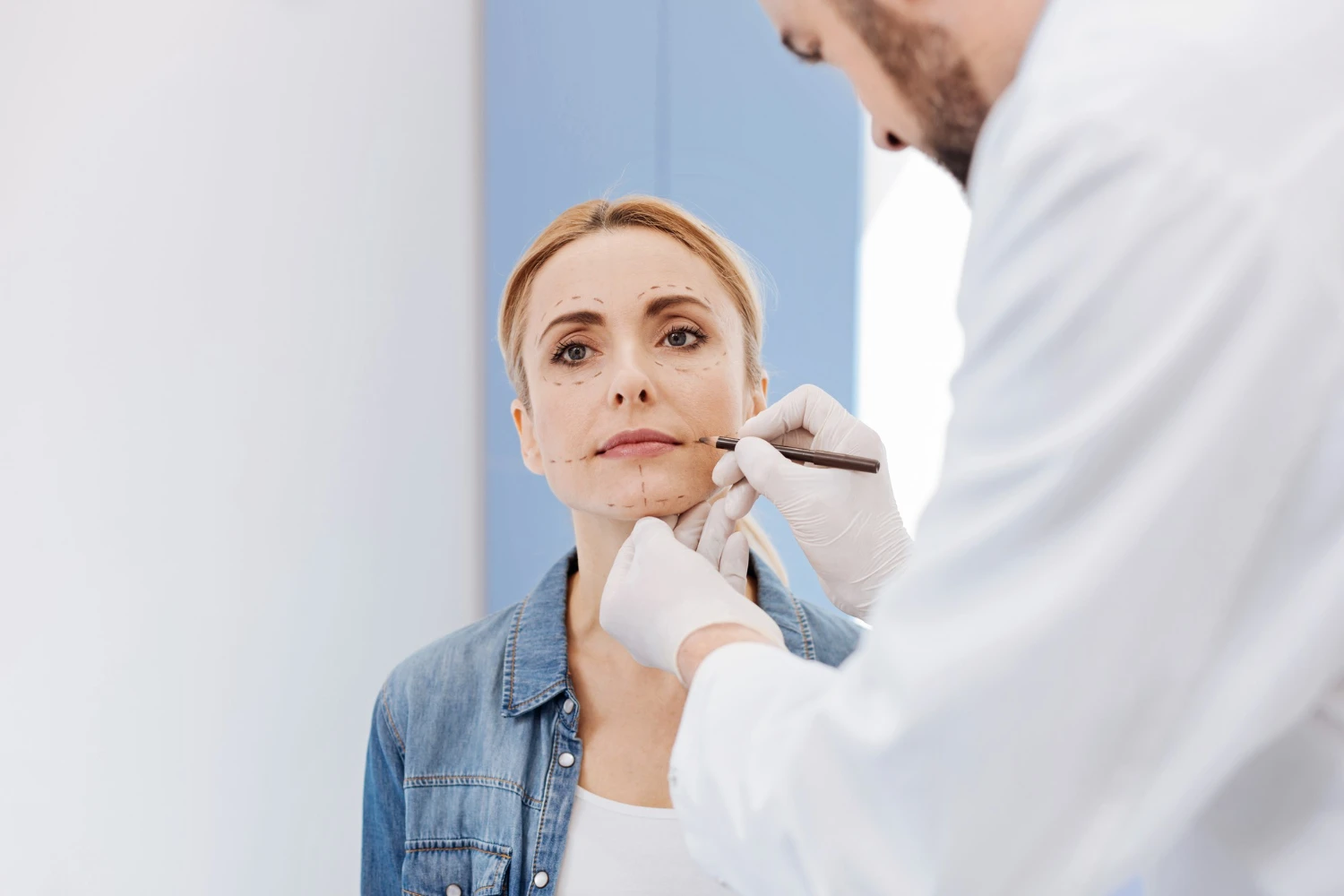
Decision Pathways and Practical Scenarios
Clinical Scenarios: Early, Moderate, and Advanced Aging—Algorithmic Recommendations
- Early aging (30s–40s; mild jowling, good skin):
- Strategy: Neuromodulators; conservative HA to midface/chin/jawline; annual RF microneedling or MFU-V; medical-grade skincare; strict sun protection.
- Facelift: Usually not indicated. Threads only in select cases—with clear counseling on limits.
- Moderate aging (late 40s–60s; visible jowls, early neck bands, midface descent):
- Strategy: Deep-plane facelift with lateral platysmaplasty and targeted fat grafting; add submental work if needed. Consider resurfacing for texture/pigment.
- Maintenance: Light neuromodulators/fillers; annual energy device for skin quality.
- Advanced aging (60s–70s+; significant laxity, prominent bands, heavy jowls):
- Strategy: Comprehensive facelift/necklift with corset platysmaplasty, judicious fat grafting, and potential adjuncts for submandibular fullness. Staged resurfacing for severe photodamage.
Combination and Sequencing Strategy: Prehabilitative Skincare, Energy Devices, and Timing of Surgery
- Prehabilitation: 8–12 weeks of skincare (retinoid, vitamin C, sunscreen) to prime the skin and support healing.
- Sequencing:
- Before surgery: Avoid fillers in the surgical field close to the operation; consider non-ablative skin work several months prior.
- During surgery: Pair with fat grafting; selective laser when appropriate.
- After surgery: Resume neuromodulators at 2–4 weeks and fillers at 6–12 weeks if needed; consider annual RF for collagen maintenance.
Candidacy Red Flags: Unrealistic Expectations, Smoking, Coagulopathy, and Skin of Color Considerations
- Red flags: Body dysmorphic disorder, doing it mainly due to social pressure, expecting “zero downtime” from surgery, or wanting extreme changes.
- Smoking/nicotine: Raises the risk of skin loss and poor healing—most surgeons require 4–6 weeks of cessation before and after.
- Anticoagulation: Coordinate with your prescriber to reduce hematoma risk.
- Skin of color: Higher risk of post-inflammatory hyperpigmentation and hypertrophic/keloid scars. Use conservative energy settings and devices tailored to Fitzpatrick type; favor staged resurfacing, pretreatment, and strict photoprotection.
Provider Selection, Informed Consent, and Post-Procedure Maintenance Plan
- Provider selection: For surgery, choose a board-certified plastic surgeon or facial plastic surgeon. For injectables/devices, look for board-certified dermatologists or plastic/facial plastic surgeons with deep aesthetic experience. Review before-and-afters that match your anatomy and taste.
- Informed consent: Clarify technique, scar placement, anesthesia, realistic outcomes, risks, and revision policies. Know the recovery timeline and what help you’ll need at home.
- Maintenance plan: No matter the path, commit to sunscreen, skincare, weight stability, and periodic touch-ups—you’re protecting your investment.


From Our Blog

What Is a Deep Plane Facelift and Why Do Top Surgeons Prefer It?
The deep plane facelift has become the go-to choice for many top facial plastic surgeons—and for good reason. Instead of just pulling skin tight, it works where aging actually happens: in the deeper support layers of the face.
READ THE ARTICLE
What’s the Safest Age to Get a Facelift—and When Is It Too Early?
There isn’t a magic birthday for a facelift. The “safest” age is when your anatomy and skin will clearly benefit more from surgical lifting than from nonsurgical fixes—and when your health makes an elective procedure low risk.
READ THE ARTICLE
Mini Facelift vs. Full Facelift: Technical Differences, Candidacy, and Outcomes
A facelift isn’t one single operation—it’s a range of techniques tailored to how (and where) you’re aging. “Mini facelift” and “full facelift” are common labels, but they point to very different levels of dissection, how deeply tissue is moved, and how much work is done in the neck.
READ THE ARTICLE
Do Facelift Scars Show, and How Can They Be Minimized?
Facelifts are meant to bring back the youthful look of the face and neck—not announce you had surgery. That said, every incision leaves a mark. The real question isn’t “Will there be scars?”
READ THE ARTICLE