Rhinoplasty Cost in NYC: Cosmetic vs Functional Costs, Insurance, and When a Crooked Nose Affects Breathing

Rhinoplasty Cost in NYC: Cosmetic vs Functional

One of the most common questions patients ask during a rhinoplasty consultation in NYC is simple on the surface: How much does rhinoplasty cost in New York City?

The honest answer is that rhinoplasty cost depends on what your nose needs. Some patients are seeking purely cosmetic refinement. Others have breathing problems caused by a deviated septum, nasal valve collapse, turbinate enlargement, or an old nasal fracture. Many patients fall somewhere in between: they want the nose to look straighter, softer, or more balanced — but the same structural issues affecting appearance may also be affecting airflow.

That distinction matters because cosmetic rhinoplasty and functional rhinoplasty are evaluated, priced, and sometimes billed differently.

The American Society of Plastic Surgeons (ASPS) reports an average rhinoplasty surgeon’s fee of approximately $7,637 nationally — but this figure excludes anesthesia, operating-room or facility fees, and other procedure-related costs. ASPS also notes that surgeon experience, procedure type, and geographic location all affect the final fee. The national average is not the same as a complete rhinoplasty quote in New York City.

This article explains what goes into rhinoplasty pricing in NYC, how cosmetic and functional components are separated, when insurance may apply, and why a nose that looks crooked may not be “just cosmetic.”

What Goes Into Rhinoplasty Cost in NYC?

A complete rhinoplasty quote in New York City typically includes several components:

Surgeon’s fee — reflects the complexity of the operation, the surgeon’s training and experience, and the level of planning required. A straightforward cosmetic refinement is different from a post-traumatic crooked nose, a revision rhinoplasty, or a combined cosmetic and functional septorhinoplasty in NYC.

Anesthesia fees — separate in most practices and depend on the length and complexity of the procedure.

Facility fees — cover the accredited surgical setting where the procedure is performed. Accredited operating-room facilities in New York City carry higher overhead costs than many other regions.

Post-operative care — includes follow-up visits, splint removal, monitoring of swelling, and management of healing over time.

The type of surgery matters significantly. A primary rhinoplasty is usually more predictable than a revision. A revision case may require cartilage grafting, scar-tissue management, or reconstruction of support weakened during a prior surgery. A functional case may involve deviated septum surgery, nasal valve collapse treatment, turbinate reduction, or correction of traumatic deformity.

The better question is not simply, “What is the price of rhinoplasty?” It is: What does my nose need surgically, and which parts of that plan are cosmetic, functional, or both?

Rhinoplasty Cost Ranges Specific to New York City

Several factors cause rhinoplasty costs in New York City to run higher than the national average:

  • Operating-room and facility costs in New York City are among the highest in the country.
  • Anesthesia fees reflect both the cost of living and the specialization of anesthesiologists who work in facial surgery settings.
  • Surgeons in New York City who focus specifically on facial plastic surgery — including nasal anatomy, rhinoplasty technique, and functional airway repair — typically have extensive fellowship training that is reflected in their fees.
  • Complexity of the patient population: many patients seeking rhinoplasty in NYC have had prior surgeries, prior trauma, or combined cosmetic and functional concerns that require more advanced planning and technique.

As a general reference, total rhinoplasty costs in New York City (surgeon’s fee plus anesthesia and facility) often fall within these ranges — though every case is quoted individually after a full evaluation:

  • Primary cosmetic rhinoplasty — typically ranges from approximately $10,000 to $18,000 total for straightforward cosmetic refinement in NYC.
  • Combined septorhinoplasty (cosmetic and functional together) — the total cost varies depending on which functional components are included and whether any portion is processed through insurance.
  • Revision rhinoplasty — typically costs more than primary rhinoplasty because of the added complexity of working through scar tissue, augmenting with cartilage grafts, or rebuilding structural support. Revision cases in NYC commonly range from approximately $15,000 to $25,000 or more total.

These ranges are for orientation only. A flat quote cannot be given before evaluation because every nose is different. The quote you receive after a consultation will reflect the specific plan for your anatomy — not a package price.

Cosmetic Rhinoplasty vs Functional Rhinoplasty

Cosmetic rhinoplasty is performed to change the appearance of the nose. Common cosmetic goals include refining the nasal tip, reducing a dorsal hump, narrowing the bridge, improving symmetry, straightening a crooked or broken nose, or creating better facial balance.

Functional rhinoplasty is performed to improve nasal breathing by correcting structural problems that obstruct airflow. These may include a deviated septum, nasal valve collapse, turbinate enlargement, post-traumatic deformity, or weakness of the nasal sidewall.

In practice, the two categories often overlap. A patient may come in because the nose looks crooked in photos — but during examination, that same patient may have a septum pushed to one side, narrowing one nasal passage. Another patient may complain that the tip looks twisted, but the underlying issue may be a caudal septal deviation affecting both tip position and airflow. A third patient may have a pinched or narrow middle vault after prior surgery, creating both an aesthetic concern and nasal valve collapse.

Insurance companies draw a firm line between appearance and function. Appearance-only changes are typically considered cosmetic. Surgery intended to improve documented nasal obstruction may be considered functional or reconstructive, depending on the specific medical criteria and documentation. The ASPS notes that rhinoplasty performed to improve breathing because of an obstructed airway may be considered reconstructive and may be covered by insurance, but it requires examination and prior authorization.

When a “Cosmetic” Issue Is Actually Functional

Patients often separate appearance and breathing in their minds. They may say, “I know the crookedness is cosmetic, but I also have trouble breathing.” In many cases, those two complaints are connected.

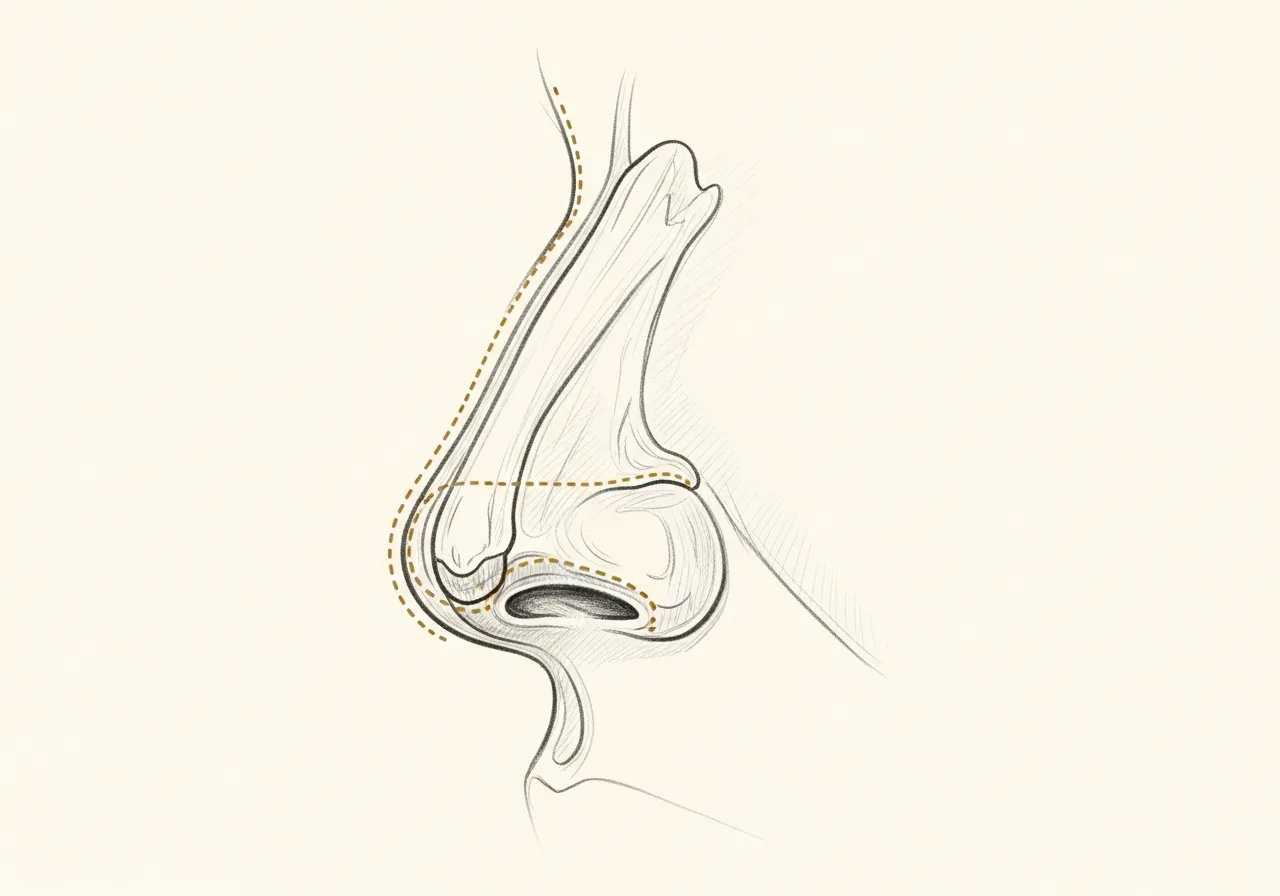
The outside of the nose is not decoration — it is part of the airway. The nasal bones, septum, upper lateral cartilages, lower lateral cartilages, and nasal valves all contribute to both shape and airflow. When these structures are displaced, collapsed, over-resected, or weakened, the nose may look abnormal and function poorly at the same time.

A broken nose that healed crooked

After trauma, the nasal bones may shift to one side. The septum may also buckle, fracture, or deviate internally. From the outside, the patient sees a crooked bridge. From the inside, the airway may be narrowed. Simply shaving or camouflaging the outside of the nose may not solve the true problem — straightening the nose may require addressing the nasal bones, septum, and sometimes the nasal valves. That is why broken nose repair is often both aesthetic and functional.

A crooked tip or uneven nostrils

A twisted nasal tip can also be functional. The front portion of the septum — the caudal septum — helps determine where the nasal tip sits. If the caudal septum is deviated, the tip may pull to one side, the nostrils may look uneven, and the base of the nose may appear off-center. At the same time, that caudal septal deviation may narrow one side of the nasal airway, and patients may notice that one nostril feels blocked, especially during sleep or exercise.

A pinched bridge or narrow middle vault

Some patients have a narrow or pinched appearance in the middle third of the nose. This can occur naturally, after trauma, or after prior rhinoplasty. The middle vault is closely related to the internal nasal valve — one of the narrowest parts of the nasal airway. When the internal nasal valve is too narrow or collapses during breathing, patients may feel obstruction even if the septum is relatively straight. They may notice that breathing feels easier when pulling the cheek to the side, or that nasal strips help at night. These are common signs of nasal valve collapse.

The American Academy of Otolaryngology–Head and Neck Surgery (AAO-HNS) recognizes nasal valve dysfunction as a common cause of symptomatic nasal airway obstruction and states that nasal valve repair can improve obstruction in appropriately selected patients.

A dorsal hump with structural imbalance

A dorsal hump is often cosmetic, but not always purely cosmetic. In some patients — especially after trauma — the hump may be part of a larger structural deformity. The septum may be deviated beneath it, the nasal bones may be asymmetric, and the middle vault may be narrow. Removing the hump without stabilizing the airway can sometimes create new functional problems. A thorough rhinoplasty plan considers what will happen to both appearance and breathing after the bridge is changed.

A nose that looks over-reduced after prior surgery

Revision rhinoplasty patients may present with a nose that looks too small, pinched, scooped, or collapsed — visible concerns that are directly linked to loss of cartilage support. When support is weakened, the nasal sidewalls may collapse inward during inspiration. Rebuilding support with cartilage grafts can restore both form and function.

Does Insurance Cover Rhinoplasty?

Insurance coverage depends on the patient’s specific plan, the diagnosis, the documentation submitted, and whether the procedure is considered medically necessary by the insurer.

In general, insurance does not cover rhinoplasty performed solely to change appearance. However, insurance may cover certain functional or reconstructive components when there is documented nasal obstruction, trauma-related deformity, nasal valve collapse, or septal deviation that meets the plan’s medical-necessity criteria.

Aetna’s clinical policy bulletin describes septoplasty as medically necessary in certain cases, including septal deviation causing continuous nasal airway obstruction that does not respond to appropriate medical therapy. The same policy describes rhinoplasty coverage only in limited circumstances — such as certain congenital conditions or chronic non-septal nasal airway obstruction from vestibular stenosis due to trauma, disease, or congenital defect when defined criteria are met.

Cigna’s coverage policy similarly distinguishes between functional and cosmetic indications — describing scenarios where rhinoplasty may be medically necessary for traumatic nasal deformity causing functional impairment, while stating that rhinoplasty performed solely for changing appearance is cosmetic and not medically necessary.

UnitedHealthcare and other major carriers use comparable frameworks: functional components with documented obstruction and failed medical management may qualify for review; cosmetic refinements do not.

Key takeaway

A breathing problem may create an insurance-covered component, but it does not automatically make the entire rhinoplasty covered. A patient may have a functional septoplasty or nasal valve repair that is potentially billable to insurance, while cosmetic changes to the bridge, tip, or overall nasal shape remain out-of-pocket.

Going further on insurance: Our guide to functional rhinoplasty and insurance coverage walks through how cosmetic and functional components are separated for billing, what documentation insurance companies typically require, and what questions to ask your insurer before scheduling surgery.

Why a Deviated Septum Does Not Always Mean Insurance Covers Everything

A deviated septum is one of the most common functional findings in rhinoplasty patients — and one of the most misunderstood when it comes to cost.

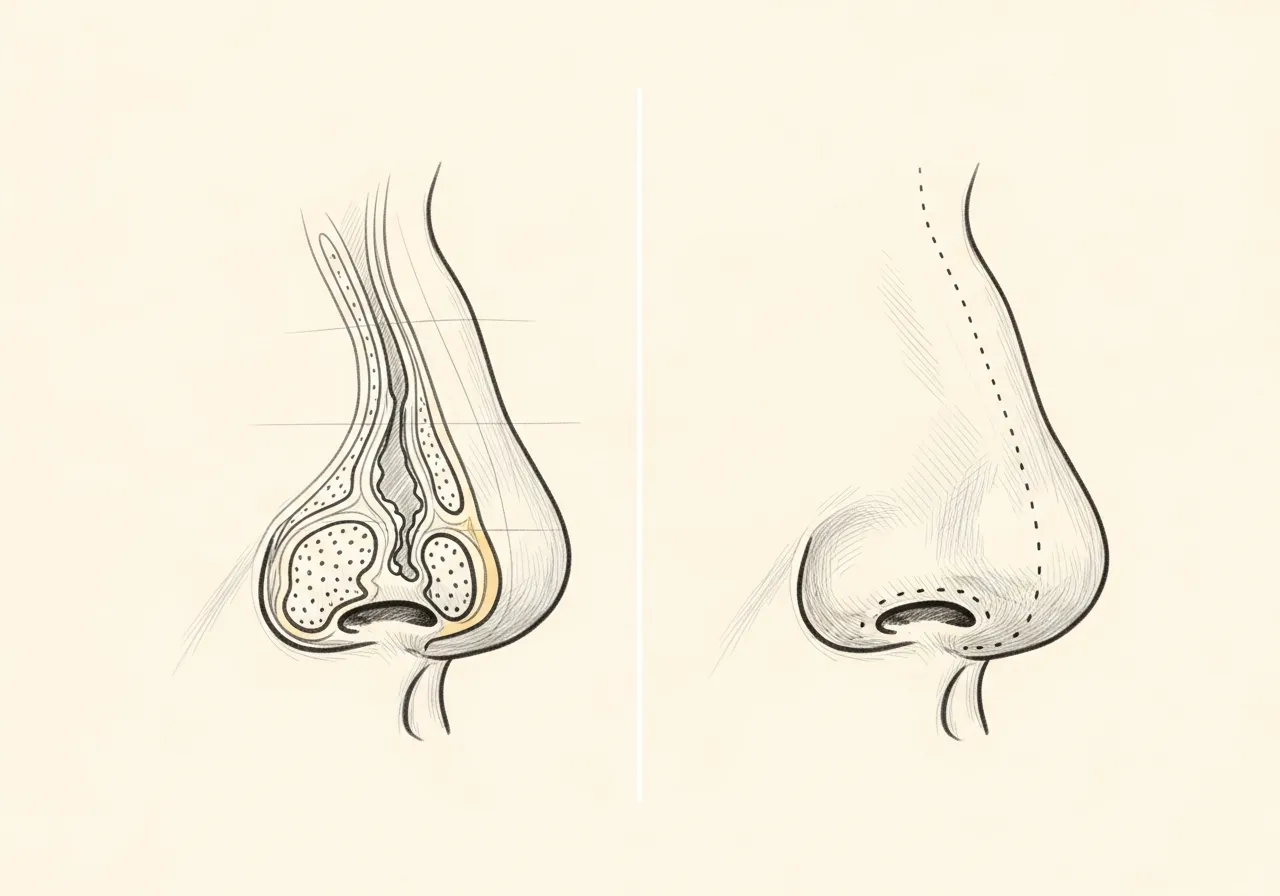
The septum is the wall inside the nose that separates the right and left nasal passages. When it is deviated, it can block airflow. Deviated septum surgery (septoplasty) is the procedure used to straighten the septum internally. However, septoplasty alone does not always change the outside appearance of the nose. If the external nose is crooked because the nasal bones, upper lateral cartilages, or tip support are also deviated, a septoplasty by itself may improve breathing but leave the nose looking crooked.

The opposite is equally true. Cosmetic rhinoplasty can change the outside appearance of the nose — but if the septum, turbinates, or nasal valves are not properly evaluated, the patient may still have breathing problems after surgery.

That is why combined septorhinoplasty in NYC is often appropriate for patients who have both cosmetic and functional concerns — creating a nose that looks balanced and breathes well at the same time.

How We Evaluate Cosmetic and Functional Components During Consultation

A rhinoplasty consultation should not be rushed. The nose has to be evaluated from the outside and the inside.

We start by listening to your goals. What bothers you in photos? What feels out of proportion? Do you want subtle refinement, correction of crookedness, or a more significant change?

Then we ask about breathing. Is one side worse than the other? Is obstruction constant or intermittent? Is it worse at night, during exercise, or during allergy season? Has there been prior trauma? Prior surgery? Chronic congestion? Use of nasal sprays? Improvement with nasal strips?

The physical exam is equally important. We evaluate the bridge, nasal bones, middle vault, tip position, nostril symmetry, septum, turbinates, and nasal valves. A patient who says “my nose just looks crooked” may have a septal deviation. A patient who says “my nose just feels blocked” may also have visible valve collapse or post-traumatic asymmetry.

This evaluation separates the surgical plan into three categories:

  • A cosmetic component — tip refinement, hump reduction, narrowing, or aesthetic straightening
  • A functional component — septoplasty, turbinate reduction, nasal valve collapse treatment, or correction of structural obstruction
  • An overlap component — where the same structural correction improves both appearance and breathing

This distinction is essential for pricing, insurance discussion, and surgical planning.

Common Rhinoplasty Cost Scenarios in NYC

Cosmetic

Purely cosmetic rhinoplasty

When the patient has no significant breathing complaint and no functional obstruction requiring treatment, surgery is focused on appearance: bridge, tip, symmetry, projection, rotation, or overall balance. This is an out-of-pocket cosmetic procedure.

Functional

Functional nasal surgery without cosmetic changes

Some patients mainly want to breathe better and are not seeking an aesthetic change. Depending on anatomy, this may involve deviated septum surgery, turbinate reduction, nasal valve collapse treatment, or another functional nasal procedure. If medical-necessity criteria are met, part or all of the functional procedure may be considered by insurance — subject to plan, documentation, deductibles, and prior authorization.

Combined

Combined cosmetic and functional septorhinoplasty

This is very common. The patient wants cosmetic improvement but also has nasal obstruction — for example, a crooked post-traumatic nose, a deviated septum, and a desire for a smoother bridge or refined tip. Learn more about the planning involved in septorhinoplasty in NYC. The estimate may involve both insurance-related functional components and out-of-pocket cosmetic components, and that separation should be explained clearly before surgery.

Revision

Revision rhinoplasty

Revision rhinoplasty is often more complex because the anatomy has already been altered. Scar tissue, missing cartilage, asymmetry, valve collapse, or over-resection can all increase complexity. Revision surgery may require cartilage grafting from the septum, ear, or rib, and may involve both cosmetic reconstruction and functional airway repair. Because of this added complexity, revision rhinoplasty in NYC typically costs more than a primary procedure.

Why the Cheapest Rhinoplasty Quote Is Not Always the Best Value

Rhinoplasty is one of the most technically demanding procedures in facial plastic surgery. Small changes can have a large impact. A millimeter can matter. Support matters. Healing matters. Breathing matters.

A low quote may not include anesthesia, facility fees, post-operative care, or revision policies. It may also reflect a surgical plan that is too limited for the patient’s anatomy. For example:

  • If a patient has nasal valve collapse but the operation only addresses the septum, breathing may not improve adequately.
  • If a dorsal hump is reduced without supporting the middle vault, the nose may look narrower but breathe worse.
  • If a crooked post-traumatic nose is treated as a surface-level cosmetic issue, the deeper structural deviation may remain — and both appearance and breathing may be suboptimal.

The goal is not to choose the most expensive surgeon. The goal is to choose a surgeon who understands both the aesthetic and functional anatomy of the nose and can explain the full plan clearly — including what is cosmetic, what is functional, and how the two relate to each other in your specific case.

Questions to Ask Before Rhinoplasty in NYC

Before choosing a rhinoplasty surgeon in New York City, ask questions that clarify both cost and surgical strategy:

  • What is included in the quote? Does the fee include anesthesia, facility costs, follow-up visits, and post-operative care?
  • Is my case cosmetic, functional, or both? Do I have a deviated septum, turbinate enlargement, nasal valve collapse, or post-traumatic deformity?
  • Could any part of my procedure be submitted to insurance? Will cosmetic refinements be billed separately?
  • If my nose is crooked, is the crookedness only external, or is the septum also involved?
  • Will straightening the outside of my nose also help my breathing?
  • Do you perform both cosmetic rhinoplasty and functional nasal airway surgery?
  • How do you protect breathing while changing the appearance of the nose?

These questions help you understand not just the price, but the quality and completeness of the surgical plan.

Final Thoughts: Rhinoplasty Cost Is Really About the Plan

Rhinoplasty cost in NYC is not one-size-fits-all because noses are not one-size-fits-all. A patient seeking a small cosmetic refinement has a different surgical plan than someone with a broken nose that healed crooked, a deviated septum, and nasal valve collapse. A patient having primary rhinoplasty has a different level of complexity than someone needing revision rhinoplasty.

The most important step is a careful in-person evaluation. Once the anatomy is assessed — both externally and internally — the cost discussion becomes much clearer: what is cosmetic, what is functional, what may be insurance-related, and what is out-of-pocket.

A well-planned rhinoplasty should not force patients to choose between looking better and breathing better. In many cases — especially with a crooked or post-traumatic nose — those goals are connected, and the best plan addresses both.

Ready to understand your options?

Schedule an in-person evaluation to assess your nose externally and internally, review cosmetic and functional components, and build a plan around your anatomy.

Schedule a rhinoplasty consultation in NYC

Frequently Asked Questions

Can insurance cover rhinoplasty after a broken nose?

Sometimes. If a prior nasal fracture caused a documented functional problem — such as nasal obstruction or inadequate airflow — insurance may consider certain reconstructive or functional components. Cosmetic refinements are usually separate and billed out-of-pocket. See our guide on functional rhinoplasty and insurance coverage for more detail on what documentation is typically required.

Is a crooked nose always cosmetic?

No. A crooked nose can be cosmetic, functional, or both. If the nasal bones, septum, or nasal valves are displaced, the same issue that makes the nose look crooked may also narrow the airway and make breathing harder.

Does septoplasty straighten the outside of the nose?

Not always. Deviated septum surgery straightens the internal septum. If the external nasal bones or cartilages are also crooked, septoplasty alone may improve breathing but leave the outside of the nose looking off-center. Combined septorhinoplasty addresses both.

Can cosmetic rhinoplasty and functional rhinoplasty be done together?

Yes. Many patients undergo combined septorhinoplasty in NYC, where cosmetic goals and functional breathing issues are addressed during the same operation. This avoids a second surgery and allows the surgeon to plan both objectives together.

Will insurance pay for the cosmetic part if I also have breathing problems?

Usually no. Insurance may consider medically necessary functional components — such as septoplasty or nasal valve collapse treatment — but appearance-only changes are typically out-of-pocket regardless of whether functional surgery is also being performed.

Why does revision rhinoplasty cost more?

Revision rhinoplasty is usually more complex because the surgeon must work through scar tissue, altered anatomy, missing cartilage, or structural collapse from prior surgery. It often requires cartilage grafting from the septum, ear, or rib, and more advanced reconstruction — all of which increase operating time and technical difficulty.