Double Board Certified · Adolescent Rhinoplasty
Teenage Rhinoplasty — carefully-timed, individually evaluated.
Teenage rhinoplasty is appropriate in a narrow set of circumstances — mature facial growth, well-articulated personal motivation, and family support. When…
ABFPRS
Facial Plastic & Reconstructive Surgery
ABOto
Otolaryngology — Head & Neck Surgery
AAFPRS
Fellowship Director

In Consultation
"Adolescent rhinoplasty is a parent-and-patient conversation. The most important question is timing, not technique."

A Note from Dr. Mourad
"Teenage rhinoplasty is appropriate in a narrow set of circumstances — mature facial growth, well-articulated personal motivation, and family support. When those conditions are met, a thoughtful operation early can shape the trajectory of a young person's confidence for decades."
— Dr. Moustafa Mourad, MD
Overview
What is teenage rhinoplasty?
Teenage rhinoplasty is a first-time nasal surgery performed on an adolescent who has reached skeletal maturity of the nose — generally around age fifteen to sixteen in girls and sixteen to seventeen in boys. The technical operation is the same as adult rhinoplasty; the difference is the developmental, emotional, and ethical framework around it.
It is considered when a structural concern — a dorsal hump, a deviated bridge, a bulbous or droopy tip, post-traumatic deformity — or a functional concern such as a deviated septum has produced a persistent, patient-driven request, not a parent-driven one. Motivation must come from the teenager.
Adolescent candidacy is evaluated with extra care: skeletal maturity, emotional maturity, realistic expectations, school and athletic schedules, and family support. When any of those is not yet in place, deferring is the right answer.
An Established Academic Authority
Double board certification. Fellowship director. Published author. A surgeon's surgeon.
ABFPRS
Board Certified
American Board of Facial Plastic & Reconstructive Surgery
ABOto
Board Certified
American Board of Otolaryngology — Head & Neck Surgery
AAFPRS
Fellowship Director
American Academy of Facial Plastic and Reconstructive Surgery
Textbook
Published Author
Contributions to the academic literature of facial plastic surgery
Dual board certification in both Facial Plastic & Reconstructive Surgery and Otolaryngology — a combination held by a small number of physicians nationally.
02 · Ideal Candidates
Who benefits most from this operation.
Candidacy is determined together at consultation. The most satisfied patients share three things in common.
I
Mature Anatomy
Generally 15 and older for girls, 16 and older for boys, with stable facial growth confirmed at examination.
II
Patient-Driven Motivation
The patient — not a parent — must clearly want the operation and be able to articulate specifically what bothers them.
III
Family Support
A supportive family environment is essential for recovery, post-operative care, and realistic expectation-setting.
If this describes you, the next step is a quiet, unhurried conversation — not a sales call.
An Honest Note
When this operation may not be right for you.
Patients whose motivation is to please a parent, partner, or social media audience are not the right candidates regardless of anatomic readiness.
Patients with active body dysmorphic features around the nose are managed with appropriate referral first.
Patients with ongoing acne or active intranasal allergic disease benefit from optimisation before any nasal surgery.
Smokers — even occasional — must commit to abstinence well before and after surgery.
03 · Approaches
Three paths for the younger patient.
Teenage rhinoplasty is performed only when skeletal maturity, motivation, and family support all align. The right technique is the one that produces a refined result that ages well into adulthood.
1 of 3 · Structural Rhinoplasty
04 · Technique
Conservative & structural — the right operation for the adolescent nose.
The teenage nose is operated on with the long view: a result that will look natural at 16, 26, and 56.
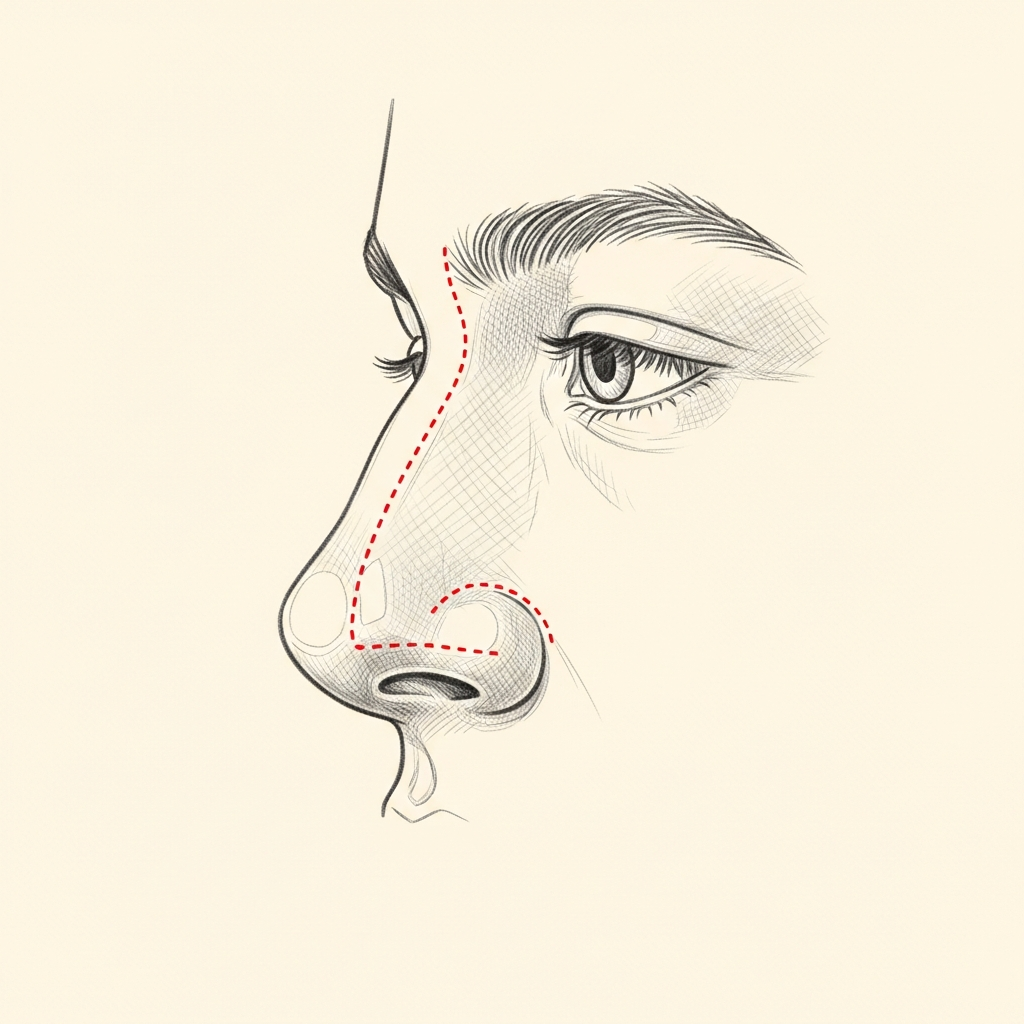
Conservative
No more than the anatomy requires
Adolescent rhinoplasty is, almost without exception, an exercise in restraint. Modest reduction, conservative tip rotation, and preservation of dorsal aesthetic lines produce results that age well.
Aggressive operations in adolescents tend to set up the lifetime of revisions Dr. Mourad sees in his revision practice. The first operation must be the right one.
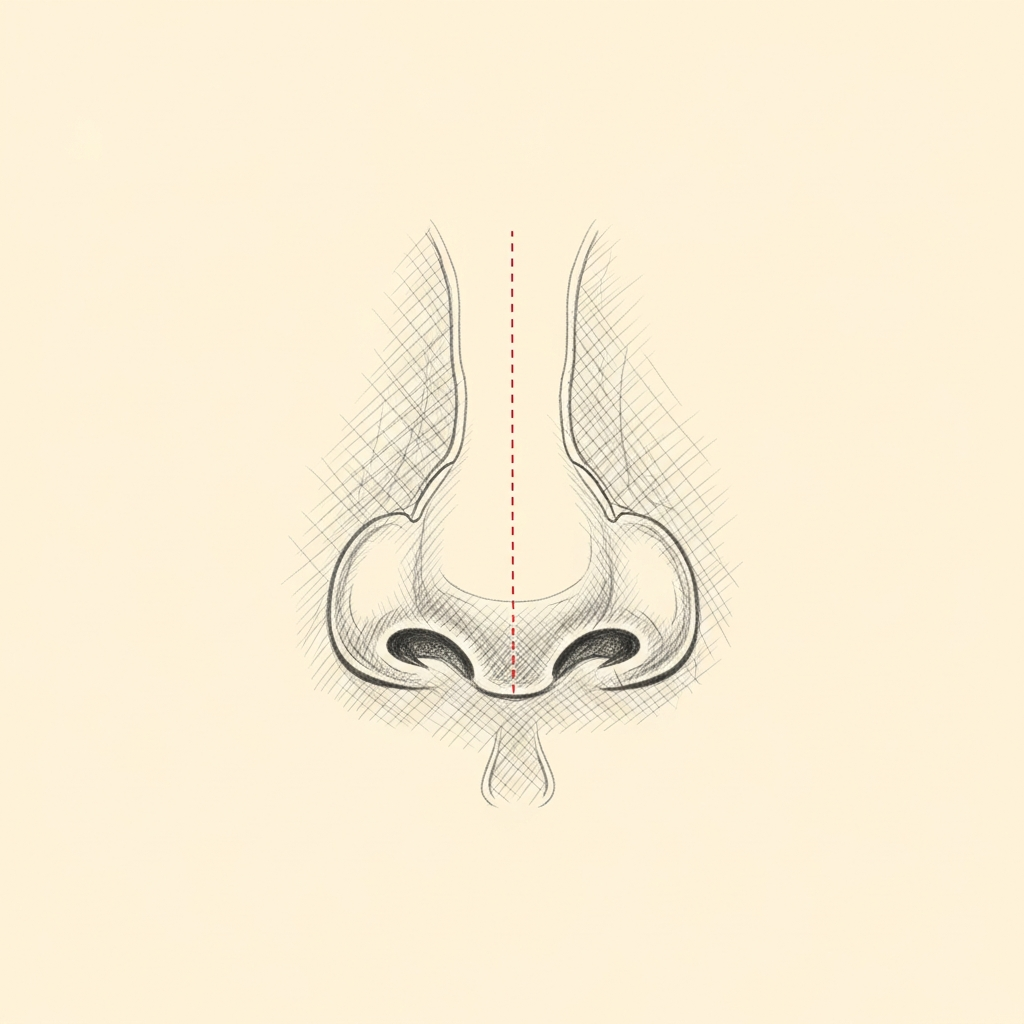
Structural
Cartilage support for long-term shape
Structural cartilage support — columellar struts, lateral crural reinforcement, and judicious tip sutures — produces a result that holds shape as the face continues to mature.
This is the operation that ages with the patient rather than against them.
Illustrative diagrams. Every adolescent rhinoplasty is individual and conservatively planned.
01 · Why Dr. Mourad
Diagnosis first, then a plan that fits.
Dr. Mourad has a specific approach to evaluating adolescent rhinoplasty candidacy — anatomic, psychological, and familial — never one of those alone.
The operation is conservative and structural: cartilage support that ages predictably, never aggressive reduction that creates revision risk in adulthood.
No teenage rhinoplasty is recommended at the first visit; multiple consultations with the patient and parent are the standard.
Begin the conversation
A careful, honest evaluation is the right first step.
Cost, Financing & Insurance
Teenage Rhinoplasty Cost, Financing & Insurance in NYC
The cost of teenage rhinoplasty depends on the surgical plan, the techniques required, the type of anesthesia, the surgical facility, and whether functional nasal airway concerns are addressed. Candidacy and timing are evaluated carefully, including physical maturity and motivation.
Cosmetic rhinoplasty is generally elective and typically self-pay. When functional nasal airway surgery is medically necessary and performed at the same time, that portion may be eligible for insurance coverage depending on the family’s plan. After consultation, our office provides a personalized estimate, and financing may be available for qualified families.
What May Affect Cost
- Complexity of the surgical plan
- Techniques required
- Whether functional airway work is included
- Type of anesthesia
- Surgical facility
- Insurance plan requirements
This information is educational and is not a guarantee of pricing, insurance coverage, reimbursement, financing approval, or surgical candidacy. A personalized estimate is provided after consultation. Insurance coverage depends on the patient’s plan, medical necessity, documentation, and carrier requirements. Financing terms are determined by third-party financing providers.
05 · In Dr. Mourad's Words
Educational videos.
Short educational films and patient perspectives from the Manhattan practice.
Dr. Mourad in Practice
An overview of the practice and philosophy.
Patient Perspective
A patient discusses her experience before, during, and after surgery.
Inside the Consultation
How Dr. Mourad evaluates anatomy, goals, and candidacy.
Before & After
Real results, real patients.
Every case is unique — tailored to individual anatomy and goals. Browse representative outcomes from the Manhattan practice.
06 · Recovery
What healing actually looks like.
Stage 01
First 24 Hours
Initial recovery focuses on rest, hydration, and following all post-operative instructions exactly. Pain is managed with multi-modal non-narcotic protocols where appropriate.
Stage 02
Week 1
Swelling and bruising peak in the first few days and improve steadily through the first week. Most patients are presentable for casual social activity by the end of week two.
Stage 03
Weeks 2 – 4
Through weeks two to four the early result begins to settle. Light cardio resumes around three weeks; vigorous exertion and contact activities are deferred per the operative plan.
Stage 04
Months 1 – 6
The final refined result emerges progressively over the following months as residual swelling continues to resolve. Follow-up visits are scheduled across the first year.
Have a specific question?
Send a brief note describing your anatomy or concerns — the office will route it directly to Dr. Mourad for review.

Before You Arrive
Your consultation, prepared.
Bring photographs relevant to your concern, when available.
Bring records from any prior surgery, when available.
List current medications, supplements, and blood-thinning agents.
Note any prior anesthesia issues or chronic medical conditions.
Allow 60 minutes for the first consultation.
Bring questions; no decisions are made at the first visit.
Frequently Asked
Patient questions, honestly answered.
There is no absolute age cutoff; candidacy depends on skeletal maturity and individual anatomy. Typically, girls are evaluated carefully after approximately 15–17 years and boys after roughly 16–18 years, but these are ranges rather than rules. We use physical exam findings and growth history to determine whether nasal and facial growth are sufficiently advanced. Final surgical decisions are made in person during consultation with the family and patient.
Assessment combines clinical examination, growth history, and selective imaging when indicated. We examine facial proportions, dental development, and nasal framework stability; hand‑wrist radiographs or cephalometric imaging are used only when needed. The goal is to ensure that planned structural changes will not interfere with ongoing growth. An in‑person evaluation determines whether it is appropriate to proceed or to defer surgery until further maturity.
Surgical manipulation of nasal cartilage and septal support can influence later appearance if performed before sufficient maturity. A preservation‑oriented, structural approach seeks to protect septal integrity and tip support to minimize impact on growth. In some adolescents, modest reshaping combined with conservative grafting can be appropriate; in others, staged timing is safer. These risks are discussed case by case during consultation.
Functional indications include persistent obstruction from a deviated septum, turbinate hypertrophy, or nasal-valve compromise that fails medical therapy. Surgical options such as septoplasty or turbinate reduction are considered when symptoms impair sleep, exercise tolerance, or nasal breathing despite appropriate medical care. We document objective findings and correlate them with symptoms before recommending surgery. An in‑person assessment determines candidacy and whether combined cosmetic and functional procedures are appropriate.
Emotional readiness is evaluated through private discussion with the teenager and a separate conversation with parents when appropriate. We look for realistic expectations, consistent motivation over time, and the capacity to understand risks and recovery; impulsive or externally pressured requests prompt deferral. When concerns exist, we may recommend psychological assessment or a period of observation of 3–12 months. Surgical decisions are made jointly and in person at consultation.
Both open and closed approaches may be used depending on the structural needs of the case. Choice is based on the anatomy that must be addressed—tip refinement, dorsal work, septal reconstruction—and on preservation of support structures. When functional correction is required, septoplasty is frequently combined with rhinoplasty to address airway issues in the same operation. The operative plan is individualized and decided after in‑clinic assessment.
Initial recovery typically includes a nasal splint for 5–7 days and limited activity for the first 1–2 weeks; many teens return to school in 7–14 days depending on swelling and comfort. Non‑contact activities often resume at 2–3 weeks, while contact sports should generally be avoided for 6–12 weeks to protect healing structures. Contour refinement continues over months, with most visible changes stabilizing by 6–12 months. Specific recommendations are provided at the in‑person consultation and during follow‑up visits.
Complications can include persistent breathing difficulty, asymmetry, scar or graft issues, and the need for secondary refinement as growth completes. Revision reasons often relate to evolving anatomy as the face matures or to undercorrection/overcorrection of structural support at the index operation. We emphasize conservative restructuring and long‑term follow‑up to minimize revision rates. Any concern about outcomes is addressed through a clinical evaluation and individualized plan for management.
Most adolescent rhinoplasty can be performed with a small external incision at the columella (open approach) or entirely internal incisions (closed approach), and visible scars are typically subtle. Incision choice depends on the exposure required for structural correction and on preservation of tip support. We counsel families about expected incision placement and scar care measures. A definitive scar assessment is part of the in‑person consultation.
Yes; combining septoplasty or turbinate reduction with rhinoplasty is common when both form and function require correction. Addressing the septum and turbinates during the same operation often improves breathing and supports long‑term nasal architecture. Each combined plan is individualized, and we explain the additional risks and recovery implications. Surgical decisions are finalized during an in‑person consultation with the family and patient.
The Most Important Step
Your expert consultation.
A careful evaluation by a double board-certified physician is the right first step. The conversation is unhurried, the diagnosis is honest, and the operative plan is built around what your anatomy can sustain and what you actually want.