Double Board Certified · Specialized Revision Practice
Revision Rhinoplasty NYC — Correct, Rebuild, Restore
Dr. Moustafa Mourad performs revision rhinoplasty in NYC for patients who remain unhappy with the appearance, structure, or breathing of the nose after prior nasal surgery. Revision surgery may involve scar release, cartilage grafting, septal reconstruction, nasal valve repair, and careful reshaping to restore natural balance and durable support.
ABFPRS
Facial Plastic & Reconstructive Surgery
ABOto
Otolaryngology — Head & Neck Surgery
AAFPRS
Fellowship Director

In Consultation
"The hardest cases are the ones I am sent."

A Note from Dr. Mourad
"Revision rhinoplasty is a different operation from primary rhinoplasty. The scar tissue is dense, the cartilage is depleted, and the airway has often been compromised. What this work demands is restraint, structural thinking, and a willingness to take cases that others decline."
— Dr. Moustafa Mourad, MD
Medically reviewed by Moustafa Mourad, MD, FACS — dual board-certified Facial Plastic & Reconstructive Surgeon and Otolaryngologist (Head & Neck Surgery).
Last reviewed: June 2026
Make sure you're in the right place
Is this the right page for you?
This page is for
- You have already had one or more nasal surgeries and remain unhappy with the breathing, the appearance, or both.
- You have scar tissue, weakened or depleted cartilage, or a nose that looks or functions differently than planned after prior surgery.
- You were told elsewhere that your case is too complex or inoperable.
You may be looking for
- If you have never had nasal surgery, primary rhinoplasty is the right starting point.
- If your only concern is breathing through a deviated septum, see septoplasty.
- If your nose was recently broken, see broken nose repair.
Overview
What is revision rhinoplasty?
Revision rhinoplasty is rhinoplasty performed on a nose that has already had previous nasal surgery. Sometimes called secondary rhinoplasty or corrective nose surgery, it is an inherently more complex operation than primary rhinoplasty because the anatomy has been altered, the cartilage stock may be depleted, scar tissue distorts normal tissue planes, and the underlying structural support may be weakened by prior reduction.
Patients pursue revision for many reasons — residual cosmetic concerns, asymmetry, an over-rotated or pinched tip, a saddle deformity, a pollybeak fullness, or new breathing problems that emerged after the first operation. Functional revision and cosmetic revision are frequently performed together because the structural fix and the aesthetic fix are the same operation.
A revision plan often requires cartilage grafting — most commonly from the ear or, when significant rebuilding is needed, from the rib — to restore lost support before refinement is possible. The most important decision is usually when to operate, not how; mature scar tissue and stable healing from the prior surgery are essential before revision.
What It Can Address
What Problems Can Revision Rhinoplasty Correct?
Revision rhinoplasty addresses a defined set of problems left behind by prior nasal surgery. The right plan depends on what was done before and what the tissues will now tolerate.
Contour & symmetry
Persistent asymmetry, residual humps, and dorsal irregularities that remain visible after prior surgery.
Tip concerns
A pinched, over-rotated, or drooping tip, and pollybeak fullness in the supratip above it.
Profile & bridge
Saddle nose deformity from over-resection and a residual hump from under-correction of the dorsum.
Nostril & alar
Nostril asymmetry and alar retraction that affect the balance and proportion of the base.
Breathing & airway
Nasal valve collapse, persistent obstruction, and breathing problems that developed after a prior rhinoplasty.
Tissue & structure
Scar tissue and depleted septal cartilage that require grafting and structural rebuilding before refinement is possible.
Not every concern can be fully corrected, and revision outcomes depend on individual anatomy, scarring, and healing. Realistic, individualized goals are discussed in detail during consultation.
An Established Academic Authority
Double board certification. Fellowship director. Published author. A surgeon's surgeon.
ABFPRS
Board Certified
American Board of Facial Plastic & Reconstructive Surgery
ABOto
Board Certified
American Board of Otolaryngology — Head & Neck Surgery
AAFPRS
Fellowship Director
American Academy of Facial Plastic and Reconstructive Surgery
Textbook
Published Author
Contributions to the academic literature of facial plastic surgery
Dual board certification in both Facial Plastic & Reconstructive Surgery and Otolaryngology — a combination held by a small number of physicians nationally.
02 · Ideal Candidates
Who benefits from revision rhinoplasty.
A suitable candidate presents with documented anatomic problems after prior surgery and reasonable expectations about achievable change. Indications include persistent dorsal deformity, tip support loss, symptomatic nasal obstruction tied to structural deficits, visible asymmetry, or complications from prior grafts or implants. Ideal candidates are in good general health, have completed initial healing, and can provide prior operative reports or photographs when available. The candidacy decision always follows an in‑person assessment that integrates both form and function.
I
Aesthetic Dissatisfaction
Visible cosmetic concerns that remain or appeared after prior surgery — asymmetry, dorsal irregularities, a pinched or over-rotated tip, pollybeak fullness, or a nose that does not look balanced with the rest of the face.
II
Functional Compromise
Breathing difficulty after prior surgery — nasal obstruction, septal deviation, internal or external nasal valve collapse, turbinate problems, or dynamic sidewall collapse that calls for airway-directed revision.
III
Structural Loss
Depleted cartilage and scar tissue that require staged reconstruction. Candidacy is strengthened by nicotine cessation, medical optimization, and a willingness to follow postoperative care.
If this describes you, the next step is a quiet, unhurried conversation — not a sales call.
An Honest Note
When revision rhinoplasty may not be right for now.
Most revision rhinoplasty should not be performed within twelve months of the prior surgery. The tissues must fully soften and the final settled shape must be visible before re-operating.
Patients whose dissatisfaction is rooted in body-image concerns rather than anatomic findings benefit from a longer, more thoughtful evaluation — sometimes including psychological support — before any further surgery.
Revision in patients with extremely thin skin and depleted cartilage carries elevated risk; the conversation about realistic outcomes is especially important.
Patients seeking dramatic transformation through revision are usually better served by a deliberate, conservative single-stage refinement rather than another aggressive operation.
03 · Approaches
Six paths through a difficult problem.
Revision rhinoplasty is rarely a single technique. The right plan combines several of these elements based on what the prior surgery did and what the tissues will now tolerate.
1 of 6 · Cartilage Graft Revision
04 · Technique
Costal cartilage vs septal & auricular grafts.
Revision work almost always requires cartilage grafting to rebuild what the prior surgery removed or weakened. The donor site depends on how much structural material is needed and what remains available.
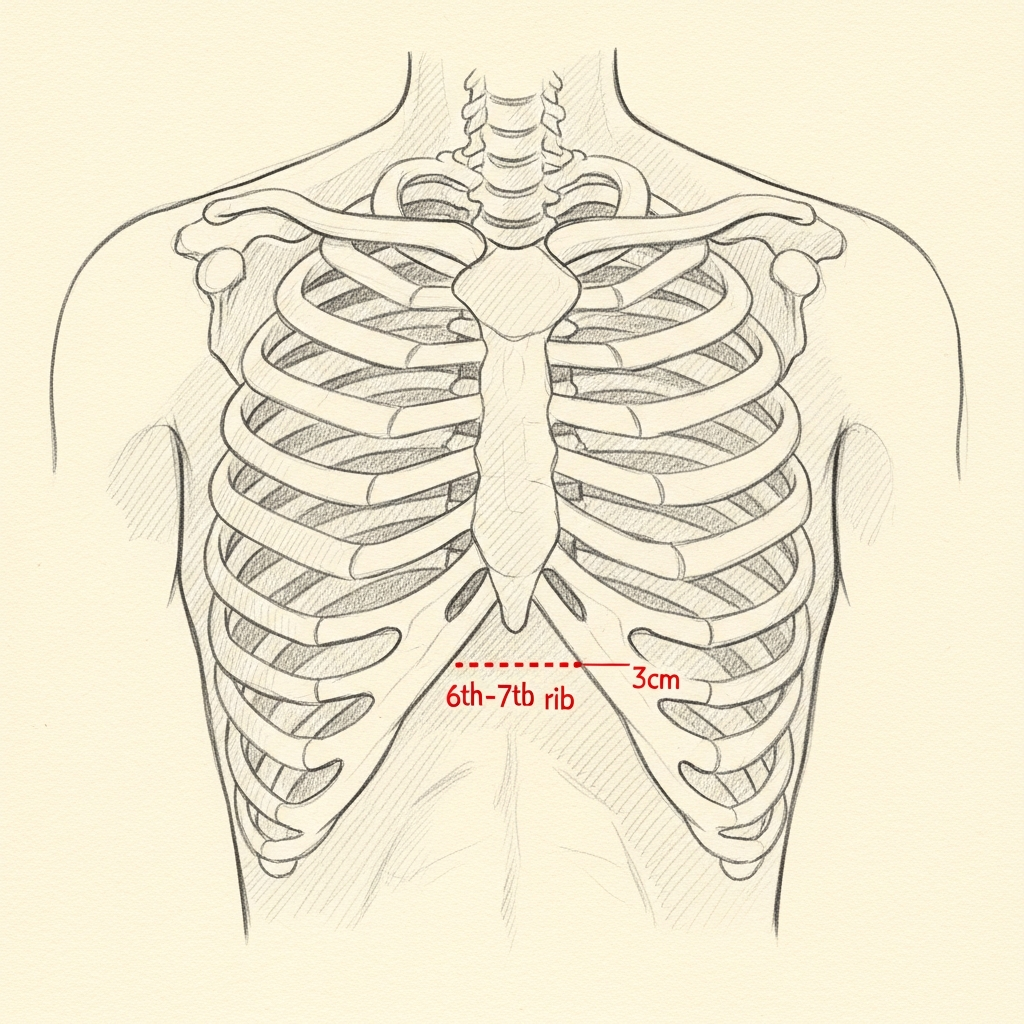
Costal
Rib cartilage for major reconstruction
Costal, or rib, cartilage is often preferred for major revision reconstruction because it can provide abundant, strong graft material when septal and auricular cartilage are depleted.
Harvest is performed through a small hidden incision in the natural inframammary crease. Donor-site discomfort, scarring, and other risks are reviewed during consultation, and pain control is individualized.
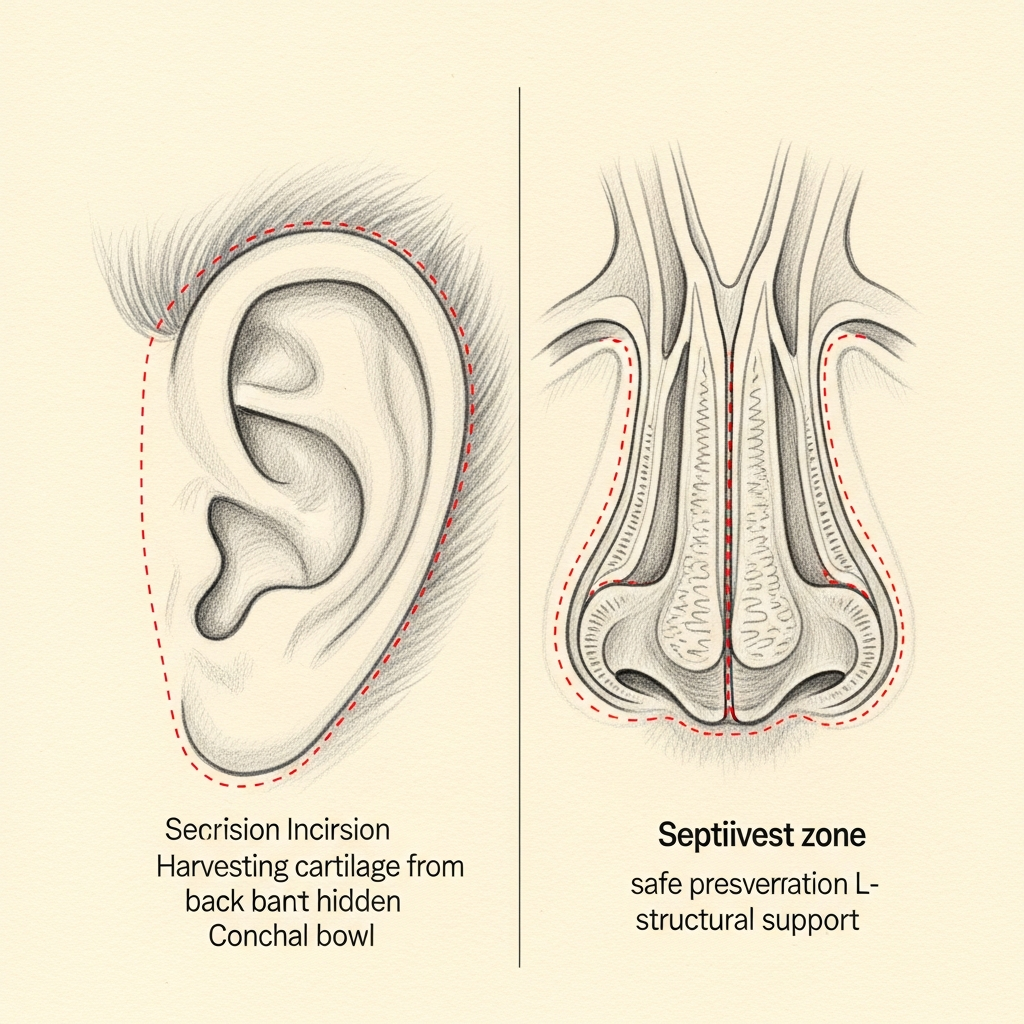
Septal & Ear
Local cartilage when supply allows
Residual septal cartilage is the first-line graft source when sufficient material remains and an L-strut can be safely preserved.
Auricular (conchal) cartilage from behind the ear provides curved, resilient graft material well-suited to lateral wall and lobular reconstruction. The harvest site is hidden in the postauricular crease.
Illustrative diagrams. Graft source is selected case-by-case based on remaining anatomy, structural need, and patient preference.
01 · Why Dr. Mourad
A specialist in the cases others won't take.
Dr. Moustafa Mourad begins with an anatomy‑first evaluation that prioritizes structural stability and airway dynamics. The visit starts with a detailed history of prior nasal procedures, review of operative reports when available, and discussion of any implants or grafts previously used. Knowing what was performed informs expectations about remaining septal reserve, scar planes, and likely donor‑site needs. When records are unavailable, a thorough physical exam and intraoperative contingencies guide the reconstructive plan.
Clinic examination combines static inspection with dynamic airway assessment. External analysis evaluates dorsal contour, tip support, and symmetry. Intranasal inspection assesses septal deviation, mucosal health, turbinate size, and dynamic collapse of the internal or external valve during breathing. Nasal endoscopy (a thin flexible camera) is used selectively to visualize internal anatomy clearly when symptoms suggest complex airway pathology. Standardized photographs document baseline anatomy and support shared decision‑making during follow‑up.
Planning focuses first on restoring a stable framework to permit predictable long‑term shape and function. Dr. Mourad determines whether septal cartilage is available for grafting or whether conchal or costal cartilage will be required, and he explains the tradeoffs for each donor site. He outlines whether an open or closed approach is preferable and whether staging will reduce tension and improve outcomes. Patients receive a written summary of the proposed plan, alternatives, and a timeline for recovery and staged procedures if indicated.
Begin the conversation
A revision consultation is a careful, honest evaluation — not a sales conversation.
Cost, Financing & Insurance
How Much Does Revision Rhinoplasty Cost in NYC?
Revision rhinoplasty is often more complex than primary rhinoplasty because the surgeon may be working with scar tissue, altered anatomy, weakened cartilage, breathing obstruction, or the need for grafting. For this reason, revision rhinoplasty cost is highly individualized.
If part of the revision is performed to correct a documented functional issue, such as nasal obstruction, valve collapse, septal deviation, or turbinate problems, insurance may apply to the functional portion. Cosmetic refinements are generally self-pay. Our office can help patients understand what documentation may be needed and what out-of-pocket costs may apply.
What May Affect Cost
- Number and type of prior surgeries
- Scar tissue or altered anatomy
- Cartilage grafting needs
- Functional breathing concerns
- Complexity of cosmetic revision
- Anesthesia and facility fees
This information is educational and is not a guarantee of pricing, insurance coverage, reimbursement, financing approval, or surgical candidacy. A personalized estimate is provided after consultation. Insurance coverage depends on the patient’s plan, medical necessity, documentation, and carrier requirements. Financing terms are determined by third-party financing providers.
05 · In Dr. Mourad's Words
Revision rhinoplasty videos.
Short educational films and patient perspectives from the Manhattan practice.
Rhinoplasty with Dr. Mourad
An overview of Dr. Mourad's approach to rhinoplasty in his Manhattan practice.
Patient Perspective
A patient discusses her revision experience before, during, and after surgery.
Inside the Consultation
How Dr. Mourad evaluates revision anatomy, prior records, and surgical candidacy.
From the Patient Gallery
A revision rhinoplasty rebuilt with costal cartilage.
A female patient in her 40s, revision rhinoplasty with rib (costal) cartilage grafting. Standardized studio photographs before and after surgery; written photographic consent on file. Results vary; this case is representative, not predictive.
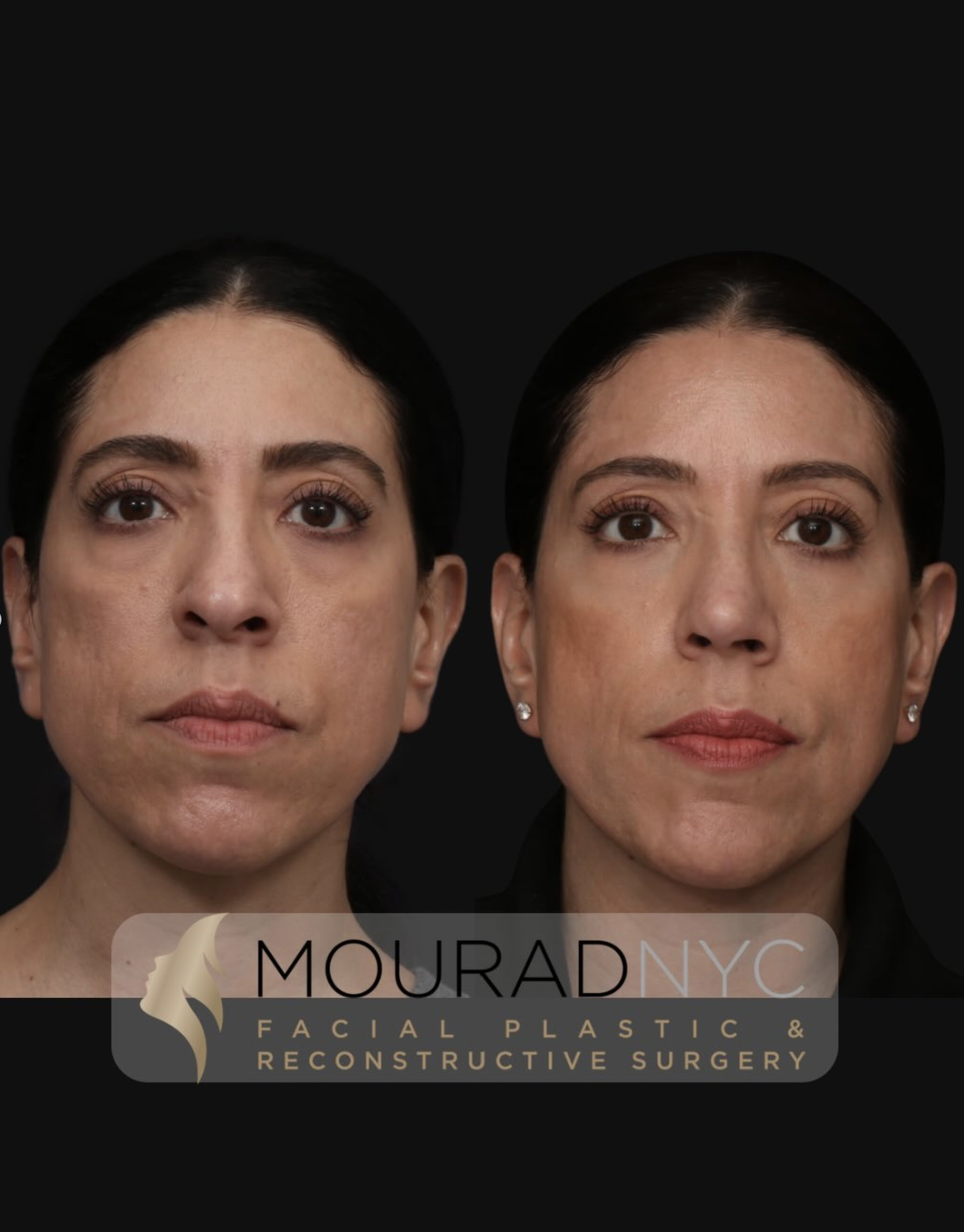
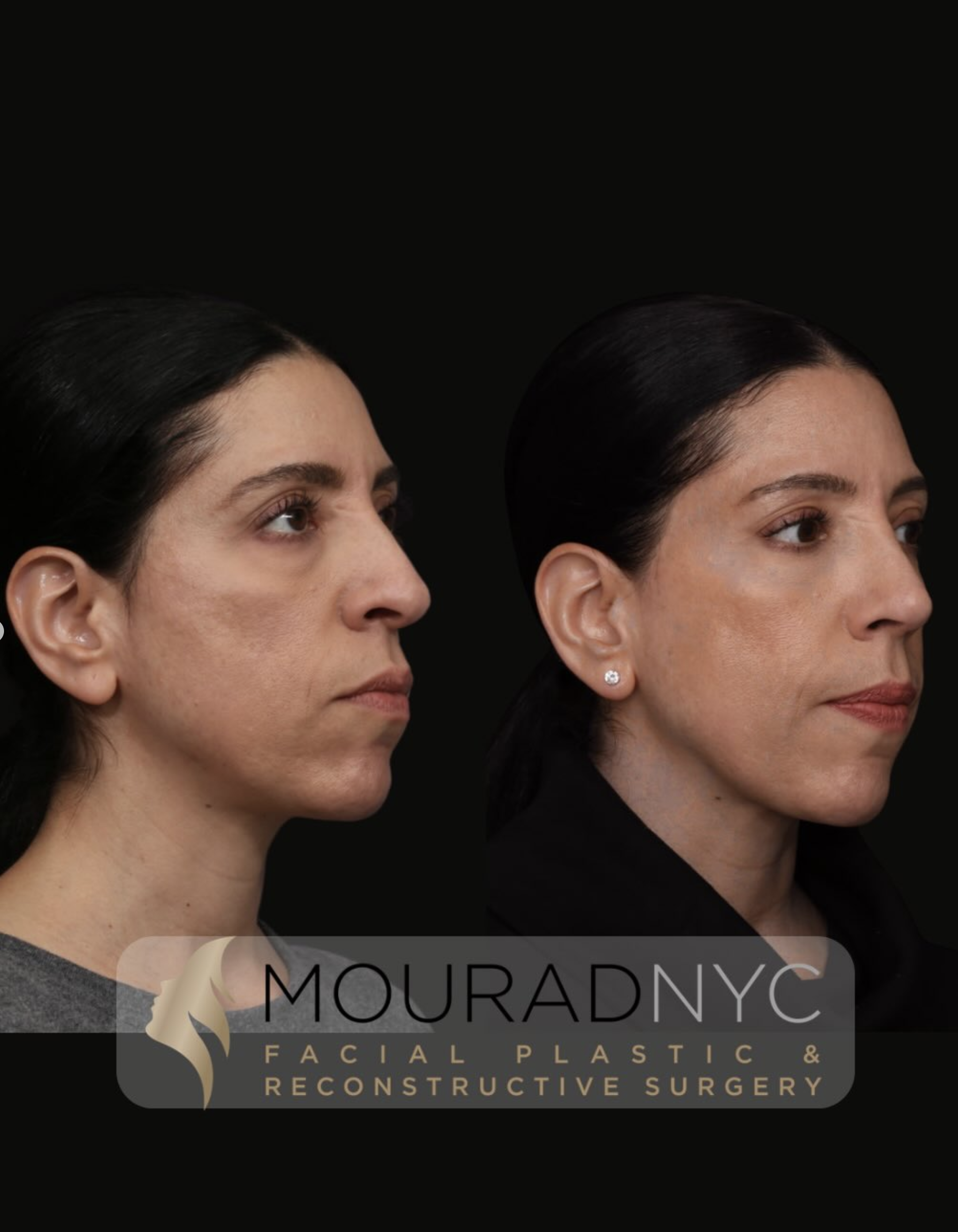
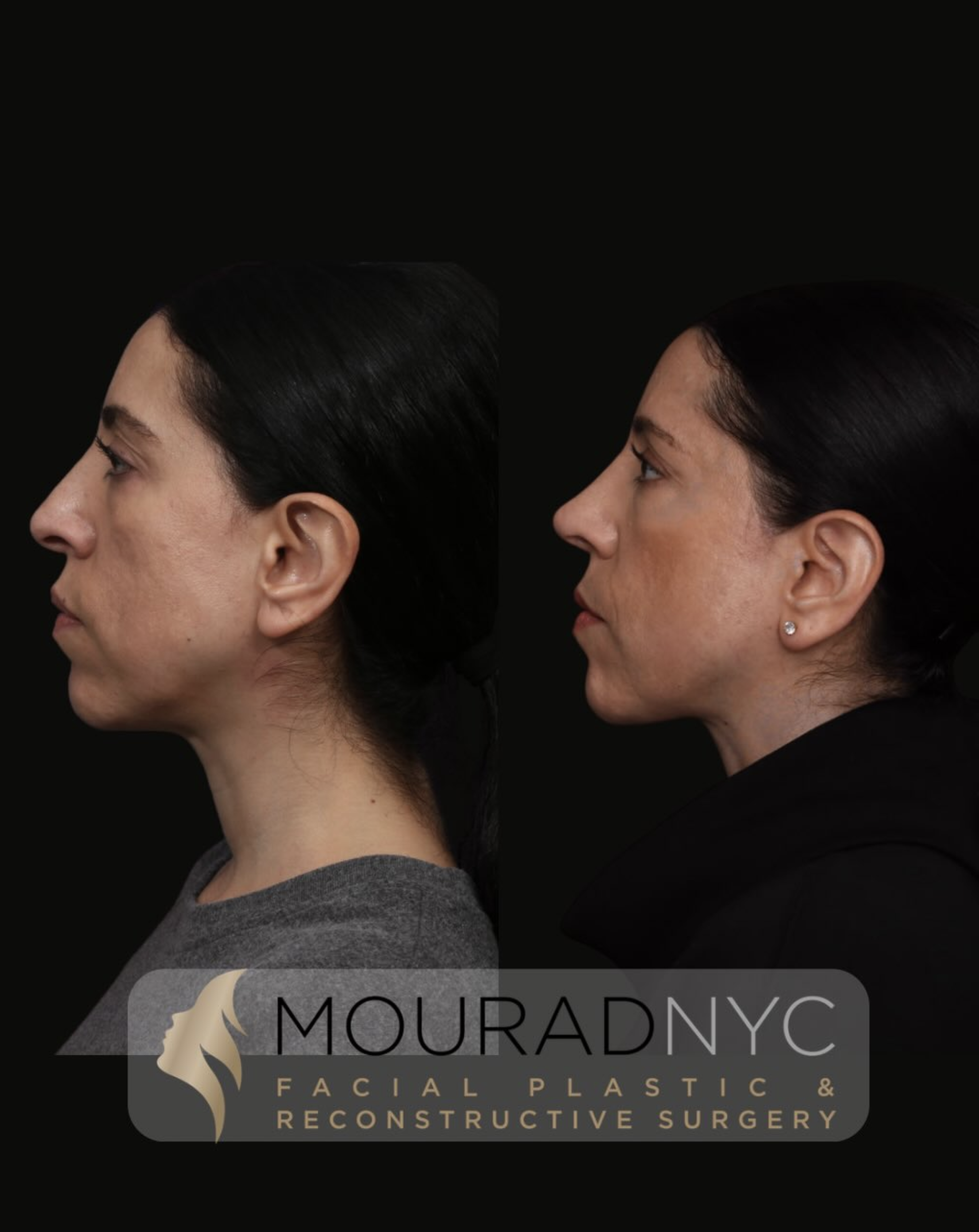
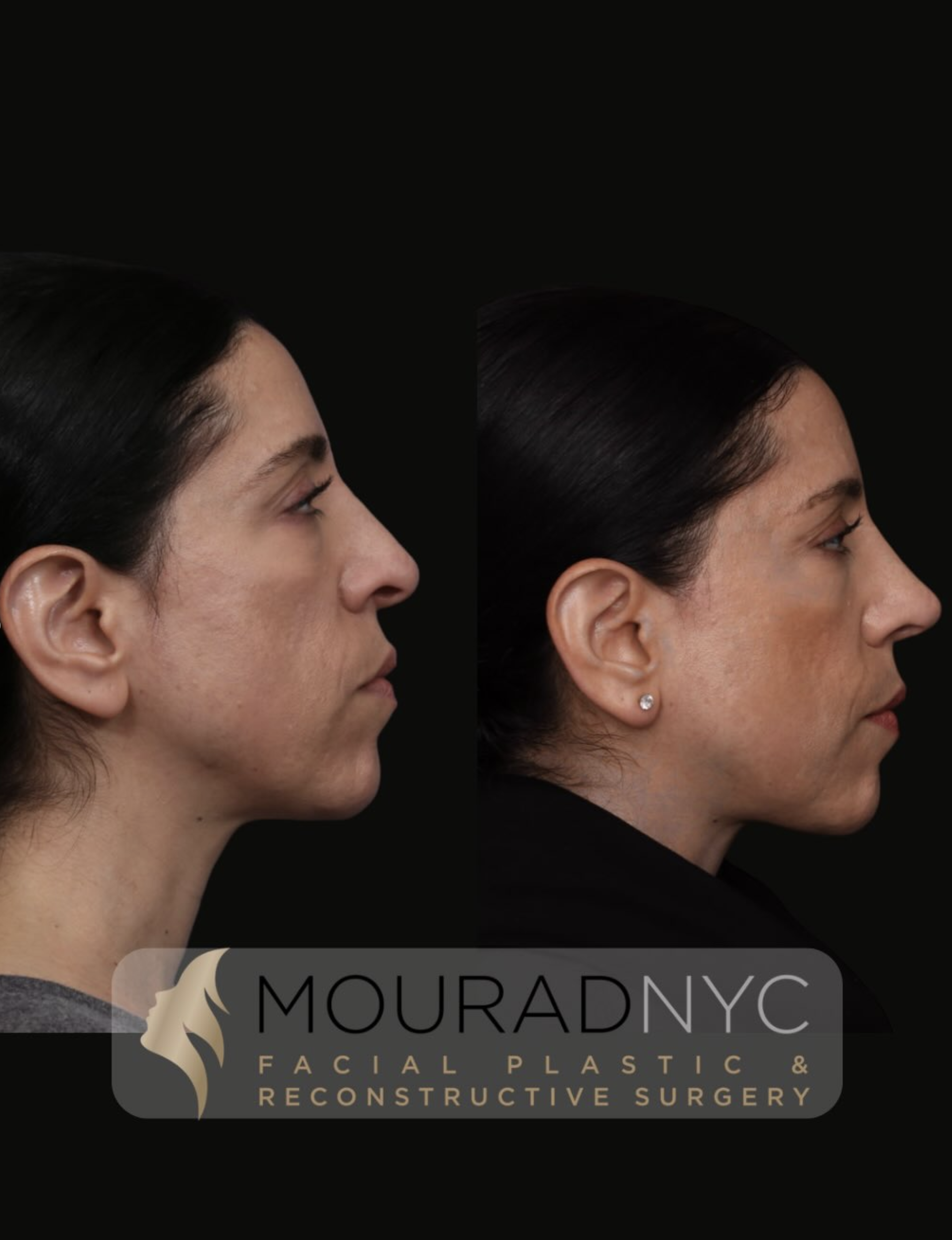
Pre and post-operative comparison · Written consent on file
06 · Recovery
What revision healing actually looks like.
Stage 01
First 24 Hours
The first day centers on rest and protection of the repair. Expect a splint or cast on the bridge, support inside the nose, congestion, and some oozing managed with gentle head elevation. Pain is usually moderate and controlled with prescribed medication. Bending, lifting, and any straining that raises pressure in the nose are avoided.
Stage 02
Week 1
Through the first week swelling and bruising around the eyes and nose are most noticeable and then begin to settle. The external splint and any internal splints or sutures are typically removed near the end of this week. Many patients feel presentable enough for desk-based work once the splint is off, while strenuous activity remains off-limits.
Stage 03
Weeks 2 – 4
Over weeks two to four the obvious bruising resolves and the early shape of the rebuilt nose emerges, though the tip stays firm and slightly swollen. Light exercise is reintroduced gradually on the surgeon's guidance. Because revision tissue is scarred and less predictable, swelling in this phase can fluctuate more than after a first-time rhinoplasty.
Stage 04
Months 1 – 18
Refinement continues longer than most patients expect. Deep tip swelling in a revision nose can take roughly twelve to eighteen months to fully resolve, and the final contour is assessed at the end of that window. Grafted cartilage settles, the skin redrapes, and small asymmetries common in early healing typically continue to improve over this period.
Have a specific question?
Send a brief note describing your anatomy or concerns — the office will route it directly to Dr. Mourad for review.
Twelve to Eighteen Months
Long-term healing.
Outcomes after revision rhinoplasty evolve across predictable phases that reflect healing, graft integration, and scar remodeling rather than a single endpoint. The early phase is characterized by edema, bruising, and firm tissues that obscure fine contours. The intermediate phase entails graft settling, soft-tissue relaxation, and improving nasal symmetry as inflammation resolves. The late phase, typically approaching twelve months, reveals more stable tip definition and dorsal refinement, though subtle changes may continue for longer in complex reconstructions. Because revision cases usually involve added structural work, the surgeon anticipates gradual maturation and plans follow-up accordingly.
Functional improvements in airway patency follow a similar multi-stage course and depend on both mechanical repair and mucosal recovery. Septal reconstruction, turbinate reduction, and valve support procedures reduce structural blocks to airflow, but mucosal swelling and scar contracture influence subjective breathing for months. Objective assessment with nasal endoscopy, validated patient-reported outcome measures, or airflow testing at follow-up visits helps track progress in both subjective and measurable terms. Successful functional outcomes therefore rely on combined surgical mechanics and postoperative medical care tailored to mucosal health.

Safety & Consent
Risks, safety, and informed consent.
Revision rhinoplasty carries specific risks that differ from primary procedures because scarred tissue and prior grafting change the operative landscape. Bleeding and hematoma formation remain early risks and can compromise grafts or require urgent drainage in the operating room. Septal hematoma (a collection between nasal septum layers) produces worsening pain and obstruction and requires prompt drainage to avoid cartilage loss. Mitigation includes meticulous intraoperative hemostasis, perioperative blood-pressure control, and early postoperative monitoring for expanding nasal fullness or new drainage that suggests a hematoma.
Infection is a recognized complication that may present with fever, increasing pain, erythema, and purulent drainage from incision or donor sites. Alloplastic implants have a higher risk of late exposure and infection compared with autologous grafts, and implant-related infections sometimes mandate removal. To reduce infectious risk we apply strict sterile technique, judicious antibiotic use when indicated, and selection of autologous tissue when feasible. Early identification of infection allows office-based irrigation and targeted antibiotics or timely operative washout when necessary to protect structural grafts.

Before You Arrive
Your revision consultation, prepared.
Bring operative reports from any prior nasal surgery if available.
Bring pre-operative photographs from your prior surgery if available.
Note any breathing changes since your prior surgery — when, how severe.
List all medications, supplements, and blood-thinning agents.
Allow 75 minutes; revision consultations are deliberately longer.
No decisions are made at the first visit — that is by design.
In Their Words
From patients of the practice.
Revision surgery made me nervous because I had already been through one rhinoplasty elsewhere. This time felt very different. Everything was explained clearly, and the result looks much more balanced.
I had breathing issues and cosmetic concerns after my first surgery years ago. My revision was not rushed, and I appreciated the honesty about what could and couldn't be fixed. My nose looks softer and functions better.
I wanted a revision but was scared of making things worse. The plan was conservative, and that gave me confidence. I finally feel like my nose fits my face.
I flew in for revision rhinoplasty after several consultations that didn't feel right. This was the first time I felt someone really understood the problem. The improvement has been a huge relief.
Individual experiences. Results and recovery vary by patient. Testimonials shared with written consent.
Patient Reviews
Revision Rhinoplasty Patient Experiences
Selected public patient reviews. Individual experiences vary.
“After a really difficult first surgery, I was hesitant about revision rhinoplasty, until I met Dr. Mourad. He was incredibly warm and attentive from the start…”
Real patient experiences
Selected public reviews from patients of the practice.
Your privacy matters
We never share personal health information.
Board-certified expertise
Dual board-certified facial plastic and reconstructive surgeon.
Individual results vary. Reviews reflect individual experiences and are not a guarantee of outcome.
Frequently Asked
Revision Rhinoplasty NYC FAQs
Revision rhinoplasty cost in NYC is highly individualized because the surgeon may be working with scar tissue, altered anatomy, depleted cartilage, breathing obstruction, or the need for grafting. There is no flat price; the fee reflects the surgical complexity, anesthesia, and facility costs for your specific case. A personalized estimate is provided after an in‑person consultation.
Cosmetic refinements are generally self‑pay. If part of the revision corrects a documented functional problem such as nasal obstruction, valve collapse, or septal deviation, insurance may apply to the functional portion. Coverage depends on your plan, medical necessity, and documentation. Our office can help you understand what records may be needed and what out‑of‑pocket costs may apply.
Most revision rhinoplasty is best deferred until at least twelve months after the prior surgery, so soft tissue swelling resolves and the final settled shape is visible before re‑operating. Earlier intervention is sometimes necessary in specific situations such as infection or implant exposure, and is often staged. Timing is individualized at the consultation.
Revision is more complex because the normal anatomy has already been altered. Scar tissue distorts the tissue planes, the original cartilage may be depleted, the skin envelope can be thinned, and structural support is often weakened by prior reduction. These factors make exposure, grafting, and reshaping more demanding than in a first‑time rhinoplasty.
Not always. When sufficient material remains, septal cartilage is the first‑line graft source, and ear (conchal) cartilage is useful for curved contour grafts. Costal (rib) cartilage is reserved for major rebuilding when septal and ear sources are depleted or significant structural support must be restored. The graft source is selected case‑by‑case based on what the anatomy requires.
Revision can improve breathing when a structural cause is identified and addressed, such as septal deficiency, internal valve narrowing, or valve collapse. Techniques may include septal reconstruction and spreader or batten grafts, sometimes combined with turbinate management. The degree of improvement depends on tissue quality and prior surgery, and is assessed with examination and endoscopy at consultation.
Common concerns include an over‑rotated or pinched tip, asymmetry, a saddle deformity from over‑resection, a residual hump, pollybeak fullness, and dorsal lines that are no longer straight. Functional problems such as valve collapse or a septal perforation sustained during prior surgery can also be addressed. Each issue is mapped and prioritized during planning.
Primary rhinoplasty is a first nasal operation on tissue that has not been previously altered. Revision rhinoplasty is performed on a nose that has already had surgery, where scar tissue, depleted cartilage, and weakened support change the plan. If you have never had nasal surgery, primary rhinoplasty is the right starting point rather than this page.
Secondary rhinoplasty is another term for revision rhinoplasty — nasal surgery performed on a nose that has already had one or more previous operations. It is the same type of procedure described on this page, addressing the altered anatomy, scar tissue, and depleted cartilage left behind by prior surgery.
The open approach is frequently chosen for revision because it gives direct exposure for scar release, accurate graft placement, and structural rebuilding. A closed approach can be appropriate for limited, well‑defined adjustments. There is no single right answer; the approach is selected based on scar burden, grafting needs, and airway goals, and the reasoning is explained during planning.
Early bruising and most visible swelling generally settle over the first two to three weeks, similar to primary surgery, and the splint is typically removed near the end of the first week. Because revision tissue is scarred, deeper swelling can take longer to resolve. Light activity is reintroduced gradually on your surgeon's guidance.
Refinement in a revision nose continues longer than many patients expect. Deep tip swelling can take roughly twelve to eighteen months to fully resolve, and the final contour is assessed at the end of that window as grafted cartilage settles and the skin redrapes. Individual healing varies, and small early asymmetries commonly continue to improve over this period.
Bring operative reports from any prior nasal surgery and pre‑operative photographs if you have them, along with a list of your medications, supplements, and any blood‑thinning agents. Note any breathing changes since your prior surgery — when they began and how severe they are. These records make the evaluation more accurate; no surgical decisions are made at the first visit.
Clinical references
This page draws on published clinical practice guidelines and public-health references. These sources inform general patient education and do not replace an individual evaluation with Dr. Mourad.
- 01Ishii LE, et al. Clinical Practice Guideline: Improving Nasal Form and Function after Rhinoplasty. Otolaryngology–Head and Neck Surgery. 2017;156(2 suppl):S1–S30. AAO-HNSF guideline
- 02U.S. National Library of Medicine (MedlinePlus). Nose Injuries and Disorders. MedlinePlus
Related Nasal Surgery
Explore related procedures and resources.
Revision is the right path only for patients with prior nasal surgery. If your situation is different, these pages may be a better starting point.
Primary rhinoplasty in NYC
For patients who have never had nasal surgery and are considering a first rhinoplasty.
Read moreSeptoplasty for a deviated septum
When the primary concern is breathing through a deviated septum rather than appearance.
Read moreNasal valve collapse treatment
Repair of internal or external valve collapse that restricts the nasal airway.
Read moreSeptal perforation repair
Closure of a hole in the septum, sometimes sustained during prior nasal surgery.
Read moreBroken nose repair
Evaluation and repair after recent nasal trauma or a post-traumatic deformity.
Read moreCost, financing & insurance
How surgical fees, financing, and insurance for functional repair are approached.
Read moreThe Most Important Step
Your revision consultation.
The appropriate next step is an in-person consultation where prior operative reports, photographs, and imaging are reviewed to shape an individualized plan. Bring all prior surgical records, implant documentation if available, and a clear chronology of functional and cosmetic symptoms to the visit. Expect the consultation to include an external exam and office nasal endoscopy (a flexible scope examination) to assess mucosal health, septal integrity, and valve competence. We will discuss candidacy, whether septal cartilage remains available, the potential need for auricular or costal cartilage, and whether a staged reconstruction is safer for durable results.