Double Board Certified · First-Time Rhinoplasty
Primary Rhinoplasty — the first operation, done well, is the best long-term value.
A primary rhinoplasty is a once-in-a-lifetime opportunity. Done with restraint and structural integrity, it tends to age beautifully. Done aggressively, it sets up a lifetime of revisions. The first operation is, by far, the most important one.
ABFPRS
Facial Plastic & Reconstructive Surgery
ABOto
Otolaryngology — Head & Neck Surgery
AAFPRS
Fellowship Director
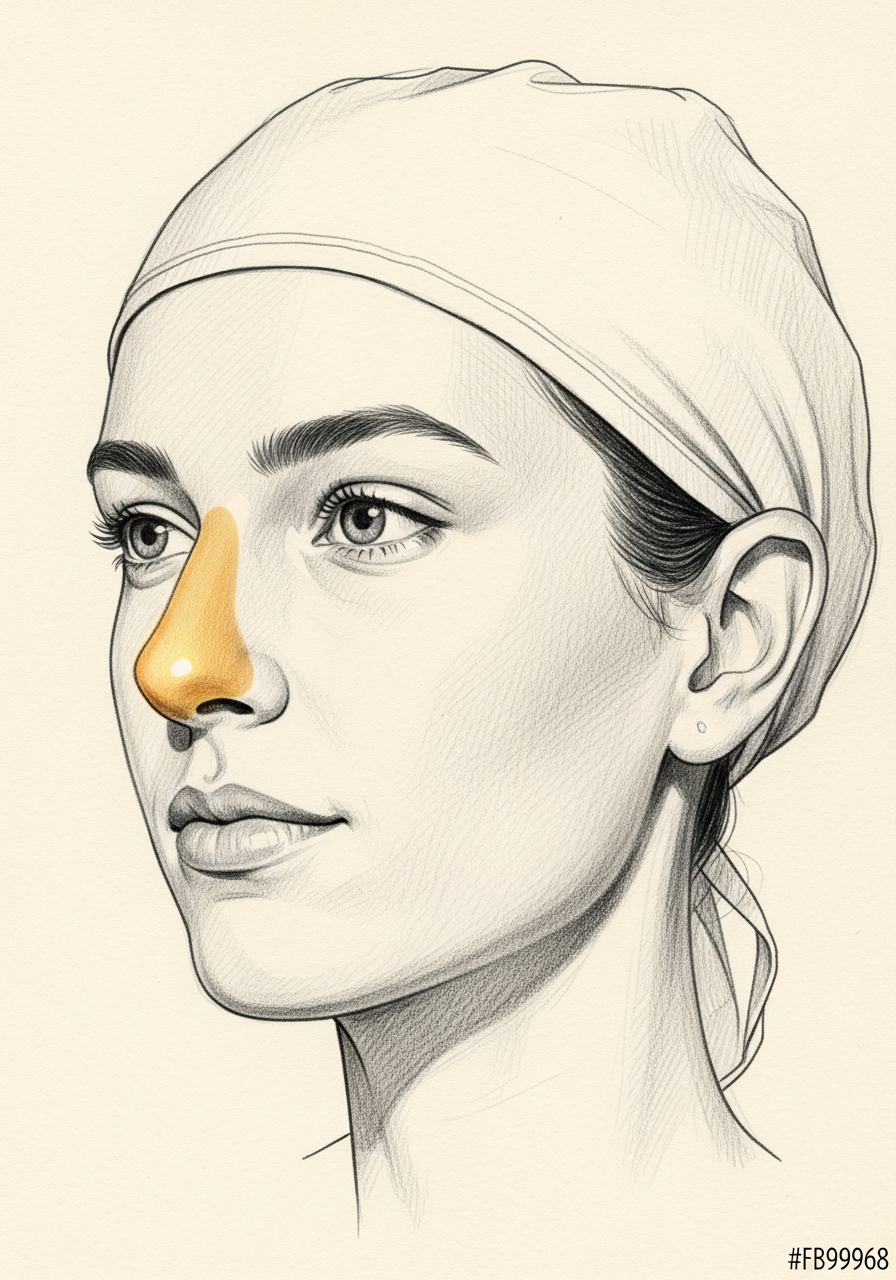
In Consultation
"The single best predictor of a great long-term outcome is the quality of the first operation."

A Note from Dr. Mourad
"A primary rhinoplasty is a once-in-a-lifetime opportunity. Done with restraint and structural integrity, it tends to age beautifully. Done aggressively, it sets up a lifetime of revisions. The first operation is, by far, the most important one."
— Dr. Moustafa Mourad, MD
Medically reviewed by Moustafa Mourad, MD, FACS — dual board-certified Facial Plastic & Reconstructive Surgeon and Otolaryngologist (Head & Neck Surgery).
Last reviewed: June 2026
Is this the right page for you?
This page is for
- You have never had nasal surgery and are considering it for the first time.
- You want to refine the bridge, tip, or profile, improve breathing, or both.
- You are looking for a natural result that suits your face rather than a generic, over-done nose.
You may be looking for
- If you have already had rhinoplasty and want it corrected, see revision rhinoplasty.
- If your only concern is breathing through a deviated septum, see septoplasty.
Overview
What is primary rhinoplasty?
Primary rhinoplasty is a first-time surgical procedure on the nose, performed to refine its shape and/or improve breathing. Through carefully planned incisions — most often a small bridging incision on the columella plus internal incisions — the underlying bone and cartilage are reshaped, and the soft-tissue envelope is allowed to redrape over the new framework.
It is considered when a patient has a dorsal hump, a wide or off-center bridge, a bulbous, droopy, or asymmetric tip, an over- or under-projected nose, breathing difficulty from a deviated septum or narrow nasal valves, or any combination of these. Aesthetic and functional goals are addressed together rather than as separate operations.
A first-time rhinoplasty is the most important rhinoplasty a patient will ever have. The native cartilage, bone, and soft tissue are at their healthiest; the right plan, executed once, avoids the long path of revision surgery.
An Established Academic Authority
Double board certification. Fellowship director. Published author. A surgeon's surgeon.
ABFPRS
Board Certified
American Board of Facial Plastic & Reconstructive Surgery
ABOto
Board Certified
American Board of Otolaryngology — Head & Neck Surgery
AAFPRS
Fellowship Director
American Academy of Facial Plastic and Reconstructive Surgery
Textbook
Published Author
Contributions to the academic literature of facial plastic surgery
Dual board certification in both Facial Plastic & Reconstructive Surgery and Otolaryngology — a combination held by a small number of physicians nationally.
02 · Ideal Candidates
Who benefits most from this operation.
Candidacy is determined together at consultation. The most satisfied patients share three things in common.
I
Specific Concerns
Patients who can articulate what bothers them — a dorsal hump, a wide tip, a deviation, a drooping appearance — rather than a vague wish to look different.
II
Realistic Expectations
A rhinoplasty refines an existing nose; it does not give a patient someone else's nose. The most satisfied patients want their own nose, better.
III
Mature Anatomy
Generally late adolescence onward, once facial growth is complete. Earlier intervention is occasionally appropriate but is decided case by case.
If this describes you, the next step is a quiet, unhurried conversation — not a sales call.
An Honest Note
When this operation may not be right for you.
Body dysmorphic features around the nose are screened for at consultation and managed with appropriate referral when present.
Patients seeking to copy a specific celebrity nose are gently re-directed toward what their own anatomy can sustain.
Severe functional issues may need to be staged or combined with septoplasty as a septorhinoplasty.
Smokers and patients on certain medications need a planned optimisation window before any nasal surgery.
03 · Approaches
The full range of options.
Primary rhinoplasty is not one operation. The right plan combines the technique that suits the patient's anatomy with the variation appropriate to their goals, heritage, sex, and stage of life.
1 of 6 · Preservation Approach
04 · Technique
Preservation vs structural rhinoplasty.
Modern primary rhinoplasty offers two well-established philosophies. The right approach for a given patient depends on the starting anatomy, the change required, and what will age best.
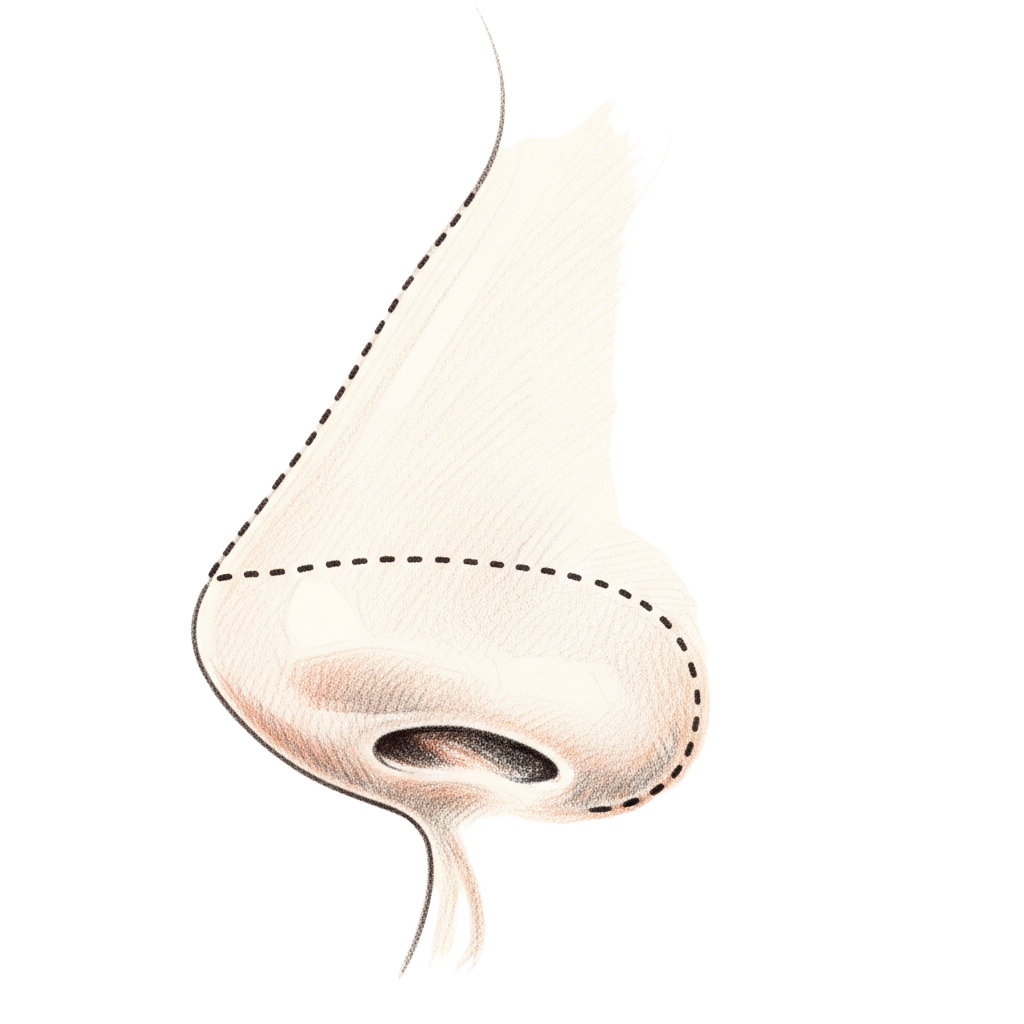
Preservation
Dorsal Preservation
The dorsal aesthetic lines are preserved as a single unit; the underlying bone and septum are reshaped from below. The natural surface anatomy of the dorsum is maintained.
Well-suited to the right primary anatomy — typically a smooth dorsum with a modest hump that can be lowered by reshaping the foundation rather than reducing the surface.
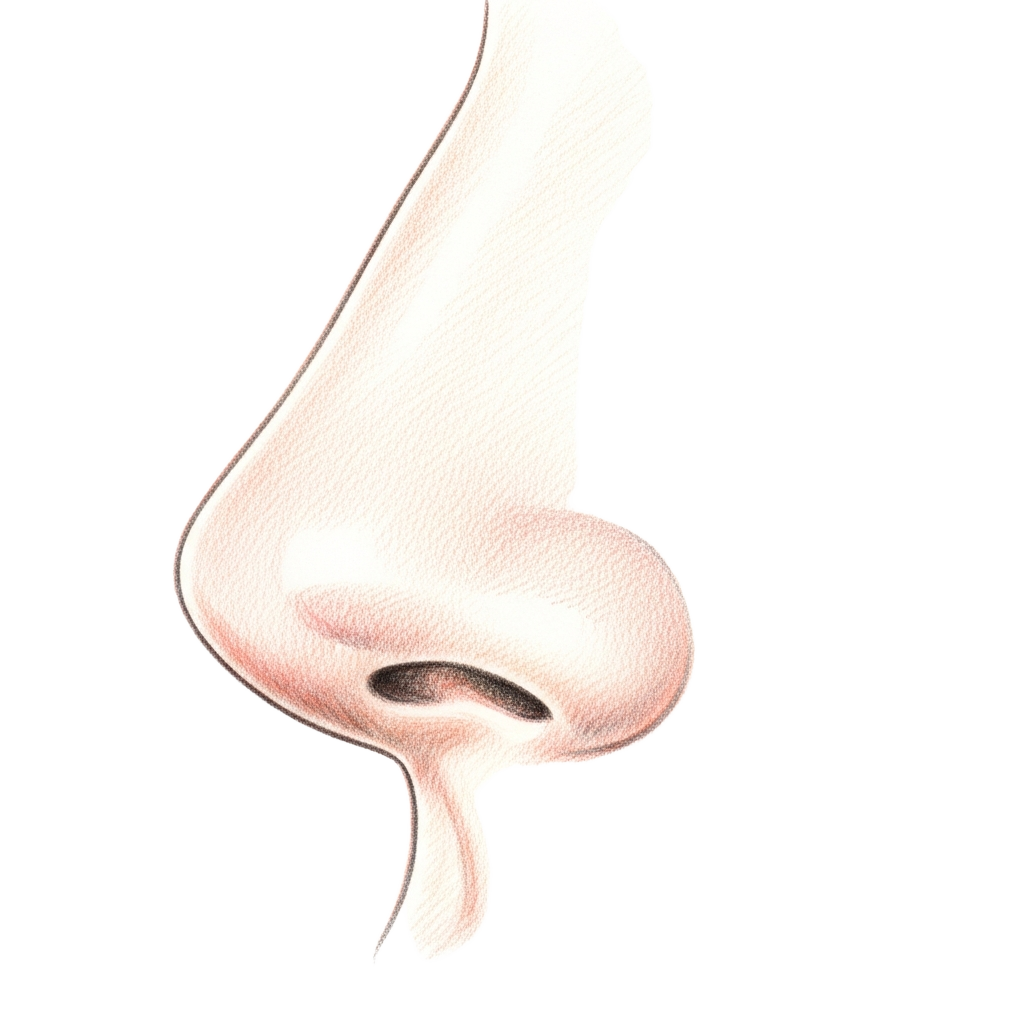
Structural
Cartilage Refinement
Cartilage grafts and suture techniques are used to refine, support, and reshape the tip and dorsum. The modern standard for the broadest range of anatomies.
Particularly well-suited to thicker skin, weaker cartilage, or any anatomy where the long-term shape requires structural support.
Both are part of a complete modern rhinoplasty practice. The right approach is determined together.
01 · Why Dr. Mourad
A surgeon trusted by surgeons for this operation.
Dr. Moustafa Mourad is double board-certified by the American Board of Facial Plastic & Reconstructive Surgery and the American Board of Otolaryngology — Head & Neck Surgery, and serves as an AAFPRS Fellowship Director.
The practice concentrates on the operations of the face, nose, and sinuses — and on the patients other surgeons have found challenging.
Every consultation is unhurried, every plan is individual, and no operation is recommended unless it is the right one.
Begin the conversation
The first operation matters most. Plan it carefully.
Cost, Financing & Insurance
Primary Rhinoplasty Cost, Financing & Insurance in NYC
Primary rhinoplasty cost depends on the complexity of the surgical plan, the techniques required, the type of anesthesia, the surgical facility, and whether functional nasal airway work is performed at the same time. Every plan is individualized after consultation.
Cosmetic rhinoplasty is generally considered elective and is typically self-pay. When functional nasal airway surgery, such as septoplasty, is medically necessary and performed at the same time, that portion may be eligible for insurance coverage depending on the patient’s plan. After consultation, our office provides a personalized estimate, and financing may be available for qualified patients.
What May Affect Cost
- Complexity of the surgical plan
- Techniques required
- Whether functional airway work is included
- Type of anesthesia
- Surgical facility
- Primary vs revision surgery
This information is educational and is not a guarantee of pricing, insurance coverage, reimbursement, financing approval, or surgical candidacy. A personalized estimate is provided after consultation. Insurance coverage depends on the patient’s plan, medical necessity, documentation, and carrier requirements. Financing terms are determined by third-party financing providers.
05 · In Dr. Mourad's Words
Educational videos.
Short educational films and patient perspectives from the Manhattan practice.
Dr. Mourad in Practice
An overview of the practice and philosophy.
Patient Perspective
A patient discusses her experience before, during, and after surgery.
Inside the Consultation
How Dr. Mourad evaluates anatomy, goals, and candidacy.
From the Patient Gallery
A representative primary rhinoplasty result.
A female patient in her 20s, documented in standardized studio conditions before and after surgery. Written photographic consent on file. Results vary by patient; this case is representative, not predictive.
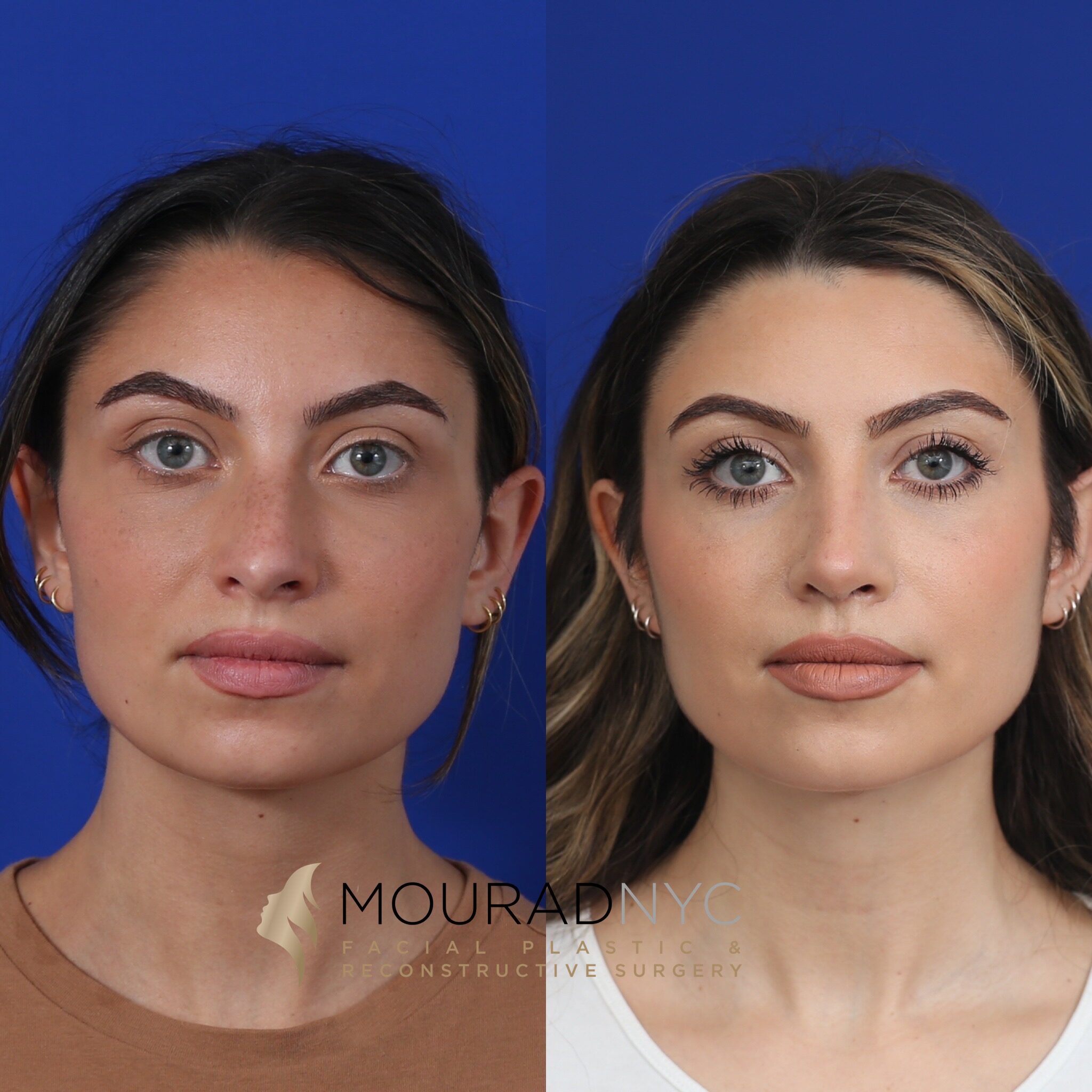


Pre and post-operative comparison · Written consent on file
06 · Recovery
What healing actually looks like.
Stage 01
First 24 Hours
A small external splint sits on the dorsum for the first week. Internal silicone splints, if used, are removed at the first post-operative visit.
Stage 02
Week 1
Bruising and swelling peak around day three. Most patients return to office work within one to two weeks. Social return is comfortable by two weeks.
Stage 03
Weeks 2 – 4
Through weeks two to four, the cosmetic shape begins to emerge. Light cardio resumes around three weeks. Contact sports are deferred for several months.
Stage 04
Months 1 – 12
The final refined shape is appreciated over six to twelve months as the tip swelling continues to resolve.
Have a specific question?
Send a brief note describing your anatomy or concerns — the office will route it directly to Dr. Mourad for review.

Before You Arrive
Your consultation, prepared.
Bring frontal, lateral, and three-quarter photographs of your nose.
Note any history of nasal trauma, allergies, or breathing issues.
List current medications and supplements.
Be prepared for a complete functional and aesthetic evaluation.
Allow 60 minutes for the first consultation.
Bring questions; no decisions are made at the first visit.
In Their Words
From patients of the practice.
I wanted my nose refined, not completely changed. The result fits my face, and that was the most important thing to me. It's the kind of change where I feel better, but no one is staring at my nose.
My side profile bothered me for years. After rhinoplasty, the bump is gone, but my nose still looks natural. I feel much more comfortable in photos now.
I was very specific that I didn't want a tiny or overly scooped nose. I felt listened to from the first appointment. The result is balanced and still feels like me.
I came from out of state because I wanted a natural rhinoplasty result, not a cookie-cutter nose. The whole process felt personalized. I'm really glad I trusted my instincts.
Individual experiences. Results and recovery vary by patient. Testimonials shared with written consent.
Patient Reviews
Primary Rhinoplasty Patient Experiences
Selected public patient reviews. Individual experiences vary.
“almost 5 years post op and i have still never breathed better before this.”
Real patient experiences
Selected public reviews from patients of the practice.
Your privacy matters
We never share personal health information.
Board-certified expertise
Dual board-certified facial plastic and reconstructive surgeon.
Individual results vary. Reviews reflect individual experiences and are not a guarantee of outcome.
Frequently Asked
Patient questions, honestly answered.
Primary rhinoplasty is performed on unoperated tissue planes so native septal and alar cartilage are usually available. There is generally less scar tissue and more predictable exposure, which makes structural maneuvers and graft placement more straightforward. Revision rhinoplasty addresses altered anatomy, previous reductions, or weakened support and is therefore more complex. Planning a primary operation emphasizes preservation of support to reduce the likelihood of secondary deformity.
Many patients who seek cosmetic change also have structural causes of nasal obstruction, such as a deviated septum, turbinate enlargement, or valve weakness. These issues can often be treated at the same operation (septorhinoplasty) when indicated, but candidacy depends on the specific anatomic findings. A careful internal airway exam and symptom review in consultation determine whether combined functional correction is appropriate. Surgical planning balances aesthetic goals with measures to protect or improve airflow.
Yes. In primary rhinoplasty the dorsal profile and tip are commonly modified during a single operation when both regions contribute to the concern. Typical maneuvers include dorsal contouring, osteotomies for width or alignment, and tip reshaping using sutures or cartilage grafts. The surgeon aims to balance reduction with reinforcement to avoid postoperative collapse or airway compromise. The exact combination of techniques is individualized to your anatomy.
Approach selection follows the exposure required and planned structural tasks, not fashion. An open approach provides direct visualization of tip cartilage and is chosen when extensive tip work or multiple grafts are anticipated. A closed approach can be appropriate for limited dorsal refinement or simpler tip adjustments when adequate access exists intranasally. The choice is individualized after anatomical assessment and discussion of goals.
Septoplasty is indicated when a displaced septum contributes to airflow limitation or when septal cartilage is needed as a graft source. Not every primary rhinoplasty requires septal work, but combined septorhinoplasty is common when functional and aesthetic goals overlap. The need for septoplasty is determined by internal examination, symptom history, and intraoperative findings. Your surgeon will explain whether septal correction is likely to be part of your planned operation.
Visible swelling and bruising typically decrease substantially within two to three weeks. Midface and dorsal contours settle more over the first three months, while tip definition continues to evolve between three and twelve months. Some subtle soft‑tissue remodeling can continue up to 12–18 months depending on skin thickness and the extent of structural work. Individual recovery timelines vary and are discussed during follow‑up visits.
Skin thickness strongly affects how quickly contour is revealed: thin skin shows refined definition sooner, while thick skin can mask fine tip detail for many months. Cartilage strength and existing septal support limit safe reduction without risking collapse. Surgical planning assesses the soft‑tissue envelope, cartilage availability, and facial proportions to set realistic goals. Often the plan favors reinforcement rather than aggressive reduction to protect long‑term form and function.
Primary rhinoplasty typically aims to refine proportions and improve harmony while preserving individual features. Planning focuses on measured changes—smoothing a dorsal hump, improving tip support, or addressing asymmetry—rather than producing an unrecognizable nose. Final appearance depends on healing, tissue behavior, and the goals agreed upon during consultation. Your surgeon will review photographic simulations and set expectations before proceeding.
Grafts are used when extra support, projection, or contour is required, for example to strengthen the tip, rebuild the dorsum, or improve valve function. In primary cases, septal cartilage is the preferred donor when sufficient material exists. Auricular cartilage is an option if septal tissue is inadequate; costal cartilage is rarely required for primary cases. The decision to graft is made during preoperative planning and confirmed intraoperatively.
Most patients see substantial reduction in visible bruising and swelling by two weeks and often return to non‑strenuous work then. External splints and many sutures are commonly removed within seven to ten days. Avoid heavy lifting or vigorous exercise for three to six weeks, depending on the surgeon’s instructions. Full recovery of form and function progresses over months, so plan a staged return to normal activities.
Clinical references
This page draws on published clinical practice guidelines and public-health references. These sources inform general patient education and do not replace an individual evaluation with Dr. Mourad.
- 01Ishii LE, et al. Clinical Practice Guideline: Improving Nasal Form and Function after Rhinoplasty. Otolaryngology–Head and Neck Surgery. 2017;156(2 suppl):S1–S30. AAO-HNSF guideline
- 02U.S. National Library of Medicine (MedlinePlus). Plastic and Cosmetic Surgery. MedlinePlus
Explore Further
Related procedures & resources
First-time rhinoplasty is one path within nasal surgery. These pages explain the alternatives and the functional considerations.
Rhinoplasty NYC
The overview of rhinoplasty approaches offered in the practice.
Read moreRevision Rhinoplasty
For patients seeking correction after a prior nasal operation.
Read morePreservation Rhinoplasty
A dorsal-preservation approach for selected candidates.
Read moreSeptoplasty
Correction of a deviated septum when breathing is also a concern.
Read moreNasal Valve Collapse
Functional repair when the nasal sidewall contributes to obstruction.
Read moreBefore & After Gallery
Representative rhinoplasty cases, photographed with written consent on file.
Read moreCost & Financing
How rhinoplasty fees are structured and financing options.
Read moreRequest a Consultation
Begin with an unhurried clinical evaluation.
Read moreThe Most Important Step
Your expert consultation.
A primary rhinoplasty consultation is the most important visit. The evaluation is thorough, the conversation is honest, and the surgical plan is built around what your anatomy can sustain and what you actually want.