Double Board Certified · Male Rhinoplasty
Male Rhinoplasty in NYC
Male rhinoplasty is not one aesthetic formula. Some patients want to preserve a strong bridge while refining a hump; others want correction of trauma, better tip support, improved symmetry, or easier breathing. Dr. Moustafa Mourad plans the operation around the individual face and the result the patient personally considers masculine—without assuming one bridge height, tip angle, or degree of narrowing.
ABFPRS
Facial Plastic & Reconstructive Surgery
ABOto
Otolaryngology — Head & Neck Surgery
AAFPRS
Fellowship Director
In Consultation
"There is no single male rhinoplasty. Some patients want to preserve a strong bridge; others want a softer profile, correction of trauma, better breathing, or greater symmetry. The plan should reflect the individual patient's face and goals rather than a prescribed masculine template."

A Note from Dr. Mourad
"Sex does not determine one skin thickness, cartilage strength, bridge height, or ideal tip angle. Planning considers the individual nose, facial proportions, airway, prior trauma, and the patient's own preferences."
— Dr. Moustafa Mourad, MD
Medically reviewed by Moustafa Mourad, MD, FACS — dual board-certified in Facial Plastic & Reconstructive Surgery and Otolaryngology–Head & Neck Surgery; Clinical Assistant Professor of Otolaryngology at New York Medical College; AAFPRS Fellowship Director. The medical review identifies the anatomy, evidence, limits, and questions patients should understand before choosing a procedure.
Last reviewed: June 2026
Overview
What is male rhinoplasty?
Male rhinoplasty is individualized rhinoplasty for a patient whose goals may include preserving or creating facial balance they personally consider masculine. It does not assume that every male patient wants the same bridge, tip, width, or profile.
Anatomy varies more among individuals than any single sex-based description can capture. Some male patients have thick skin and strong cartilage; others have thin skin, weak support, a low bridge, a narrow nose, or prior trauma. These features—not a demographic label—determine the operative plan.
The consultation evaluates bridge height and width, tip projection and rotation, skin thickness, cartilage strength, facial height and width, brow and chin projection, prior injury, septal alignment, valves, turbinates, and the patient's own goals. Population averages may inform discussion, but they do not prescribe the result.
The operation may address a dorsal hump, tip support or width, asymmetry, a crooked nose after trauma, or a structural breathing problem. Cosmetic and functional concerns can be coordinated in one plan when the examination supports both; septoplasty, valve support, or turbinate treatment is not automatically part of every male rhinoplasty.
Planning
What "masculine" means in planning
A masculine result is not defined by one straight line or one tip angle. The plan considers how the nose relates to the brow, chin, lips, jaw width, facial height, and the patient's preferences. Some patients want a strong straight dorsum; others want subtle refinement.
Avoiding over-rotation or over-narrowing may be important, but no endpoint should be assumed without discussion. Population averages describe groups, not individuals — they inform the conversation rather than prescribe a result. The endpoint is decided together at consultation.
Common goals may include reducing a hump without automatically creating a scooped profile; straightening post-traumatic or septal deviation; refining a broad or poorly supported tip; preserving or creating appropriate bridge projection; conservatively improving base asymmetry; or treating documented septal, valve, or turbinate obstruction. None of these changes is required because a patient is male.
Chin projection can change how large or projected the nose appears in profile. Dr. Mourad therefore evaluates the nose with the forehead, lips, chin, jawline, and midface before deciding how much the bridge or tip should change. This does not mean every patient needs chin treatment; it keeps nasal decisions from being made in isolation.
Structure & Function
Trauma and breathing in the same assessment
A history of sports injury, fracture, prior septal surgery, or chronic obstruction can affect both appearance and airflow. A crooked bridge may reflect bony deviation, septal deviation, cartilage memory, or a combination. Narrowing the nose without understanding those relationships can worsen breathing or leave deviation incompletely treated.
When functional findings are present, the plan may include septoplasty, nasal-valve support, turbinate treatment, or post-traumatic reconstruction. Each is added only when history and examination support it. The functional and aesthetic steps are coordinated so correction of one concern does not compromise the other.
An Established Academic Authority
Double board certification. Fellowship director. Published author. A surgeon's surgeon.
ABFPRS
Board Certified
American Board of Facial Plastic & Reconstructive Surgery
ABOto
Board Certified
American Board of Otolaryngology — Head & Neck Surgery
NYMC
Clinical Assistant Professor
Otolaryngology · Clinician Scholar Pathway
AAFPRS
Fellowship Director
American Academy of Facial Plastic and Reconstructive Surgery
Textbook
Published Author
Contributions to the academic literature of facial plastic surgery
Dual board certification in both Facial Plastic & Reconstructive Surgery and Otolaryngology — Head & Neck Surgery.
01 · Why Dr. Mourad
Diagnosis first, then a plan that fits.
Dr. Mourad begins with diagnosis rather than a predetermined male template. Existing cartilage support, skin thickness, skeletal alignment, prior trauma, and the amount of change requested determine whether support should be preserved, repositioned, or reinforced.
The aesthetic endpoint is defined with the patient. A straight dorsum, conservative tip rotation, or maintained dorsal height may suit one person's goals, while a subtle curve, lower projection, or correction of a low or asymmetric bridge may suit another.
Breathing function is evaluated during the cosmetic consultation. Symptoms and examination—not sex alone—determine whether septal, valve, turbinate, or sidewall treatment belongs in the operative plan.
02 · Ideal Candidates
Who benefits most from this operation.
Candidacy is determined together at consultation. The most satisfied patients share three things in common.
I
Specific Aesthetic Concerns
Men who can articulate what bothers them — a dorsal hump, a wide tip, a deviation, a drooping appearance.
II
Functional & Cosmetic
Men whose breathing is also affected — often addressed in the same operation as septorhinoplasty.
III
Individual Expectations
Patients who can describe the bridge, tip, projection, and overall balance they personally want, without relying on a single masculine template.
From the Patient Gallery
Male Rhinoplasty Before and After Photos
Male cases only, photographed in standardized studio conditions with written consent on file. Individual results vary; these cases are representative, not predictive.
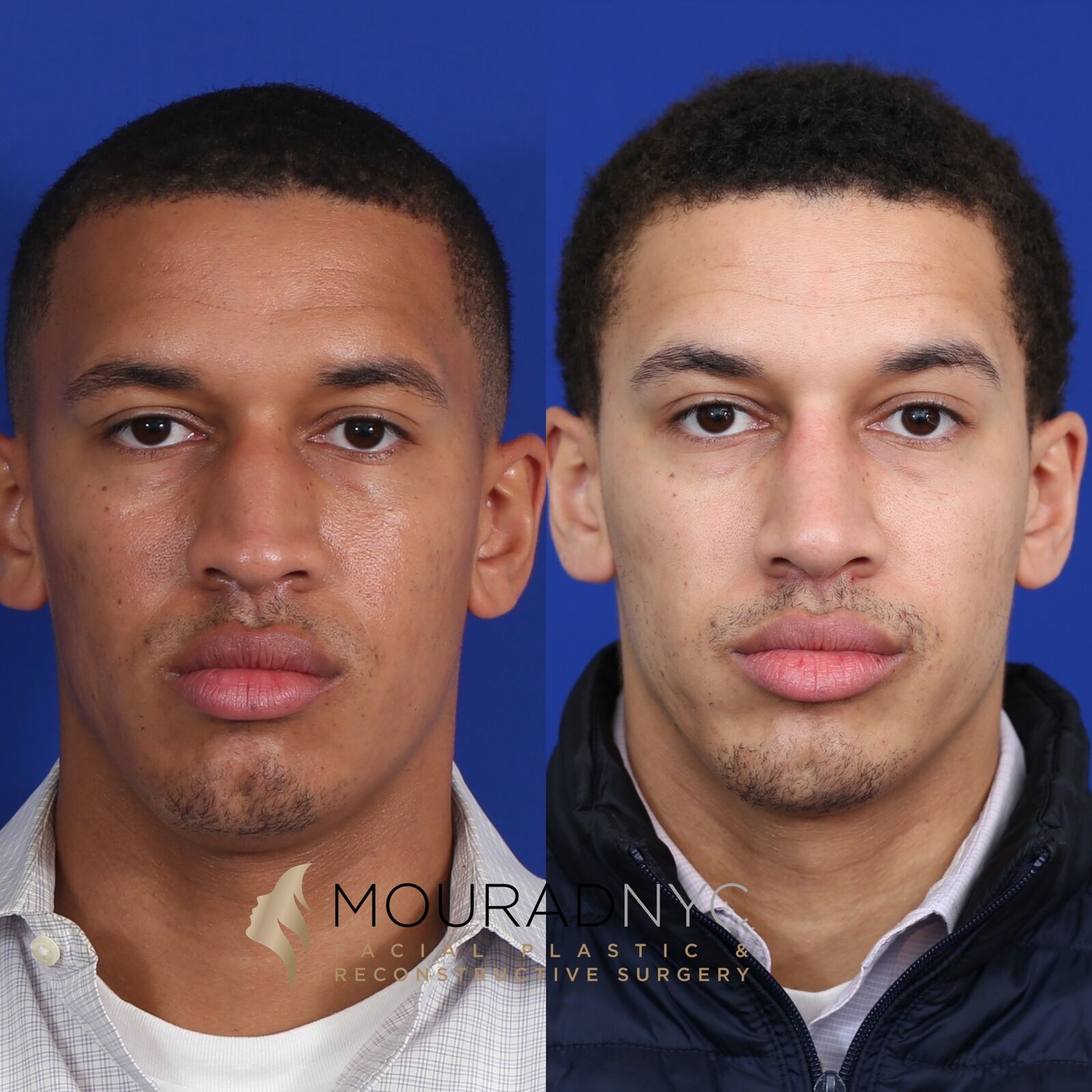
Ethnic Rhinoplasty · 30s · Male
Ethnic rhinoplasty using a costal cartilage (rib) graft for structural support, with the goal of refining the dorsal contour and tip while preserving the patient's ethnic identity and masculine facial proportions.
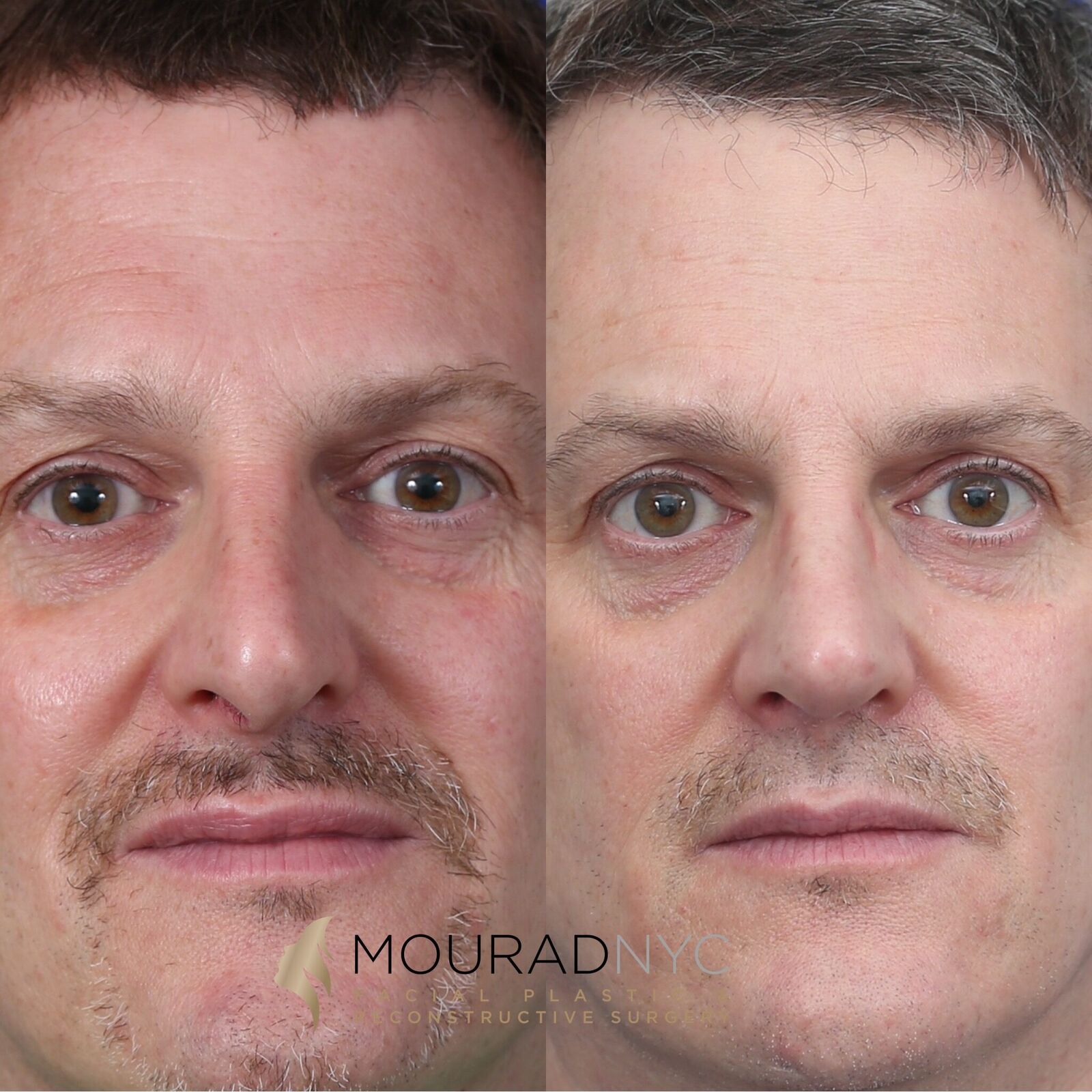
Rhinoplasty · 50s · Male
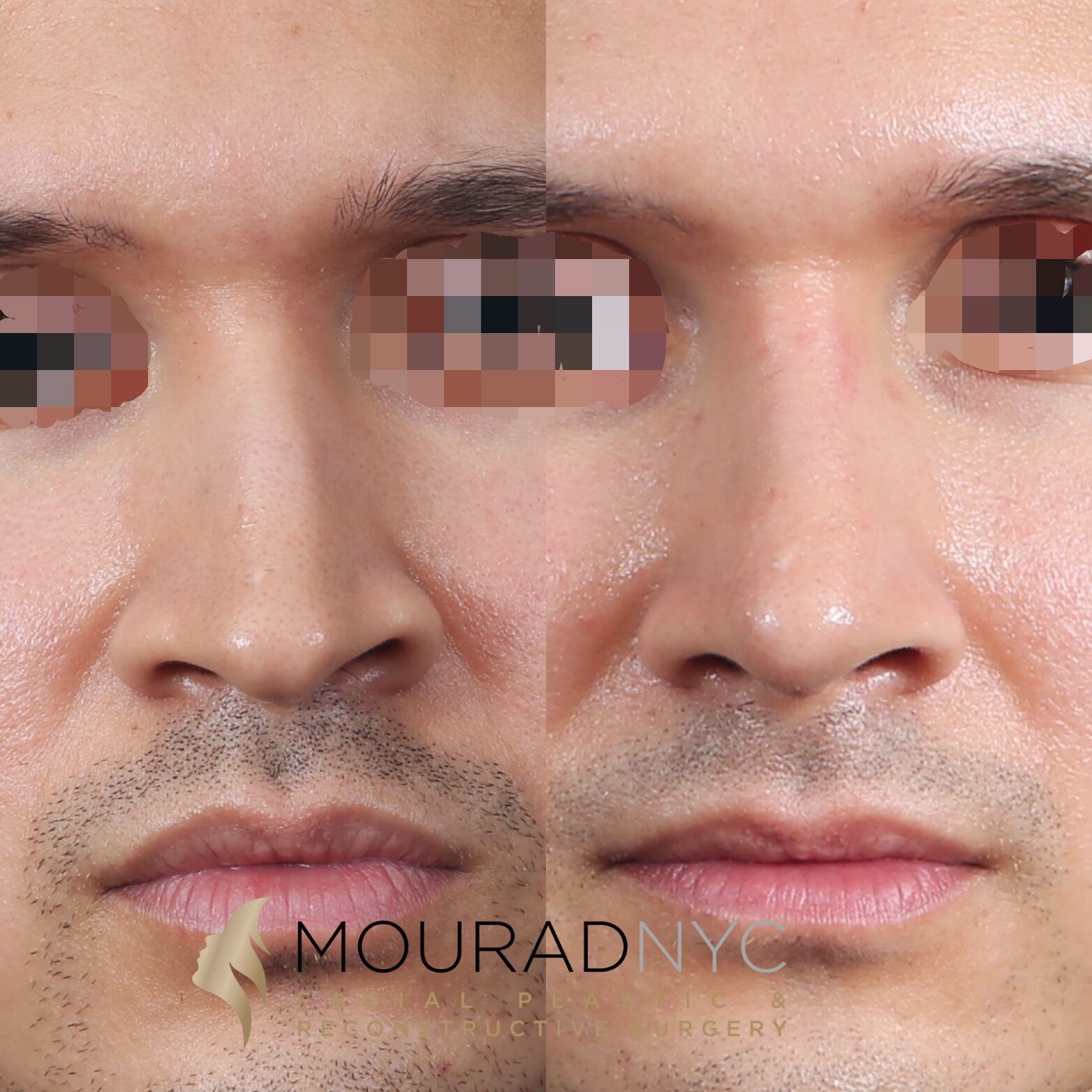
Revision Rhinoplasty · 30s · Male
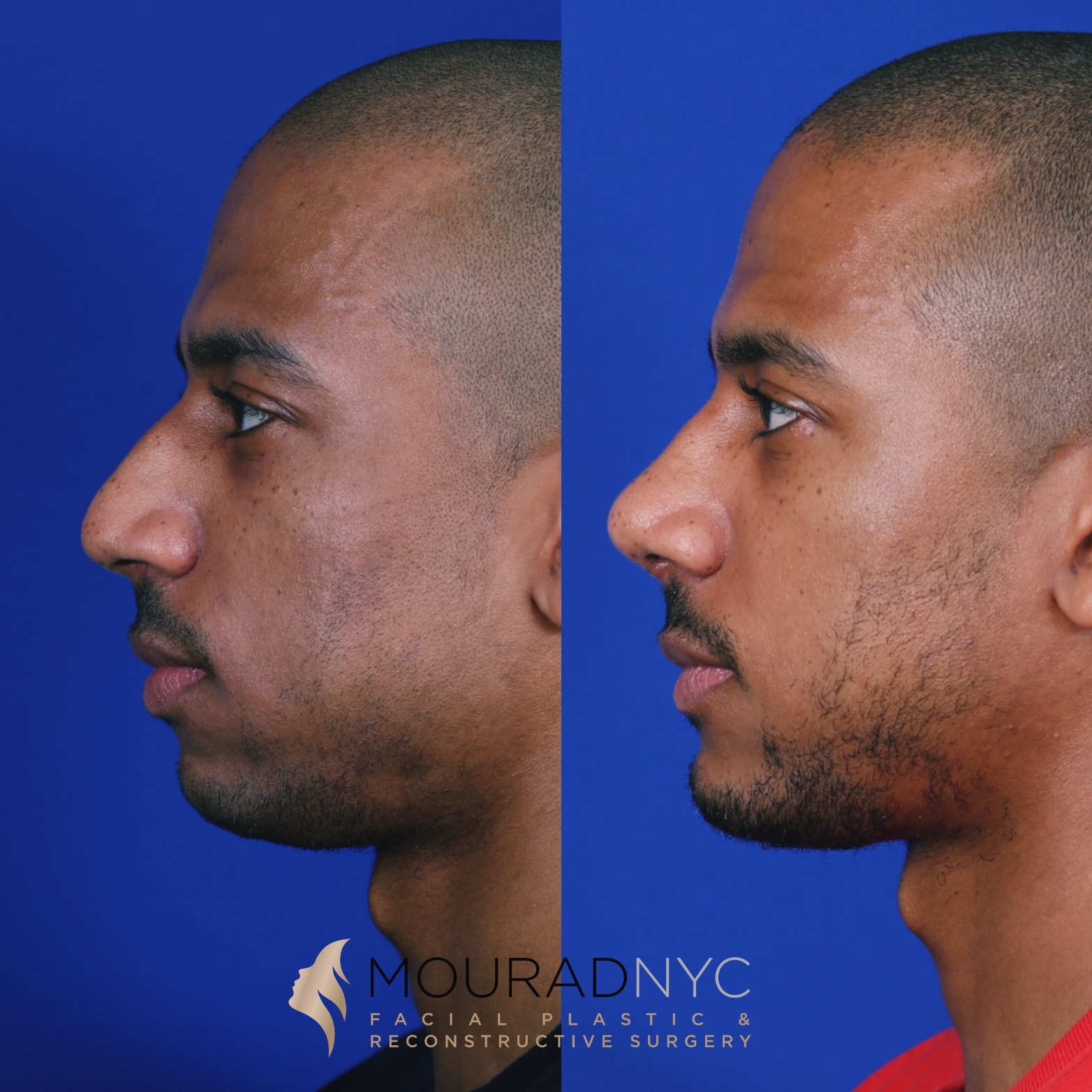
Rhinoplasty + Sliding Genioplasty · 20s · Male
Pre and post-operative comparison · Photographed in standardized studio conditions · Written consent on file
If this describes you, the next step is a quiet, unhurried conversation — not a sales call.
An Honest Note
When this operation may not be right for you.
Body dysmorphic features are screened for at consultation and managed with appropriate referral when present.
Men seeking to copy a specific celebrity nose are gently re-directed toward what their own anatomy can sustain.
Severe functional issues may need to be staged or combined with septoplasty as a septorhinoplasty.
Smokers and patients on certain medications need a planned optimization window before any nasal surgery.
03 · Approaches
Three individualized planning approaches.
The desired proportions are established with the patient rather than inferred from sex. The right technique depends on the underlying anatomy, support requirements, prior surgery or trauma, and whether breathing is also part of the problem.
1 of 3 · Structural Rhinoplasty
04 · Technique
Dorsum & tip in the masculine nose.
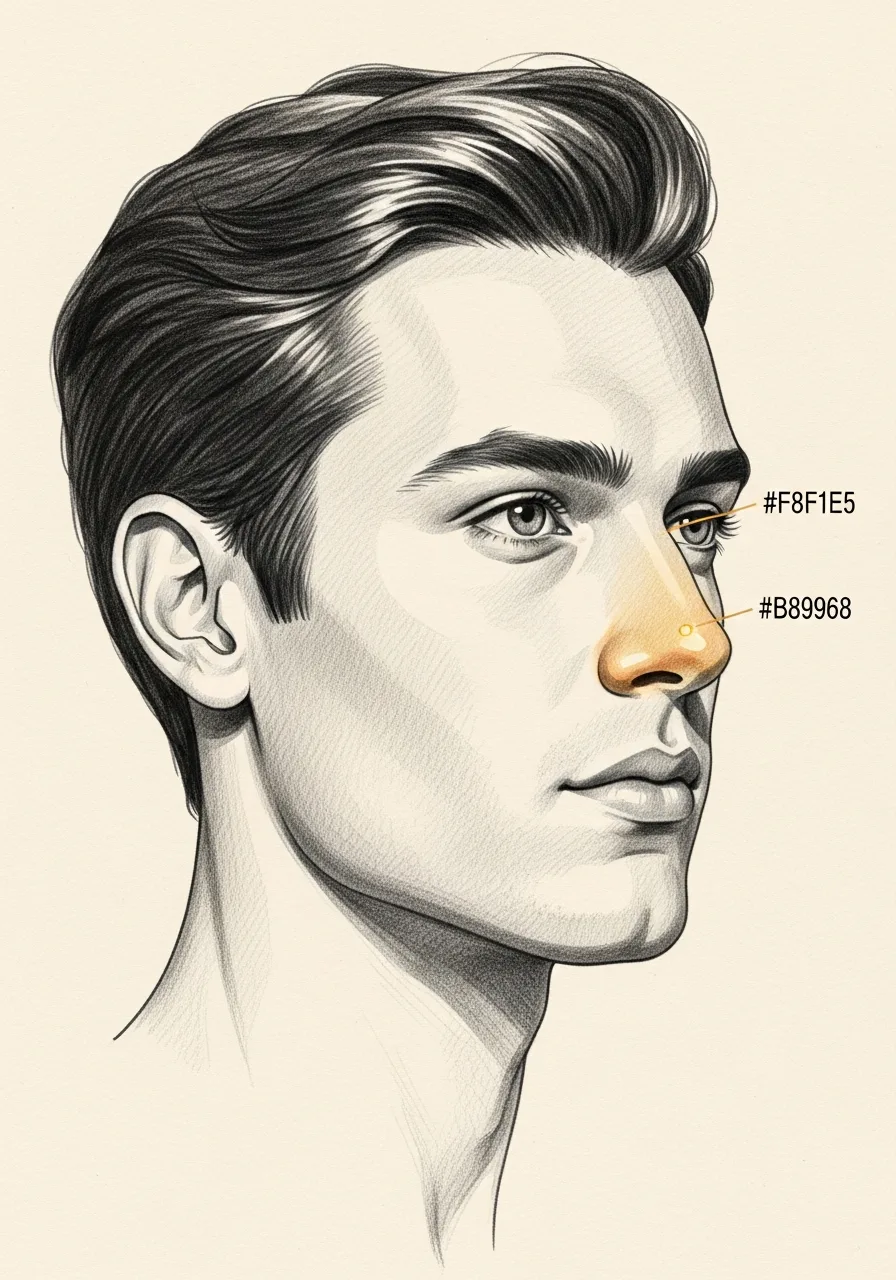
The dorsum and tip are planned together. Reduction, support, projection, and rotation are calibrated to anatomy and the patient's stated endpoint rather than to one profile formula.
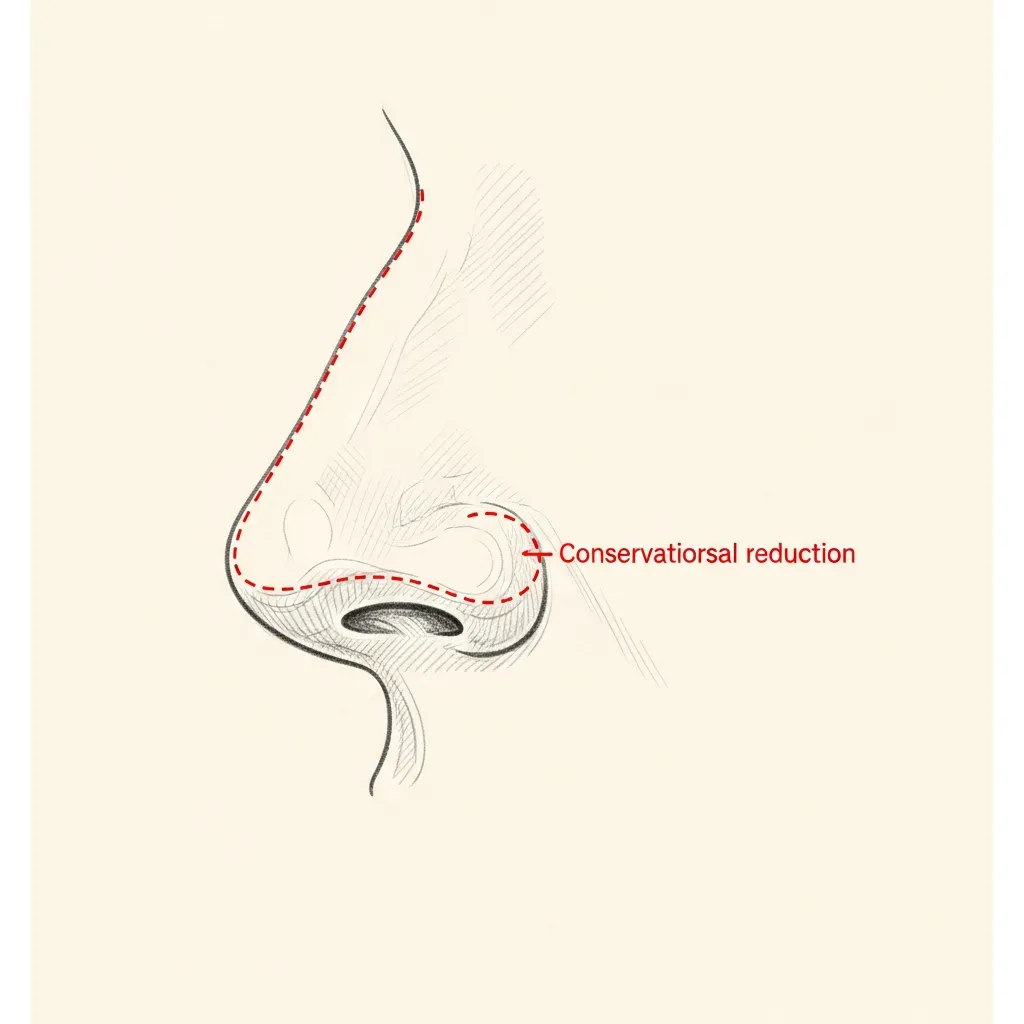
Dorsum
Straight, structurally supported
Many patients prefer a straight or strong dorsum, while others prefer a subtle curve, less projection, or correction of a low or asymmetric bridge. The target line is chosen with the patient and balanced with the rest of the face.
Dorsal augmentation with autologous cartilage is sometimes the right answer when starting projection is low; alloplastic implants are avoided in primary cases when biologic material is available.
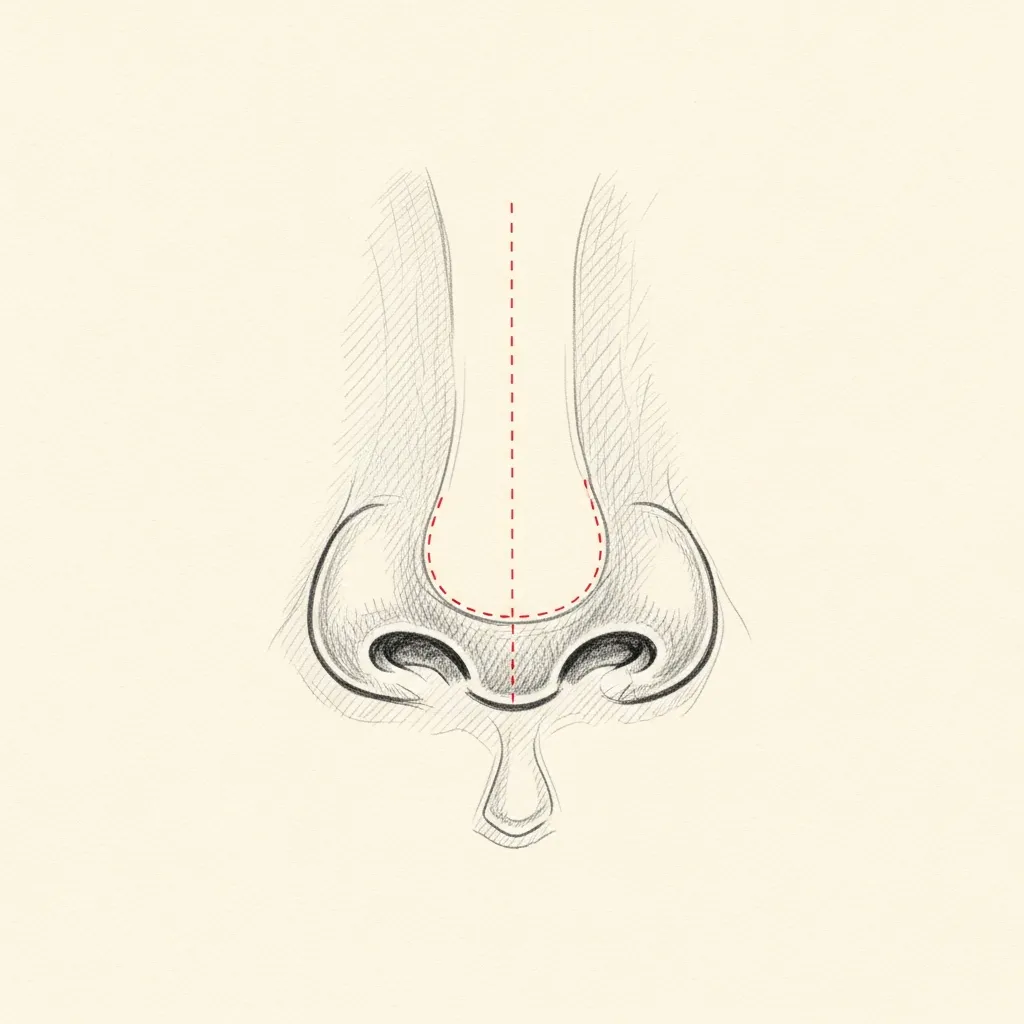
Tip
Defined, not over-rotated
The tip may be refined with cartilage sutures or structural support when indicated. Projection, width, and rotation are selected according to the existing cartilage, skin envelope, facial proportions, and patient's preference—not a fixed nasolabial-angle target.
Unwanted over-rotation or over-narrowing is avoided through conservative planning and support, but no single endpoint defines whether a result is masculine. The agreed aesthetic goal remains individual.
Illustrative diagrams. Technique and aesthetic endpoints are individualized after examination and discussion.
Begin the conversation
A careful, honest evaluation is the right first step.
Cost & Insurance
Male Rhinoplasty Cost & Insurance in NYC
Male rhinoplasty cost depends on the surgical goals, the complexity of the techniques required to maintain natural masculine proportions, the type of anesthesia, the surgical facility, and whether functional nasal airway work is included.
Cosmetic rhinoplasty is generally elective and typically self-pay. When functional nasal airway surgery is medically necessary and performed at the same time, that portion may be eligible for insurance coverage depending on the patient’s plan. After consultation, our office provides a personalized estimate. Payment is arranged directly with the practice.
What May Affect Cost
- Surgical goals and complexity
- Techniques required
- Whether functional airway work is included
- Type of anesthesia
- Surgical facility
- Primary vs revision surgery
The prices listed are provided as general estimates of typical surgical investment and are not guaranteed quotes. Surgical fees vary based on the patient's anatomy, the complexity of the procedure, previous surgery, operative time, anesthesia and facility requirements, implants or hardware, virtual surgical planning when applicable, and whether multiple procedures are performed together. An exact surgical fee is provided following consultation and development of an individualized treatment plan.
05 · In Dr. Mourad's Words
Educational videos.
Short educational films and patient perspectives from the Manhattan practice.
Dr. Mourad in Practice
An overview of the practice and philosophy.
Patient Perspective
A patient discusses her experience before, during, and after surgery.
Inside the Consultation
How Dr. Mourad evaluates anatomy, goals, and candidacy.
06 · Recovery
What healing actually looks like.
Stage 01
First 24 Hours
Walking and normal light daily activity are encouraged early. More vigorous cardiovascular activity can generally resume at approximately 2–3 weeks, with progressive weight training around 3–4 weeks depending on healing. Heavy lifting should be resumed gradually. Activities with a significant risk of direct nasal trauma should generally be avoided for at least 6–8 weeks, and true contact sports may require approximately 8–12 weeks or protective equipment depending on the sport and the amount of nasal bone work performed.
Stage 02
Week 1
Initial recovery focuses on rest, hydration, and following all post-operative instructions exactly. Pain is managed with multi-modal non-narcotic protocols where appropriate.
Stage 03
Weeks 2 – 4
Swelling and bruising peak in the first few days and improve steadily through the first week. Most patients are presentable for casual social activity by the end of week two.
Stage 04
Months 1 – 6
Through weeks two to four the early result begins to settle. Light cardio resumes around three weeks; vigorous exertion and contact activities are deferred per the operative plan.
Stage 05
The final refined result emerges progressively over the following months as residual swelling continues to resolve. Follow-up visits are scheduled across the first year.
Have a specific question?
Send a brief note describing your anatomy or concerns — the office will route it directly to Dr. Mourad for review.

Before You Arrive
Your consultation, prepared.
Bring photographs relevant to your concern, when available.
Bring records from any prior surgery, when available.
List current medications, supplements, and blood-thinning agents.
Note any prior anesthesia issues or chronic medical conditions.
Allow 60 minutes for the first consultation.
Bring questions; no decisions are made at the first visit.
Frequently Asked
Patient questions, honestly answered.
No. Many patients prefer a strong or straight dorsal line, but others want a subtle curve, less projection, or correction of a low or asymmetric bridge. The target profile is discussed with the patient and matched to the rest of the face.
Good candidates have realistic goals, completed facial growth, and medical clearance for elective surgery. Functional concerns such as a deviated septum or nasal valve collapse are frequently addressed at the same operation. Smoking, poorly controlled medical conditions, and recent nasal trauma can alter timing or candidacy and should be discussed at consultation. A focused exam and imaging when indicated determine whether a primary or revision approach is appropriate.
Clinical references
This page draws on published clinical practice guidelines and public-health references. These sources inform general patient education and do not replace an individual evaluation with Dr. Mourad.
- 01Ishii LE, et al. Clinical Practice Guideline: Improving Nasal Form and Function after Rhinoplasty. Otolaryngology–Head and Neck Surgery. 2017;156(2 Suppl):S1–S30. PMID: 28145823. DOI: 10.1177/0194599816683153. AAO-HNSF guideline
- 02Rohrich RJ, Janis JE, Kenkel JM. Male rhinoplasty. Plastic and Reconstructive Surgery. 2003;112(4):1071–1085. PubMed
- 03van Zijl FVWJ, et al. Evaluation of Measurement Properties of Patient-Reported Outcome Measures After Rhinoplasty: A Systematic Review. JAMA Facial Plastic Surgery. 2019;21(2):152–162. PMID: 30605215. DOI: 10.1001/jamafacial.2018.1639. PubMed
- 04Chen K, Zhou L. The Effect of Functional Rhinoplasty on Quality of Life: A Systematic Review and Meta-Analysis. Aesthetic Plastic Surgery. 2024;48(5):847–854. PMID: 37173413. DOI: 10.1007/s00266-023-03390-3. PubMed
- 05Rudy S, Moubayed SP, Most SP. Midvault Reconstruction in Primary Rhinoplasty. Facial Plastic Surgery. 2017;33(2):133–138. PMID: 28388792. DOI: 10.1055/s-0036-1598016. PubMed
Explore Further
Related procedures & resources
Male rhinoplasty sits within Dr. Mourad's wider rhinoplasty practice. These pages explain how the work relates.
Rhinoplasty
The full rhinoplasty practice — cosmetic, functional, preservation, and revision nose surgery.
Read moreEthnic Rhinoplasty
Refinement that respects the patient's own anatomy and heritage rather than a single ideal.
Read moreRevision Rhinoplasty
Correction of the appearance, structure, or breathing of the nose after prior surgery.
Read moreSeptorhinoplasty
Combined functional and aesthetic surgery for breathing concerns and external shape.
Read moreBefore & After Gallery
Representative cases, photographed with written consent on file.
Read moreRequest a Consultation
Begin with an unhurried clinical evaluation.
Read moreThe Most Important Step
Your expert consultation.
A careful evaluation by a double board-certified physician is the right first step. The conversation is unhurried, the diagnosis is honest, and the operative plan is built around what your anatomy can sustain and what you actually want.