
Double Board Certified · Functional Sinus Care
Sinus Infection (Acute Sinusitis): Symptoms, Causes, and Treatment
A sinus infection is inflammation of the sinuses, usually after a cold. Most are caused by viruses and clear on their own within seven to ten days. Knowing which ones need antibiotics — and which warning signs need prompt care — spares you both unnecessary medication and unnecessary worry.
ABFPRS
Facial Plastic & Reconstructive Surgery
ABOto
Otolaryngology — Head & Neck Surgery
AAFPRS
Fellowship Director
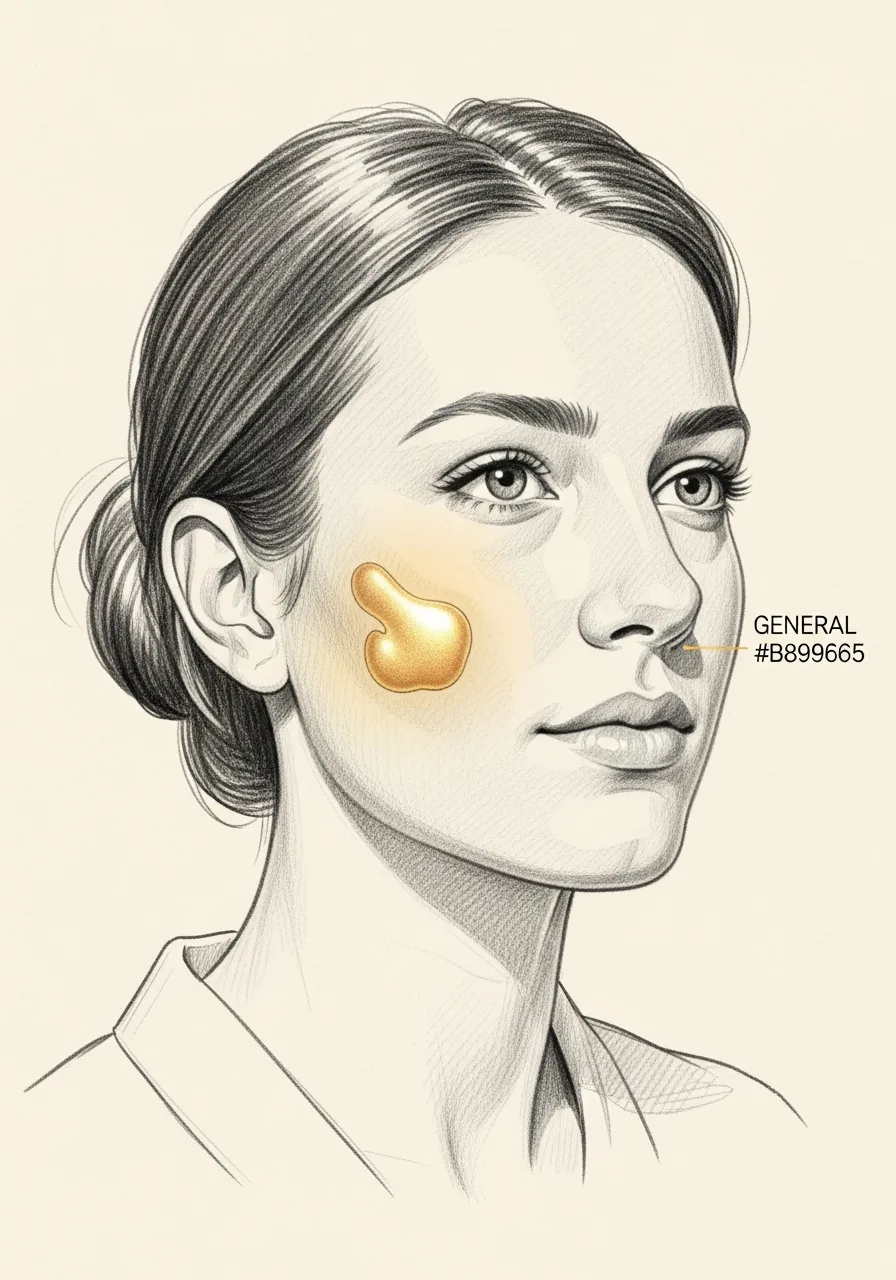
In Consultation
"Most sinus infections clear without antibiotics. The first job is recognizing the small number that need a different plan."

A Note from Dr. Mourad
"A sinus infection is inflammation of the sinuses, usually after a cold. Most are caused by viruses and clear on their own within seven to ten days."
— Dr. Moustafa Mourad, MD
Overview
What is a sinus infection?
The sinuses are air-filled spaces in the bones of the face, lined with a thin membrane that makes mucus. Normally, that mucus drains through small openings into the nose. When a cold or allergy flare inflames the lining, those openings swell shut. Mucus gets trapped, pressure builds, and the lining becomes inflamed — that is sinusitis.
Doctors classify sinusitis by how long it lasts: acute is under four weeks, subacute is four to twelve weeks, recurrent acute means four or more separate episodes a year with clearing between them, and chronic means symptoms lasting twelve weeks or longer.
Recurrent episodes are covered in our recurrent sinus infections guide. Symptoms lasting twelve weeks or longer are usually inflammatory rather than infectious; see chronic sinusitis treatment.
Key takeaways
- A sinus infection — acute sinusitis — lasts less than four weeks.
- Most are viral. Only a small fraction of colds, roughly 0.5 to 2 in 100, turn into a bacterial sinus infection.
- Green or yellow mucus does not mean you need antibiotics.
- Antibiotics help when symptoms last 10 days without improving, start severely with high fever, or get worse after first getting better.
- Saline rinses, a steroid nasal spray, and pain relief help most people feel better while it runs its course.
- Four or more infections a year, or symptoms beyond 12 weeks, are different problems and worth a specialist evaluation.
An Established Academic Authority
Double board certification. Fellowship director. Published author. A surgeon's surgeon.
ABFPRS
Board Certified
American Board of Facial Plastic & Reconstructive Surgery
ABOto
Board Certified
American Board of Otolaryngology — Head & Neck Surgery
AAFPRS
Fellowship Director
American Academy of Facial Plastic and Reconstructive Surgery
Textbook
Published Author
Contributions to the academic literature of facial plastic surgery
Dual board certification in both Facial Plastic & Reconstructive Surgery and Otolaryngology — Head & Neck Surgery.
Castle Connolly Top Doctor — Plastic Surgery, 202602 · Symptoms
Sinus infection symptoms
Common symptoms include:
I
Congestion or a blocked nose
Thick, discolored nasal discharge, or mucus draining down the back of the throat.
II
Pressure, pain, and reduced smell
Pressure or pain in the cheeks, forehead, around the eyes, or in the upper teeth — often worse when bending forward — with reduced sense of smell.
III
Other symptoms
Fatigue, sometimes fever, cough, bad breath, or ear fullness.
Viral or bacterial?
The question that decides treatment
Viral and bacterial sinus infections feel the same at first. What distinguishes them is how the illness behaves over time.
A viral sinus infection usually peaks in the first three to five days and then steadily improves, clearing within seven to ten days. Antibiotics do not help it.
A bacterial sinus infection is more likely when symptoms last 10 days or more without improvement, start severely with high fever and thick discharge or facial pain, or get worse again after you start to feel better. Mucus color does not tell you; green or yellow mucus is common in ordinary viral colds.
A viral sinus infection usually clears in 7 to 10 days. Some congestion or cough can linger for another week or two. A bacterial infection, with or without antibiotics, generally improves within one to two weeks.
The sinusitis itself is not contagious, but the cold virus that usually causes it is. Hand-washing and covering coughs help protect others.
03 · Anatomy
Acute vs chronic sinus infection.
The duration of symptoms is the most important diagnostic variable.
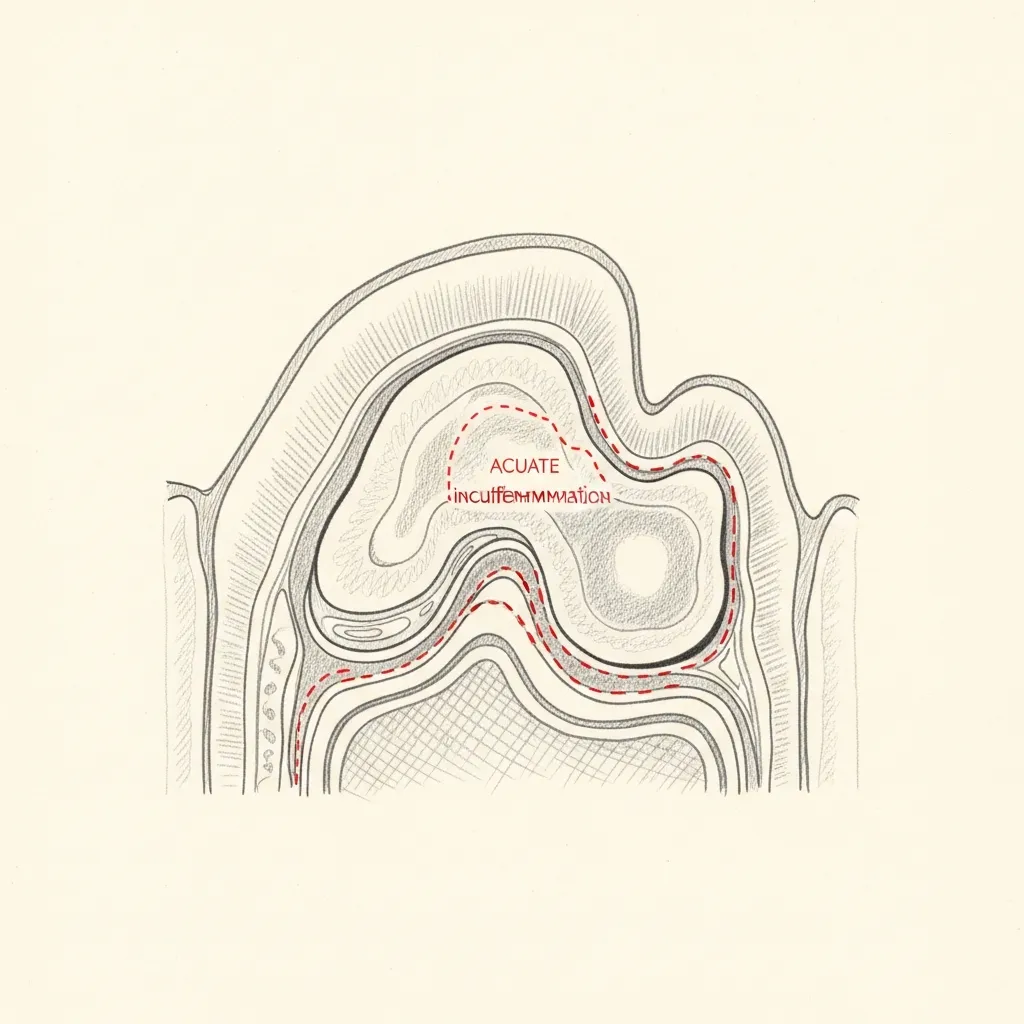
Acute
Less than 4 weeks
Acute sinusitis lasts less than 4 weeks — typically following a viral upper respiratory infection. Most cases resolve without antibiotics; a smaller proportion is bacterial and benefits from targeted therapy.
A viral sinus infection usually clears in 7 to 10 days. Some congestion or cough can linger for another week or two.
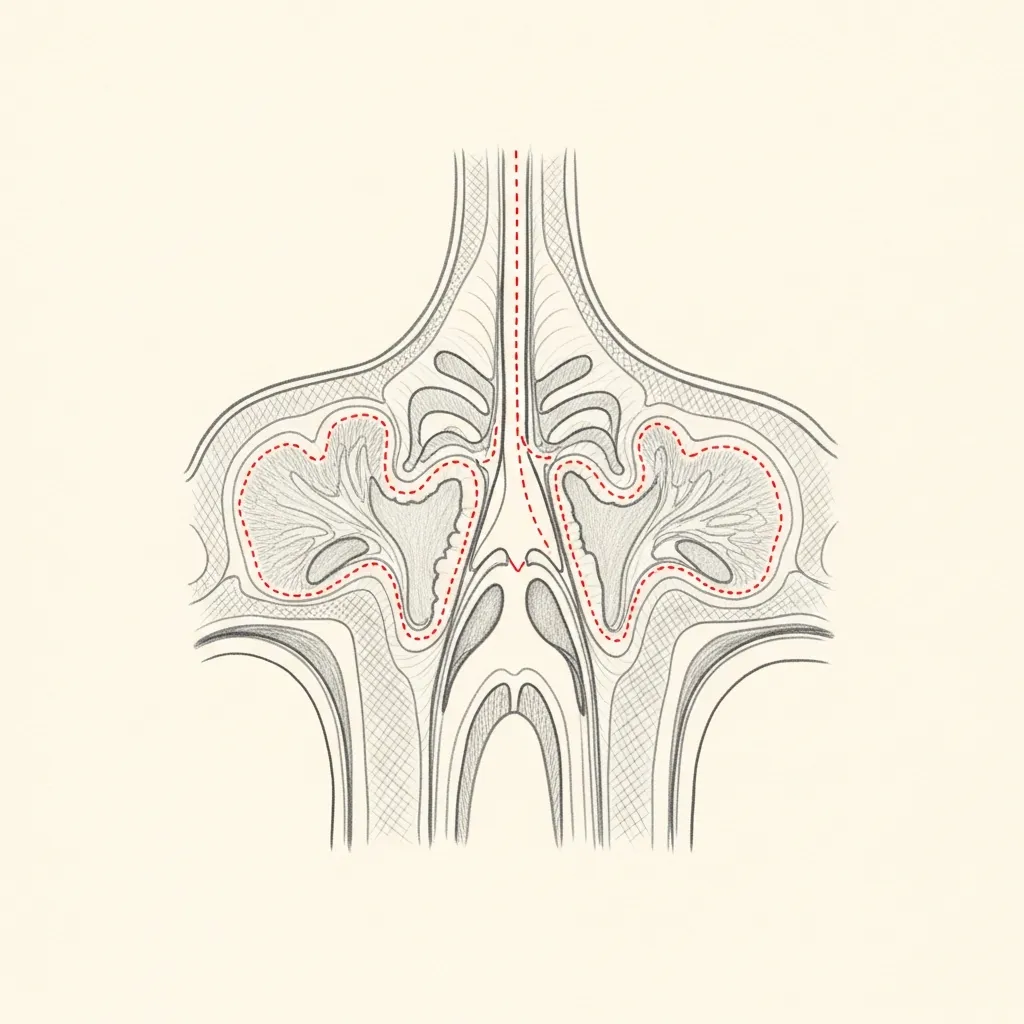
Chronic
More than 12 weeks
Chronic sinusitis lasts 12 weeks or longer and is usually an inflammatory disease rather than an infectious one. Polyps may or may not be present.
Symptoms lasting 12 weeks or longer are a different problem and need evaluation for chronic rhinosinusitis rather than repeated antibiotic courses.
Illustrative diagrams. The same symptoms can come from very different underlying processes.
04 · Diagnosis
How a sinus infection is diagnosed
Diagnosis is clinical for the typical case — symptom pattern, duration, and trajectory are the key variables.
Nasal endoscopy is used when symptoms are atypical, prolonged, or recurrent. CT imaging is reserved for suspected complications, symptoms that do not resolve, frequent recurrences, a suspected dental or fungal cause, or when surgery is being considered.
Several conditions can feel like a sinus infection and do not respond to sinus treatment. Migraine can feel like sinus pressure; allergic or nonallergic rhinitis can cause congestion and drip without infection; and a dental infection can cause one-sided maxillary symptoms.
05 · Treatment Options
Sinus infection treatment
What helps most people feel better includes saline rinses, a steroid nasal spray, acetaminophen or ibuprofen for pain and fever, decongestant sprays for no more than three days, rest, fluids, and warm compresses. Antibiotics are appropriate when the illness fits a bacterial pattern.

Supportive care
Saline irrigation, a steroid nasal spray, pain relief, rest, and fluids while a viral infection clears.
Learn More
When antibiotics are appropriate
Antibiotics are reserved for symptoms that last without improving, start severely, or worsen after initial improvement.
Learn More
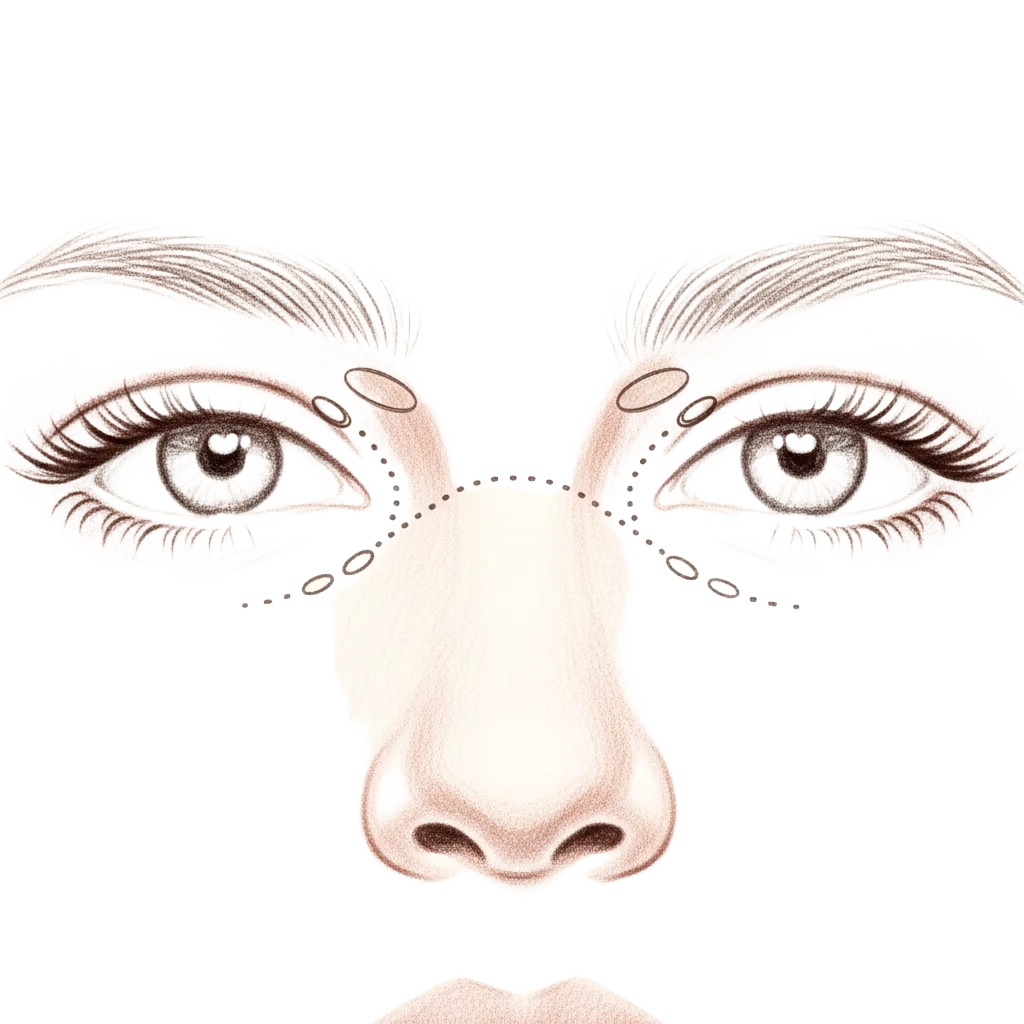
Specialist evaluation
Recurrent, persistent, one-sided, dental-source, or complicated symptoms need a focused evaluation.
Learn More
01 · Why Dr. Mourad
Diagnosis first, treatment second.
Most sinus infections are best managed by a primary care physician or urgent care. An ENT evaluation makes sense when infections keep coming back, do not clear, or come with a lost sense of smell, one-sided symptoms, or a suspected dental source.
In the office, nasal endoscopy — a quick look with a thin camera — shows the drainage pathways directly, and a CT is used when it would change the plan.
Treatment follows the diagnosis. Antibiotics are prescribed deliberately when appropriate, and avoided when they are not.
When to Seek Care
When to seek care promptly.
Swelling, redness, or pain around the eye; double vision, reduced vision, or difficulty moving the eye.
A severe headache, especially with a stiff neck; confusion, drowsiness, or unusual behavior.
Swelling of the forehead or a rapidly worsening illness.
Symptoms lasting more than 10 days without improvement, getting worse after starting to improve, or still present after four weeks should be evaluated.
Outlook
What to expect.
Most sinus infections clear in 7 to 10 days without antibiotics. A bacterial infection generally improves within one to two weeks once appropriately treated.
If symptoms are still present after four weeks, or infections keep recurring, see a doctor to reassess the diagnosis and look for an underlying driver.

Living Well
Day-to-day measures that help.
Use saline rinses once or twice a day with distilled, sterile, or boiled-and-cooled water. Rest, fluids, warm compresses, and a steroid nasal spray can ease symptoms.
Do not use decongestant sprays for more than three days; beyond that, they can cause rebound congestion.
Frequently Asked
Patient questions, honestly answered.
Usually not. Most sinus infections are viral and clear in 7–10 days. Antibiotics are appropriate when symptoms last 10 days without improvement, begin severely with high fever, or worsen after initially improving.
No. Mucus color reflects the immune response and is common in viral infections. It isn't a reliable sign that antibiotics are needed.
Continue Reading
Related sinus care
Recurrent Sinus Infections
Evaluation when infections keep returning.
Read moreBalloon Sinuplasty
A minimally invasive option for selected patients.
Read moreBalloon vs Endoscopic Surgery
How the two approaches compare.
Read moreSinus Headache & Pressure
When facial pressure may be sinus-related.
Read moreChronic Rhinitis
Congestion and drip without infection.
Read moreOdontogenic Sinusitis
When a dental source affects the sinus.
Read moreThe Most Important Step
Get an expert evaluation.
When infections keep coming back, do not clear, or come with one-sided symptoms, a lost sense of smell, or a suspected dental source, a focused ENT evaluation can clarify the next step.