Condition
Inverted-V Deformity After Rhinoplasty
An inverted-V is a V-shaped shadow in the middle of the nose after hump reduction. Why it happens, why it often blocks breathing, and how spreader grafts repair it.
ABFPRS
Facial Plastic & Reconstructive Surgery
ABOto
Otolaryngology — Head & Neck Surgery
AAFPRS
Fellowship Director
Overview
An inverted-V deformity shows up as visible shadowing or narrowing across the middle of the nose after rhinoplasty. Because the middle vault and the internal nasal valve are closely linked, it can affect both appearance and breathing.
Key takeaways
- An inverted-V deformity appears as shadowing or narrowing in the middle vault.
- It occurs when the upper lateral cartilages lose support, often after hump reduction.
- Because the middle vault relates to the internal valve, breathing can be affected.
- Repair commonly restores middle-vault support with spreader grafts or flaps.
- Evaluation includes photos, examination, endoscopy, and an airway assessment.
An Established Academic Authority
Double board certification. Fellowship director. Published author. A surgeon's surgeon.
ABFPRS
Board Certified
American Board of Facial Plastic & Reconstructive Surgery
ABOto
Board Certified
American Board of Otolaryngology — Head & Neck Surgery
AAFPRS
Fellowship Director
American Academy of Facial Plastic and Reconstructive Surgery
Textbook
Published Author
Contributions to the academic literature of facial plastic surgery
Dual board certification in both Facial Plastic & Reconstructive Surgery and Otolaryngology — Head & Neck Surgery.
Castle Connolly Top Doctor — Plastic Surgery, 2026Overview
Key takeaways
- The shadow outlines the lower edge of the nasal bones, which becomes visible when the cartilage below them collapses inward.
- It usually follows hump reduction when the middle of the nose wasn't reconstructed afterward.
- It often narrows the internal nasal valve — the tightest point of the airway.
- Repair rebuilds the middle of the nose with spreader grafts or spreader flaps.
What it looks like
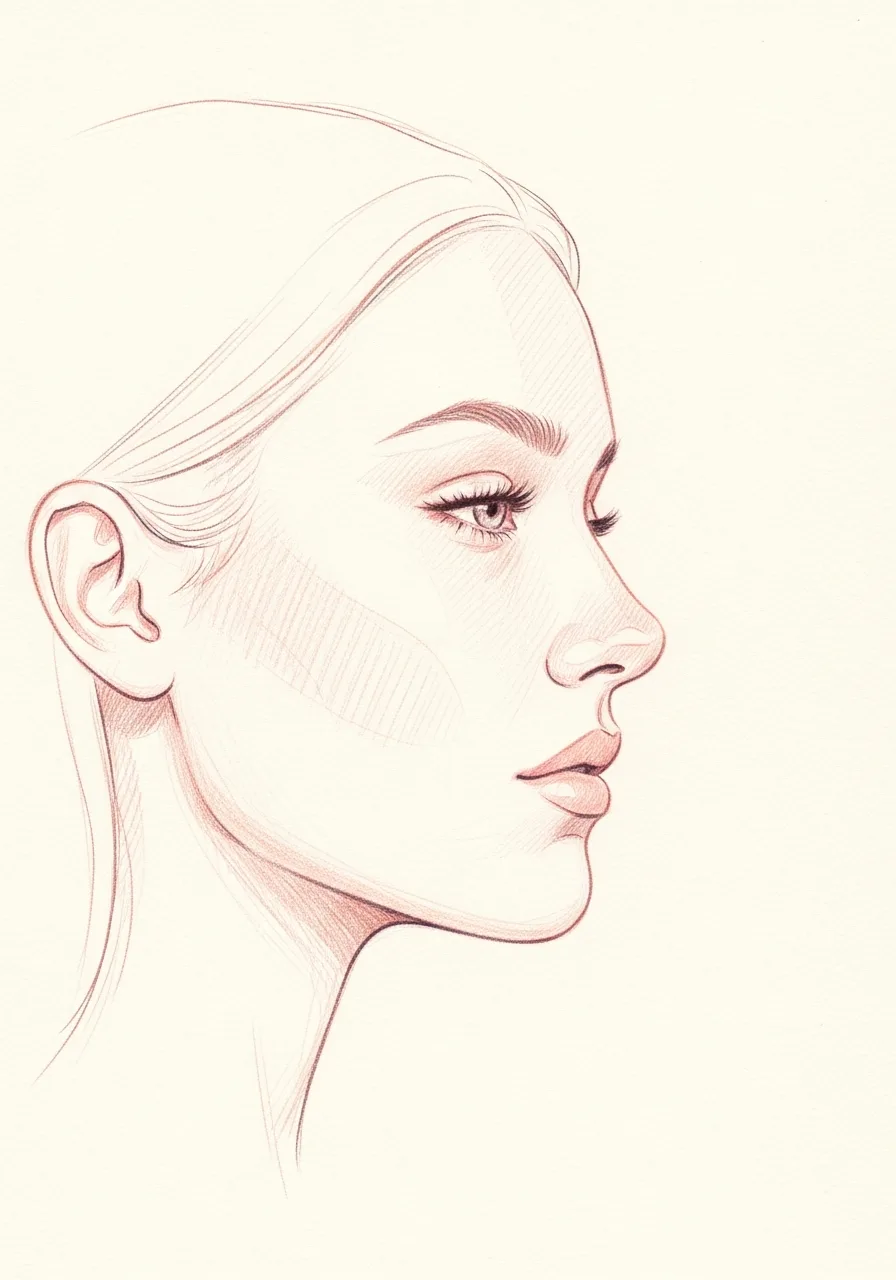
Viewed from the front, you see an upside-down "V" of shadow or a visible step partway down the bridge. The middle of the nose may look pinched or narrower than the bony bridge above it, and the lines of the bridge — which should flow smoothly from brow to tip — are broken.
Why it happens
The middle third of the nose is held up by two upper lateral cartilages that attach to the septum like the two sides of a roof. When a hump is removed, the "roof" is opened. If it isn't rebuilt, the upper lateral cartilages can fall inward over the following months as scar contracts, and the lower edge of the nasal bones stands out as a shadow.
Other contributors include weak or short nasal bones, over-removal of cartilage, trauma, and thin skin that shows the underlying contour.
Is it swelling or the real thing?
Early swelling tends to hide an inverted-V rather than create one. The shadow typically becomes visible — or more obvious — over months as swelling settles and scar contracts. A persistent V-shaped shadow several months after surgery, especially with a new feeling of blockage, is usually structural.
Why breathing is often affected
Where the upper lateral cartilages meet the septum is the internal nasal valve, the narrowest point of the entire airway. When those cartilages collapse inward, the valve narrows — and a small loss of space there makes a big difference to airflow. Many people with an inverted-V notice that breathing is harder than before surgery, particularly on deep breaths or at night. See nasal valve collapse after rhinoplasty.
How it's repaired
Repair is part of revision rhinoplasty and rebuilds the middle of the nose:
- Spreader grafts — thin strips of cartilage placed between the septum and the upper lateral cartilages, widening the middle of the nose and opening the internal valve.
- Spreader flaps — when enough upper lateral cartilage remains, it can be folded inward to do the same job without a separate graft.
- Smoothing the bony edge or repositioning the nasal bones where they contribute to the step.
Cartilage comes from the septum if enough remains, otherwise the ear or rib. The same operation often corrects other problems at the same time, like a residual hump or tip issues.
What to expect
Spreader grafts reliably restore a smoother bridge line and usually improve breathing through the internal valve. Very thin skin can still show some contour, and results refine over 12 months or more after revision. See the revision rhinoplasty recovery timeline.
Frequently Asked
Inverted-V Deformity After Rhinoplasty — patient questions, honestly answered.
It usually occurs when the upper lateral cartilages lose support — often after a nasal hump is reduced without adequately reconstructing the dorsum. Over-resection, weak cartilage, trauma, and scar contraction can also contribute, producing the characteristic V-shaped shadow across the middle vault.
It can. The middle vault is closely linked to the internal nasal valve, the narrowest part of the airway, so loss of middle-vault support can cause nasal obstruction along with the visible change. It is assessed as both a cosmetic and a functional issue.
Continue exploring
Related rhinoplasty resources
Revision Rhinoplasty
Restoring middle-vault support after prior surgery.
Nasal Valve Collapse Treatment
Addressing the internal valve and airway.
Nasal Valve Collapse After Rhinoplasty
A closely related post-surgical breathing problem.
Rib Cartilage Revision Rhinoplasty
Grafting options for middle-vault reconstruction.
Schedule a consultation
Have an inverted-V deformity evaluated.
Next step
Plans are individualized. The consultation is where that begins.
Reach the Manhattan office to schedule a private consultation with Dr. Mourad.