
Double Board Certified · Functional Nasal Care
Chronic Rhinitis: Why Your Nose Is Always Runny or Stuffy
Chronic rhinitis is persistent nasal inflammation — allergic, non-allergic, or mixed — that affects daily quality of life. Effective treatment depends on identifying the type and matching therapy to the underlying mechanism.
ABFPRS
Facial Plastic & Reconstructive Surgery
ABOto
Otolaryngology — Head & Neck Surgery
AAFPRS
Fellowship Director

In Consultation
"Most patients with chronic rhinitis have been managing symptoms for years. The first goal is an accurate diagnosis of the type."

A Note from Dr. Mourad
"Chronic rhinitis is persistent nasal inflammation — allergic, non-allergic, or mixed — that affects daily quality of life. Effective treatment depends on identifying the type and matching therapy to the underlying mechanism."
— Dr. Moustafa Mourad, MD
Overview
What is chronic rhinitis?
Chronic rhinitis is ongoing nasal inflammation or abnormal nasal reactivity that can cause congestion, drainage, sneezing, itching, or trigger-related symptoms. The pattern may be allergic, nonallergic, mixed, gustatory, medication-related, or associated with rebound congestion.
This page focuses on chronic rhinitis and distinguishes it from chronic rhinosinusitis, septal deviation, turbinate enlargement, and nasal-valve collapse. Rhinitis can enlarge the turbinates and create fluctuating obstruction, while septal deviation and valve narrowing create structural restriction; a patient can have both.
Patients are first evaluated with history, nasal examination, and nasal endoscopy when appropriate. Patients with suspected significant environmental or allergic triggers may undergo allergy evaluation or be referred for formal allergy testing and treatment. Structural procedures address a supported mechanical component and should not be described as a cure for inflammatory rhinitis.
Key takeaways
- Chronic rhinitis is persistent nasal inflammation lasting more than twelve weeks.
- It divides into allergic and non-allergic rhinitis, with mixed patterns common.
- It is often mistaken for chronic sinus infection, but the treatments differ.
- Care is layered — environmental control, intranasal steroids and antihistamines, then procedures if needed.
- Identifying the type matches therapy to the underlying mechanism.
An Established Academic Authority
Double board certification. Fellowship director. Published author. A surgeon's surgeon.
ABFPRS
Board Certified
American Board of Facial Plastic & Reconstructive Surgery
ABOto
Board Certified
American Board of Otolaryngology — Head & Neck Surgery
AAFPRS
Fellowship Director
American Academy of Facial Plastic and Reconstructive Surgery
Textbook
Published Author
Contributions to the academic literature of facial plastic surgery
Dual board certification in both Facial Plastic & Reconstructive Surgery and Otolaryngology — Head & Neck Surgery.
Castle Connolly Top Doctor — Plastic Surgery, 202602 · Symptoms
Chronic rhinitis symptoms
Three patterns are common. Patients often recognize themselves in one or more of these.
I
Persistent Congestion
Daily nasal obstruction and congestion lasting months or years, often with reduced sense of smell.
II
Runny Nose & Post-Nasal Drip
Clear or colored nasal discharge and persistent post-nasal drip, often worse on waking.
III
Sneezing & Itching
Recurrent sneezing, nasal itching, and watery eyes — patterns that often point to an allergic component.
03 · Anatomy
Allergic vs non-allergic rhinitis.
The two share symptoms but respond to different treatments. Distinguishing them is the first step toward effective care.
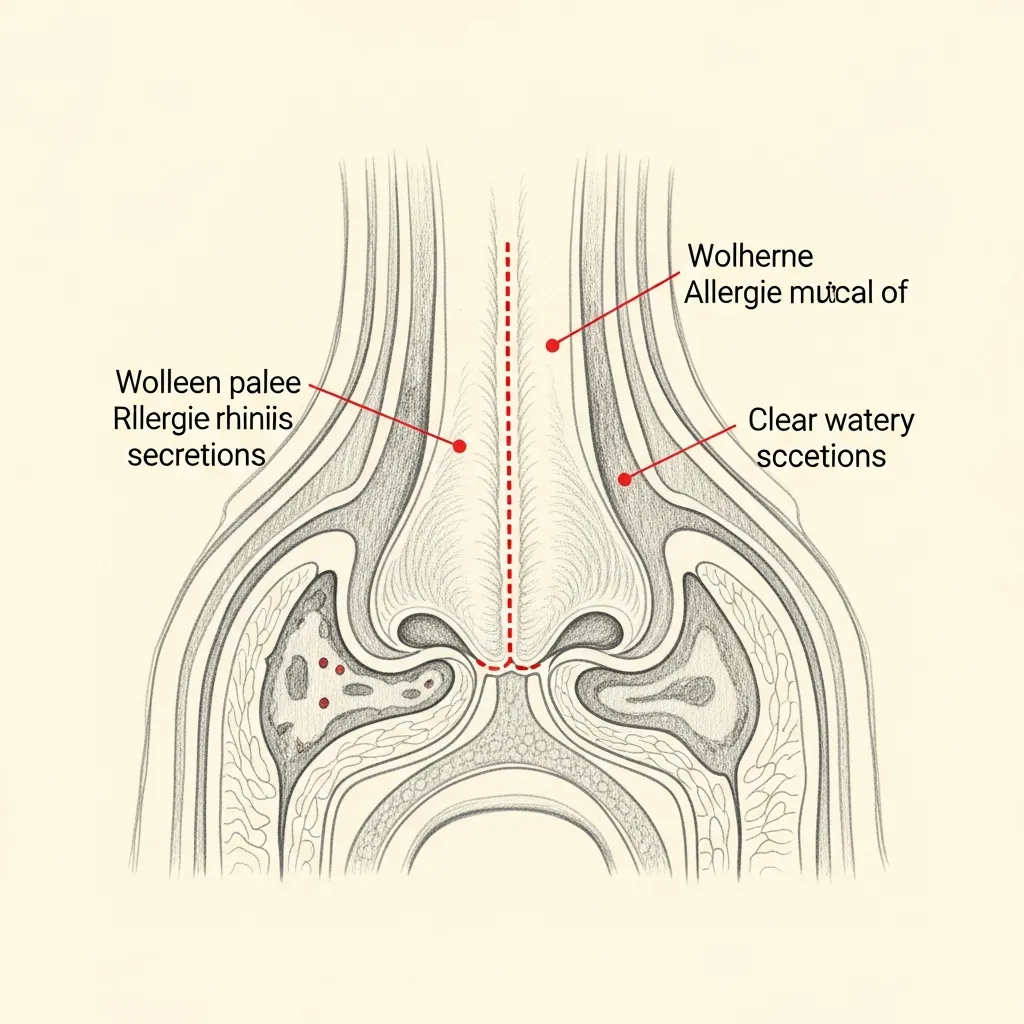
Allergic
IgE-mediated, often seasonal
Allergic rhinitis is driven by IgE-mediated response to specific allergens — often pollen, dust mite, animal dander, or mold. Symptoms are typically seasonal or triggered by exposure.
Treatment includes allergen avoidance, intranasal steroids, antihistamines, and — in selected cases — immunotherapy.
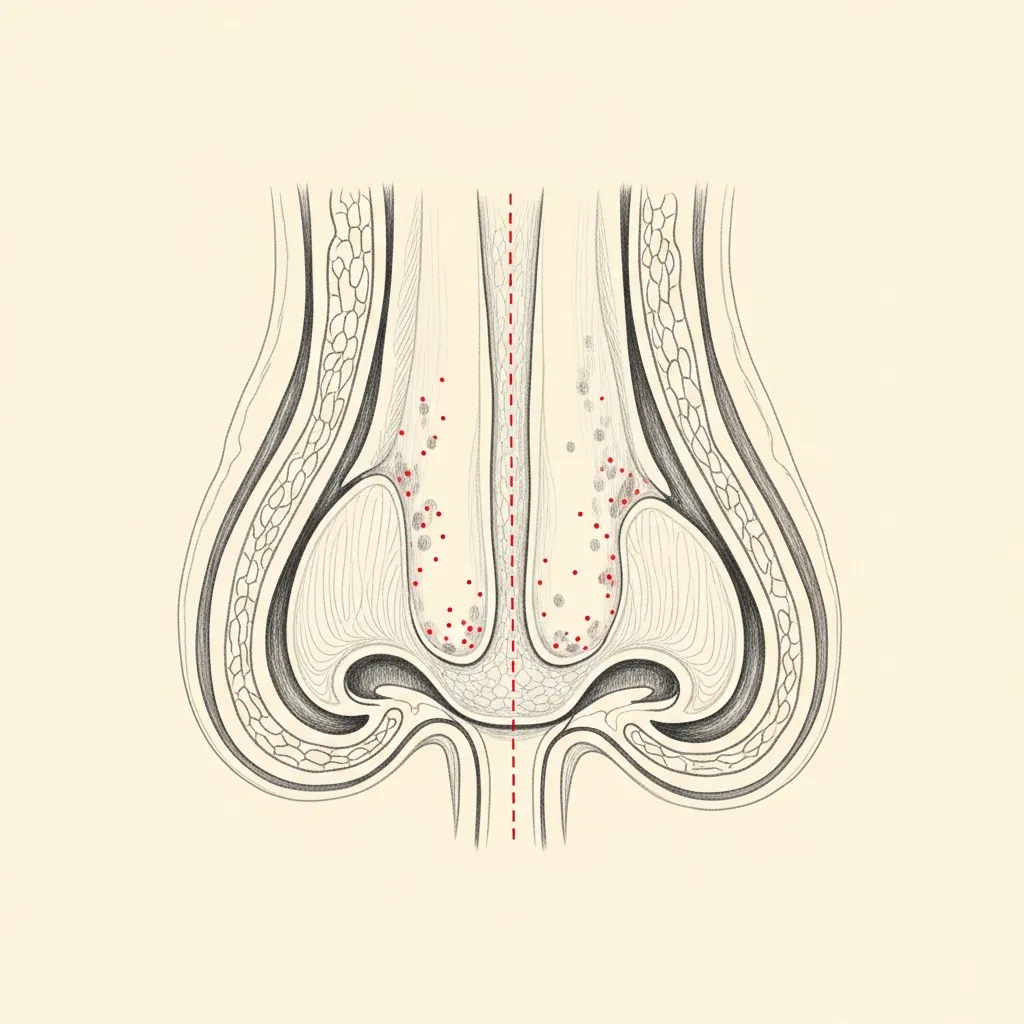
Non-Allergic
Vasomotor or irritant-driven
Non-allergic rhinitis includes vasomotor rhinitis, gustatory rhinitis, drug-induced rhinitis (including rebound from over-use of decongestant sprays), and irritant-driven inflammation.
Treatment is targeted to the specific subtype — and is often very effective once the right diagnosis is made.
Illustrative diagrams. Mixed allergic and non-allergic patterns are common.
04 · Diagnosis
How the diagnosis is made.
Patients are first evaluated with history, nasal examination, and nasal endoscopy when appropriate.
Medical therapy is optimized first. Patients with suspected significant environmental or allergic triggers may undergo allergy evaluation or be referred for formal allergy testing and treatment.
For persistent nonallergic or mixed rhinitis, posterior nasal nerve ablation may be offered when appropriate. Structural contributors are addressed separately.
05 · Treatment Options
Treatments matched to the diagnosis.
Everyday measures
• Saline rinses clear allergens, irritants, and mucus.
• Avoid known triggers — allergen control for allergic rhinitis; avoiding smoke and strong odors for nonallergic.
• Stop decongestant sprays if you've used them for more than a few days. A steroid spray can ease the transition.
Medications matched to the type
• Steroid nasal sprays reduce inflammation in both allergic and nonallergic rhinitis. They work best used daily, not only on bad days, and take a week or two to reach full effect.
• Antihistamine nasal sprays (such as azelastine) help both allergic and nonallergic rhinitis — unlike antihistamine pills, which mainly help allergy.
• Ipratropium nasal spray specifically dries a watery runny nose, including gustatory rhinitis.
• Allergy immunotherapy — shots or under-the-tongue tablets — can reduce allergic rhinitis long-term.
Procedures, when medication isn't enough
• Turbinate reduction shrinks enlarged turbinates that keep the nose blocked, while preserving their function. See turbinate reduction.
• Posterior nasal nerve ablation — an in-office procedure that calms the nerve driving a runny nose and congestion — can help selected patients whose symptoms persist despite sprays.
• Septoplasty or nasal valve repair when a structural problem adds to the blockage.
A procedure treats the mechanical or nerve-driven part of the problem. It doesn't cure allergy, so medical treatment often continues alongside it.

Medical Therapy
Intranasal steroids, antihistamines, saline irrigation, and targeted treatment of allergic triggers.
Learn More
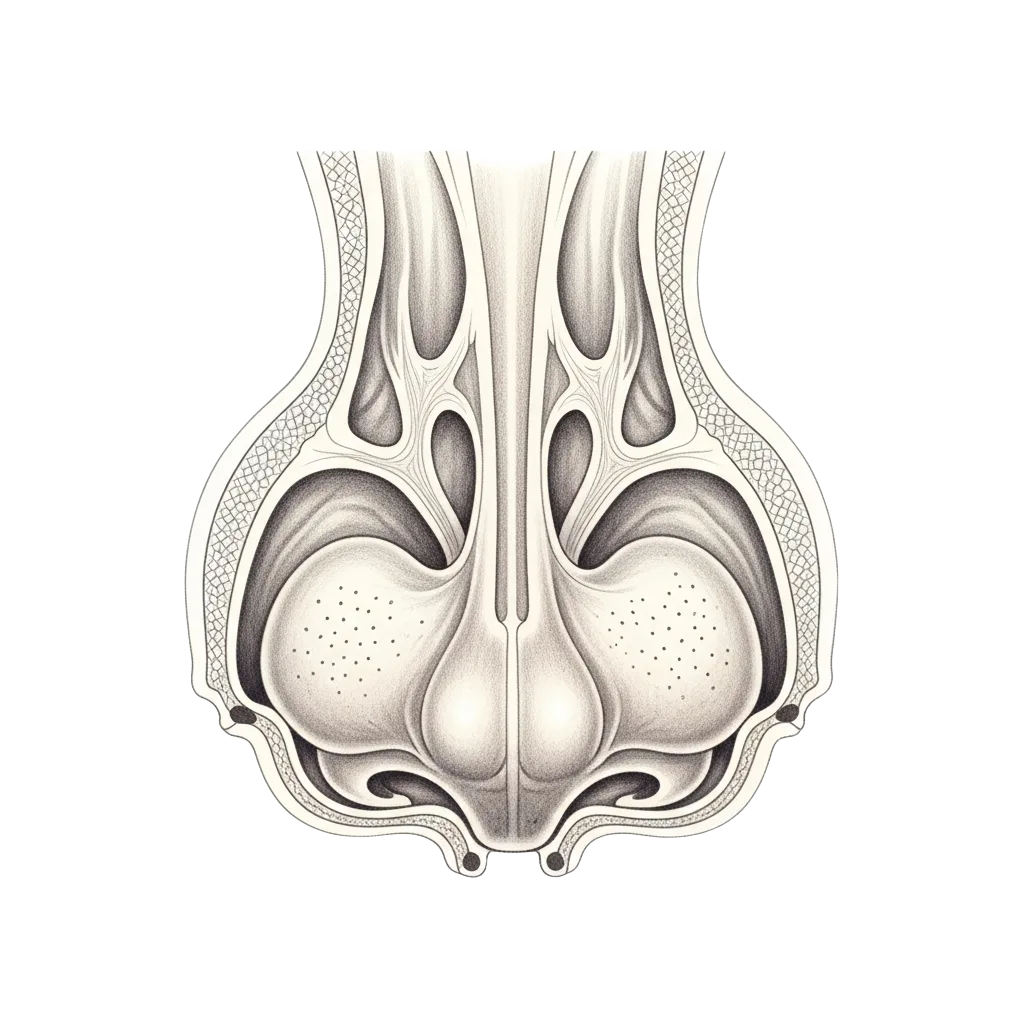
Turbinate Reduction
For patients with persistent obstruction from enlarged turbinates.
Learn More

Vivaer Airway Remodeling
In-office option for selected patients with valve-component obstruction.
Learn More
01 · Why Dr. Mourad
Diagnosis first, treatment second.
Dr. Mourad evaluates chronic rhinitis with a careful diagnostic framework — allergic versus non-allergic, structural versus inflammatory — because the right treatment depends on the right diagnosis.
Medical therapy is optimized before any procedural option is considered. Allergy evaluation or referral for formal allergy testing and treatment is used when environmental or allergic triggers are suspected.
For persistent nonallergic or mixed rhinitis, posterior nasal nerve ablation may be offered when appropriate. Structural contributors such as turbinate hypertrophy, septal deviation, or sinus disease are addressed separately rather than assuming all chronic nasal symptoms are allergy-related.
When to Seek Care
When to seek care promptly.
Severe facial pain, high fever, or visual changes — evaluate urgently.
New unilateral nasal obstruction — evaluate within days, especially in adults.
Bloody nasal discharge that does not resolve — evaluate within days.
Significant facial swelling or redness around the eye — evaluate immediately.
Outlook
What to expect.
When the diagnosis is correct and the right treatment is applied, the outlook is generally good. Most patients describe meaningful improvement in symptoms and day-to-day function.
When symptoms persist despite treatment, the workup is re-opened. Persistent symptoms with no answer almost always mean the diagnosis is incomplete.

Living Well
Day-to-day measures that help.
Daily saline irrigation, control of indoor allergens, and good sleep hygiene meaningfully reduce day-to-day symptoms for many patients.
Medical therapy, when prescribed, works best when used consistently rather than as needed — this is one of the most common reasons treatment seems to fail.
Frequently Asked
Patient questions, honestly answered.
Usually chronic rhinitis — allergic, nonallergic, or both. Vasomotor rhinitis often causes a watery nose triggered by cold air, smells, or weather changes, and gustatory rhinitis causes a runny nose while eating. An ipratropium spray is often very effective for watery drip.
Common causes are rhinitis swelling the turbinates, rebound congestion from decongestant sprays, a deviated septum, or a weak nasal valve. Frequently it's more than one. An exam shows which are involved.
Continue Reading
Related nasal airway care
The Most Important Step
Get an expert evaluation.
A careful evaluation by a double board-certified physician is the right first step. The conversation is unhurried, the diagnosis is honest, and treatment is matched to what you actually have.